Venerable Martyr
Herman Polyansky
A monastic martyr of the Russian Church, who died in 1937.
- Feast
- October 22old style November 4
- Reposed
- 193720th century
- Order
- Martyrs
Life
Holy Venerable Martyr Herman Polyansky, an archimandrite, was born in 1901 in Tiraspol, into the family of a missionary priest, and his name in the world was Boris Polyansky. He was one of the New Martyrs and Confessors of Russia, shot in a camp on 4 November 1937.
Youth and monastic life
Before the Zosima Hermitage was closed, Boris came to the monastery several times, but he was drawn to the Renovationist movement. Only in 1924, under the influence of Archbishop Bartholomew (Remov), did he repent of and abandon these ideas. That same year he came to the Vysoko-Petrovsky monastery in Moscow and began his studies in the secret Spiritual Academy that existed there.
On 17 March 1926 he was tonsured a monk with the name Herman, in memory of Archbishop Bartholomew's spiritual father, the Zosima elder Herman Gomzin. At the tonsure Bishop Bartholomew urged him to follow the humility of that elder, who never exalted himself and always judged himself, not to scatter himself and to guard his heart. A month after the tonsure he was ordained hieromonk, and in 1932 archimandrite.
Ministry
At the head of one of the Petrovsky communities, he cared for his many spiritual children, mostly young people. He was the closest and most devoted spiritual son and helper of Archbishop Bartholomew. In 1932 he defended his master's thesis; Metropolitan Anatoly Grisyuk, a hieromartyr and former rector of the Kazan Theological Academy, wrote a detailed review of it, judging its scholarly side fairly high for the time, and noting that the author had learned Greek and translated almost everywhere without error.
When the community left the walls of the monastery and moved to the church of Saint Sergius on Bolshaya Dmitrovka, Father Herman, with the bishop's blessing, also served often at Saint Nicholas in Solomennaya Storozhka and at Saint Mitrophan of Voronezh in Petrovsky Park.
Arrest and martyrdom
In January 1933 he was arrested in the Case of the Members of the Circle of Christian Youth, which he had led since 1930, after the death of Father Basil Nadezhdin and the arrest of Hegumen Mitrophan Tikhonov. In February 1933 twenty-five people were arrested, clergy and parishioners of the Petrovsky monastery. Of his work with the young, he said at the investigation that he had aimed at training cadres of zealous church workers. He was sentenced to five years in the camps.
He was held in the Mariinsk camp in Western Siberia, from which he sent letters. His spiritual daughter Zinaida Cherkova, who travelled to him at Bishop Bartholomew's request, is said by some accounts to have brought him the Holy Gifts. Learning in prison of the death of his spiritual father, he wrote two memorial canons for him.
In 1936 his sentence was extended by five more years and he was moved to Siblag, in the Novosibirsk region. There too he did not cease his pastoral service: he baptised in secret and defended his fellow prisoners, though he knew what awaited him. In an Easter letter of 1937 to a spiritual son, a schoolboy, he urged him to sense with a clear mind the power of the faith of the martyrs and confessors, and to confess the faith in life.
In October 1937 he was accused of systematic counter-revolutionary agitation and sentenced to death together with Archbishop Seraphim (Samoylovich). He was shot in the camp on 4 November 1937, on the feast of the Kazan icon of the Mother of God.
Veneration
He was canonised in August 2000 among the New Martyrs and Confessors of Russia. Because in all official records he appeared under his lay name, he was at first glorified as Hieromartyr Boris Polyansky; it was later established that the priest Boris spoken of at the canonisation and Archimandrite Herman were one and the same person. He is commemorated on 4 November, on 7 February, in the Synaxis of the New Martyrs and Confessors of the Russian Church, on 29 August, in the Synaxis of the Saints of Kuzbass, and on 5 September, in the Synaxis of the Saints of Moscow (new style, movable days).
Commemorated the same day October 22
 Abercius of HierapolisSaint · Bishop of HierapolisOct 22
- Marcus of JerusalemSaint · Bishop of JerusalemOct 22
 Paul of RostovVenerable · Abbot of Boris and Gleb MonasteryOct 22
- Theodore of RostovVenerable · First abbot of Boris and Gleb MonasteryOct 22
 Abib and ApolloHoly Martyrs · Ascetics of AkhmimOct 22
 Seraphim SamoylovichHieromartyr · Archbishop of UglichOct 22
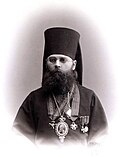 Nicodemus KononovHieromartyr · Bishop of BelgorodOct 22
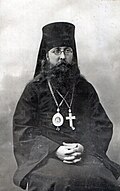 Gregory LebedevHieromartyr · Bishop of ShlisselburgOct 22
- Solarius of LuniHieromartyr · Bishop of LuniOct 22
- Symmachus of CapuaSaint · Bishop of CapuaOct 22
- Alexander AndreyevHieromartyr · ArchpriestOct 22
- Mina ShelaevVenerable Martyr · ArchimandriteOct 22