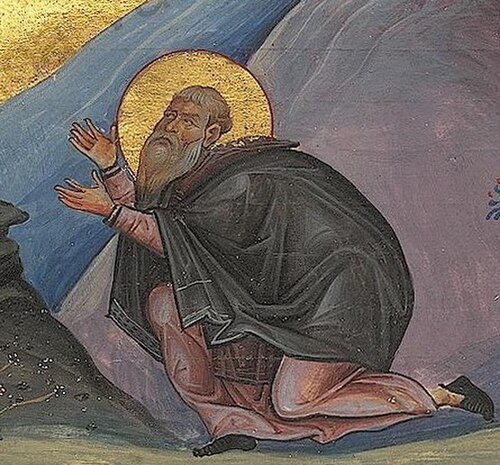
Venerable
Hilarion the Great
Hermit of Gaza
Hermit, a disciple of Anthony the Great, who spent most of his life in the desert.
- Feast
- October 21old style November 3
- Reposed
- 3724th century
- Place
- Paphos
- Order
- Venerables
Life
The venerable Hilarion the Great was a hermit and disciple of Saint Anthony the Great and spent most of his life in the desert near Gaza. Saint Jerome, who wrote his life, counts him the founder of monasticism in Palestine. He is commemorated on 21 October.
Beginnings
He was born around 291, of pagan parents, in the village of Tabatha, a few miles from Gaza. His parents sent him to study with a grammarian in Alexandria, where, according to Jerome, he showed great ability and became a good speaker. At Alexandria he received Christianity and heard of Anthony the Great. At about fifteen he went to him and stayed some two months, trying to follow him in everything. But the crowds that came to Anthony for healing and the casting out of spirits seemed to him a burden, and he set out to live alone in the wilderness of Palestine.
The hermit
Returning to Gaza, he found that his parents had died, and he gave his goods to his brothers and to the poor. He settled in the desert, seven miles from Maiuma, the port of Gaza. He went once to Jerusalem to venerate the holy sites, but he chose not to remain in the Judaean desert, since he did not wish to seem to confine God within set limits; he believed he could be near Him anywhere. Around 308 he built a hut in which he lived in solitude for twenty-two years. He wove baskets, as he had learned in Egypt, where this was the usual labour of monks. He struggled against the assaults of fleshly desire and, according to Jerome, the devil tempted him in youth; he overcame by hunger, thirst and hard work, and by prayer.
Healings and disciples
After twenty-two years of solitude a childless woman came to him, asking for healing. At first he refused, but then he prayed for her, and she was healed. From then on he was always surrounded by disciples and by people who came for healing and the casting out of unclean spirits. Jerome relates that he healed the three children of Helpidius, later a prefect, and that he drove out demons, foresaw things to come and spoke wise words. As there were no monasteries in Palestine and Syria at that time, many came to him to learn the spiritual life. One of his disciples, Epiphanius, later went to Cyprus and became bishop of Salamis. Hilarion laid the foundation of a monastery which, by the time he was sixty-three, had become a large community. He went on to visit communities, strengthening in them the strict life.
Final years
After the death of Anthony, around 356, he went to Egypt, to the place where Anthony had died, to escape the crowds. When Julian the Apostate became emperor, the authorities of Gaza tried to arrest him, and he fled. He reached Sicily and then Dalmatia, where he is said to have calmed the sea, during the earthquake of 365, by drawing three crosses in the sand. He then went to Cyprus, where his disciple Epiphanius welcomed him joyfully. He died there, in 371 or 372, having, according to his life, foretold his death.
Commemorated the same day October 21
 Viator of LyonSaintOct 21
 Hilarion of MeglenSaint · Bishop of MeglenOct 21
 Dasius, Gaius and ZoticusHoly Martyrs · Martyrs of NicomediaOct 21
 Paulin KroshechkinHieromartyr · Archbishop of MogilevOct 21
 Visarion SaraiVenerable MartyrOct 21
- Sophronius of CioaraVenerable · Defender of Orthodoxy in TransylvaniaOct 21
 Jacob of OmuchVenerableOct 21
 Neophytus OsipovVenerable Martyr · ArchimandriteOct 21
- Theophilus of LugaVenerable · Founder of Omuch HermitageOct 21
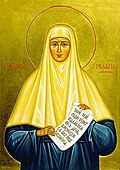 Pelagia TestovaNew MartyrOct 21
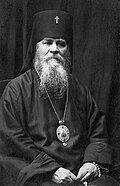 Damian VoskresenskyHieromartyr · Archbishop of Kursk and OboyanOct 21
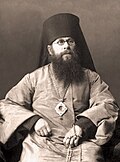 Arkady YershovHieromartyr · Archbishop of SverdlovskOct 21