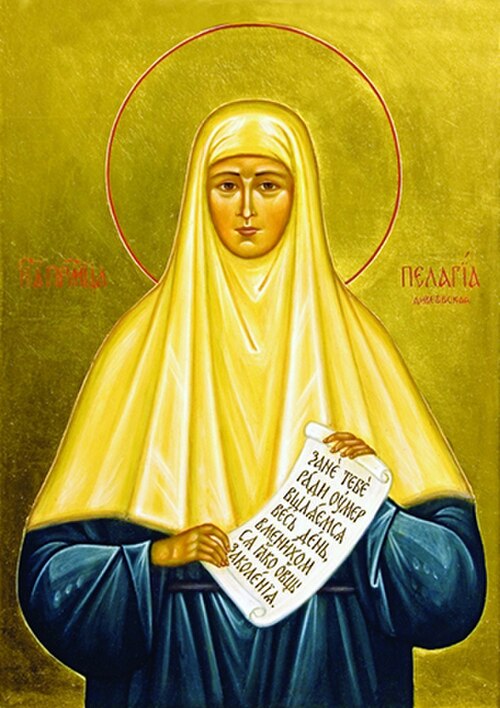
New Martyr
Pelagia Testova
Russian woman martyr born in 1887 in the Tambov region, who died on 3 November 1944 in the Karlag camp.
- Feast
- October 21old style November 3
- Reposed
- 194420th century
- Order
- Martyrs
Life
Venerable Martyr Pelagia Testova (Pelagia Timofeevna Testova) was born in 1887 in the village of Arga, in the Temnikov district, Tambov province (now in Mordovia), into a peasant family, was a nun at the Diveevo monastery from 1901 to 1927 and died on 3 November 1944 in the Karlag camp in Kazakhstan. She was the younger sister of the Venerable Martyr Martha Testova. She was numbered among the new martyrs and confessors of Russia on 6 October 2001. She is remembered on 21 October (3 November on the new calendar).
In the convent
From 1901 she had the obedience of seamstress and mower at the Seraphim-Diveevo monastery and was tonsured a rassophore. From 1918 the monastery lived under the guise of a labour artel, made up of the nuns of Diveevo. Pelagia was a member of the council of the artel and "responsible for the work force of the monastery". In the summer of 1919 the authorities ordered the artel to send some of the nuns to harvest the fields of the families of Red Army soldiers. The council answered that the sisters were weakened by hunger, could not go to work, and their own harvest was not yet in. In the same year Pelagia was arrested, with her sister Martha, on the charge of counter-revolutionary activity. They were held in the prison at Nizhny Novgorod. A special commission was set up to examine this case, and it established the innocence of the sisters. The sisters were released, and the council of the artel was restored in its rights.
After the closing of the convent
In 1927 the Arzamas district land commission cancelled the lease of "state property", that is, of the monastery buildings, on the pretext that the repairs were carried out without the authorities' consent. A campaign to abolish the monastery began. The sisters were asked to vacate all the premises, searches and arrests began on OGPU lists. In the same year the abolition of the monastery was completed and its property seized. Many sisters of the ruined convent found shelter with believers in Diveevo or the surrounding villages. All were deprived of civil rights, as "former nuns", which brought oppression.
In 1932 Pelagia moved to the village of Vorobyovo, worked at the church there and lived in the church watchman's lodge. On 20 November 1937 she was arrested, with the priests of the Vorobyovo church, on the charge of counter-revolutionary activity. She was questioned only once. She gave direct and clear answers and did not admit guilt. By decision of the troika of the UNKVD for the Gorky region of 14 December 1937 the priests were sentenced to be shot, and the nun Pelagia Testova to eight years in the Karlag camp.
In the camp
On 3 May 1938 she arrived at the camp, with a transport formed in the Gorky prison, in which were other sisters of Diveevo, among them her elder sister, Martha Timofeevna Testova. From the papers of her file it is known that, though she was an invalid, with her capacity to work lost, exhausted and with many illnesses (brucellosis, myocarditis, chronic malaria, rheumatism, chronic catarrh of the respiratory tract, cancer of the pancreas), she was used for ordinary labour: weeding, as cook, tending young sheep, weaving mats and knitting socks. Despite this exhausting work, the reports on her called her a good worker, who fulfils her norms, without penalties, of good and disciplined conduct.
In 1941 she asked the Presidium of the Supreme Soviet to review her case and release her. After the file was examined, a negative answer was given. On 3 November 1944, on the eve of the feast of the Kazan icon of the Mother of God, the nun Pelagia died in the camp hospital "of cancer of the pancreas and cachexia" and was buried in the camp cemetery near the settlement of Zhartas. On 6 October 2001 the Holy Synod of the Russian Orthodox Church, under the presidency of Patriarch Alexy II, decided to enter her in the synaxis of the new martyrs and confessors of Russia.
Commemorated the same day October 21
 Hilarion the GreatVenerable · Hermit of GazaOct 21
 Viator of LyonSaintOct 21
 Hilarion of MeglenSaint · Bishop of MeglenOct 21
 Dasius, Gaius and ZoticusHoly Martyrs · Martyrs of NicomediaOct 21
 Paulin KroshechkinHieromartyr · Archbishop of MogilevOct 21
 Visarion SaraiVenerable MartyrOct 21
- Sophronius of CioaraVenerable · Defender of Orthodoxy in TransylvaniaOct 21
 Jacob of OmuchVenerableOct 21
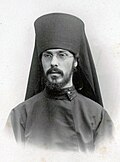 Neophytus OsipovVenerable Martyr · ArchimandriteOct 21
- Theophilus of LugaVenerable · Founder of Omuch HermitageOct 21
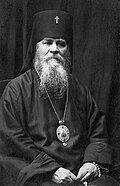 Damian VoskresenskyHieromartyr · Archbishop of Kursk and OboyanOct 21
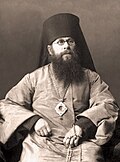 Arkady YershovHieromartyr · Archbishop of SverdlovskOct 21