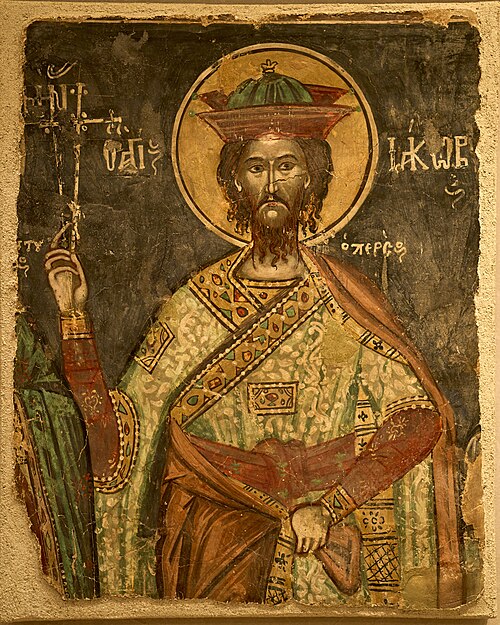
Great Martyr
James the Persian
Martyr of Persia
Christian of Persia, put to death in 420 by dismemberment because he would not renounce Christ.
- Feast
- November 27old style December 10
- Reposed
- 4215th century
- Place
- Ctesiphon
- Order
- Great Martyrs
Life
Saint James the Persian, the Great Martyr, also called Intercisus, "the cut to pieces", was a Christian of Persia who received a martyr's death in 420 or 421 because he would not renounce Christ. The Church remembers him on 27 November. His death, with the persecution of other Christians in the Persian Empire, led to the Roman-Persian war of 421 to 422.
He was born at Beth Huzaye in Persia into a Christian family and, according to tradition, was an officer and courtier of King Yazdegerd I. Once, because of the king's favours, he offered sacrifice to idols with him, and so became an apostate. His wife, mother and children wrote him a letter of reproach: if he did not turn from the devil's deceit they would no longer wish to see him. Reading it, James repented bitterly and prayed to Jesus Christ. The Zoroastrians told the king, and James openly confessed his faith before King Bahram V, the successor of Yazdegerd. He was cruelly tortured: according to his Life his fingers and toes were cut off one by one, then his limbs, and at each cut he gave thanks to God, until he was beheaded. According to tradition his body was cut into twenty-eight pieces. He was killed at Beth Lapat (Gundeshapur), whose ruins lie near Dezful in Iran. Scholars say the story may be a composite of the lives of several Persian martyrs.
After his death Bahram saw the growth of the Christians and ordered his relics burned and scattered. Some of the faithful carried part of them to a monastery of the Iberians near the Tower of David, whence Peter the Iberian took them to Egypt. His head came to Nicomedia, then to Cormery in France, and in 1440, according to one source, to the Vatican. A portion of his relics is at the Dragomirna Monastery in Suceava County, in a shrine under a canopy in the narthex of the church of the Descent of the Holy Spirit. Monasteries bear his name at Sireți in the Republic of Moldova, in Jerusalem in the Armenian Quarter, in Lebanon, Syria, Cyprus and in India at Pengamuck, where a bone from his finger is kept.
Commemorated the same day November 27
 Barlaam and JoasaphHoly VenerablesNov 27
 Virgil of SalzburgSaint · Bishop of SalzburgNov 27
 Palladius of HelenopolisSaint · Bishop of HelenopolisNov 27
 Theodosius of TarnovoVenerable · Bulgarian hermit and clericNov 27
 Damaskinos the StuditeSaint · Patriarchal exarch of AitoliaNov 27
 Bilihildis of AltmünsterVenerable · Abbess of AltmünsterNov 27
 Roman Olgovich of RyazanRight-Believing · Grand Prince of RyazanNov 27
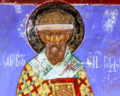 James of RostovSaint · Bishop of RostovNov 27
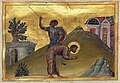 Acacius of SebasteHieromartyr · Priest of SebasteNov 27
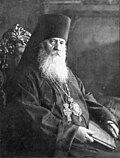 Kronid LyubimovHieromartyr · Superior of the Trinity LavraNov 27
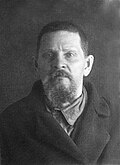 Alexis GavrinVenerable Martyr · MonkNov 27
 Joasaph BoevVenerable Martyr · ArchimandriteNov 27