
Right-Believing
Roman Olgovich of Ryazan
Grand Prince of Ryazan
Grand Prince of Ryazan from 1258 to 1270, only son of Oleg Ingvarevich, who died a martyr in 1270.
- Feast
- November 27old style December 10
- Reposed
- 127013th century
Life
Saint Roman Olgovich of Ryazan, the Right-Believing Prince, was grand prince of Ryazan from 1258 to 1270, only son of Oleg Ingvarevich Krasny, and received the crown of martyrdom in the Golden Horde, in 1270, for confessing the faith in Christ. Born in 1237, shortly before the Tatar invasion, he was venerated as a saint from his death. He is commemorated on 19 July (1 August New Style), the day of his martyrdom.
Childhood and reign
By princely custom his parents gave him the Slavic name Yaroslav, and at baptism Roman. His childhood and youth fell in the first period of the Mongol yoke. His father, Prince Oleg Ingvarevich, was taken prisoner by Batu and returned to his homeland only in 1252, after fourteen years; it is not known how the young Roman escaped the Tatars, but it is supposed that Bishop Euphrosynus Svyatogorets of Ryazan and Murom took him to Murom. In 1258 Oleg, feeling his end near, received the great schema with the name Cosmas and left the throne to his son, then fell asleep in peace. At his father's death, on 20 March 1258, Roman ascended the throne of the vast principality of Ryazan, which was slowly recovering from the Tatar devastation. For twelve hard years of his reign he knew how to keep the lands of Ryazan from new ravages. In the Horde Khan Berke died then and Mengu-Timur came to power; Roman obeyed him without resistance and fulfilled his demands for four years. At the collecting of tribute by the Horde's baskaks he did not give them due help, having pity on the people.
Martyrdom
One day one of the baskaks reported to Mengu-Timur that the right-believing Prince Roman reviled the khan and his faith. There were people who confirmed the slander. Believing it, Timur grew angry and ordered the prince to come at once to the Horde. Leaving for the khan, Roman divided among his sons the lands of the principality and received the Holy Mysteries. In the Horde, in the chronicler's words, the holy prince "cleared himself of the slander, but the baskak incited many of the Tatar princes and they began to force him to their faith". In 1270 the khan commanded him to choose one of two: the death of a martyr or the Tatar faith. The prince answered that, submitting to God's will, he obeyed the khan's power, but no one would force him to change his faith. The Tatars began to beat him, then threw him in chains into prison. On the next day, 19 July, he was led out to execution. Roman Olgovich began to speak to the gathered crowd, among whom were many Russians, of the holiness of the faith of Christ; they cut out his tongue. Then they put out his eyes, cut off the fingers of hands and feet, the ears, lips, nose, hands and feet. "And when only the body remained, they flayed the skin from his head and planted a spear in it."
Veneration
Tradition says that the relics of the martyr Roman were secretly brought to Ryazan and buried with reverence; the place of burial is not known. His veneration as a saint began immediately after his death: contemporaries called him a new martyr and compared him with the Great Martyr James the Persian (died 421); the chronicle says of him: "He bought for himself the Kingdom of Heaven by his passion and received the crown from the hand of the Lord, with his kinsman, Grand Prince Michael Vsevolodovich of Chernigov, suffering for Christ and for the Orthodox faith." In 1812, on the day of his commemoration, the Russian troops won their first victory at Klyastitsy; in memory of it, on the wall of the cathedral of Christ the Saviour in Moscow the image of Saint Roman was painted. On icons, by tradition, the prince is shown as a man not old, with fair, curly hair falling on his shoulders in thin waves, with a sable fur on his shoulders, in a velvet undercoat, his right hand stretched out in prayer and his left holding a city with a church.
Since 1854 a procession and moleben have been held at Ryazan on the day of commemoration. In 1861 a church in honour of the right-believing Prince Roman was consecrated at Ryazan. In the sanctuary of the Boris and Gleb cathedral at Ryazan there is today a portable altar consecrated in his name, and at the Divine Liturgy in the cathedral, beside the ordinary troparia, a troparion is sung to the martyr Roman, wise ruler of the land of Ryazan, intercessor, confessor, defender of the Orthodox faith. After death he showed signs of intercession: in 1812, in the time of the French invasion, Archbishop Gabriel of Ryazan consecrated and gave the Ryazan militia fourteen banners with the cross; the sign of the saint's protection appeared a year later, for the defenders of the fatherland returned unharmed on the very day of his commemoration. Archbishop Gabriel ordered that a moleben be made to Saint Roman as defender of the land of Ryazan, together with Saint Basil, first bishop of Ryazan. The first icon with him full-length was painted for the chapel of the Three Hierarchs in the seminary church at Vladimir; the second, by the painter Nikolai Shumov, was given to the cathedral by the merchant Mokiy Panov, to be carried in processions and a moleben be made before it each year on 19 July. The painter's family felt the saint's prayers: in April 1864 a daughter was born to him, sick from birth, whom the doctors thought incurable, and the painter asked the prince: "I built and adorned your church; heal my daughter.", precisely on 19 July, and on the same day the doctor found a new remedy and the girl recovered. The first church dedicated to him was built by Archbishop Smaragd at the summer residence in Novopavlovka, in memory of his arrival at the see of Ryazan, and at thirty years of episcopal service he consecrated it himself and prayed to the prince to protect the builder and all the inhabitants of Ryazan. In the land of Ryazan are also venerated as local saints his father, the right-believing Prince Oleg of Pronsk (in the schema Cosmas), and his wife, the right-believing Princess Anastasia. Among his children are Constantine, killed in 1308 in Moscow captivity, Feodor (died 1294) and Yaroslav (died 1299).
Commemorated the same day November 27
 Barlaam and JoasaphHoly VenerablesNov 27
 Virgil of SalzburgSaint · Bishop of SalzburgNov 27
 Palladius of HelenopolisSaint · Bishop of HelenopolisNov 27
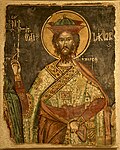 James the PersianGreat Martyr · Martyr of PersiaNov 27
 Theodosius of TarnovoVenerable · Bulgarian hermit and clericNov 27
 Damaskinos the StuditeSaint · Patriarchal exarch of AitoliaNov 27
 Bilihildis of AltmünsterVenerable · Abbess of AltmünsterNov 27
 James of RostovSaint · Bishop of RostovNov 27
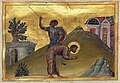 Acacius of SebasteHieromartyr · Priest of SebasteNov 27
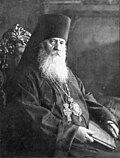 Kronid LyubimovHieromartyr · Superior of the Trinity LavraNov 27
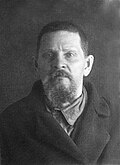 Alexis GavrinVenerable Martyr · MonkNov 27
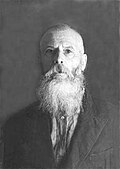 Joasaph BoevVenerable Martyr · ArchimandriteNov 27