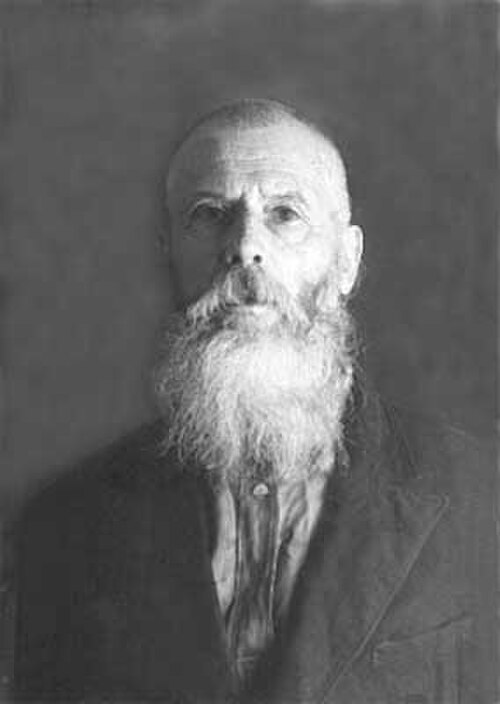
Venerable Martyr
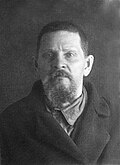
Joasaph Boev
Archimandrite
Archimandrite born at Moscow in 1879, a figure of the Edinoverie, shot at Butovo in 1937; canonized in 2000.
- Feast
- November 27old style December 10
- Reposed
- 193720th century
- Place
- Butovo firing range
- Order
- Martyrs
Life
Venerable martyr Joasaph (born Ivan Vasilievich Boev, 20 April 1879 to 10 December 1937) was an archimandrite of the Russian Orthodox Church and a man of the Edinoverie movement (keeping the old rite within the official Church), a shoemaker by trade and a beekeeper, shot at the Butovo firing range near Moscow. He was numbered among the new martyrs and confessors of Russia in 2000. He is commemorated (Old Style) on 27 November and in the Synaxis of the New Martyrs of Butovo.
Childhood and monasticism
He was born in Moscow, in the Red Barracks, the son of a peasant from the village of Krasnoye, Oryol province. His father, after the army, became an unskilled attendant at the Golitsyn hospital, on a salary of seven roubles a month, with lodging, heating and light free. Father Joasaph related that out of poverty his father could not give him schooling; he barely finished two classes of the town school, and at eleven he was apprenticed to the shoemaker's trade. Twice he ran away from his master because of the harshness and beatings. His father punished him and sent him back to shoemaking, to another master. After four years he came out a master and worked until twenty-one for various masters.
As an apprentice and shoemaker he saw the drunkenness around him and the indifference to the faith (the workshops worked even on feast days, so as not to lose income). He said he had no calling to marriage and entered as a novice the Nikolo-Berlyukovo hermitage, forty versts from Moscow. In 1912 he was tonsured a monk with the name Joasaph. In May 1914 he was sent to the examination for deacon before Bishop Demetrius (Dobroserdov) of Mozhaisk, vicar of Moscow, who proposed that he serve at the Savino metochion; he was ordained hierodeacon by Archbishop Vladimir and served there until 1918. He was then moved to the Edinoverie monastery of Saint Nicholas in Moscow. In 1921 he was ordained priest by Bishop Nicanor (Kudryavtsev), in the monastery church, and was mobilized into the rear militia, but, as a master beekeeper, was released and worked at the land department of Moscow, then as head of an apiary. In 1923 the apiary was closed and he returned to the monastery, where he worked as a watchman, in the building made meanwhile a commune. Living there in 1923 to 1924, he was able to serve in the monastery church without being on the staff.
Parish priest, arrests and martyrdom
In July 1924, on the recommendation of Archimandrite Anthony (Milovidov), he was invited to serve by the community of the village of Aratskoye, Chelyabinsk region. On 13 April 1932 a board of the political police sentenced him to three years of imprisonment, served in the Krasnovishersk camps. After his return he served at the church of the Dormition in Goncharakh on the Taganka in Moscow, and in April 1937 he moved to the village of Nikolskoye, in the Zvenigorod district, where he served at the church of Saint Nicholas. On 27 November 1937 he was arrested on the charge of counter-revolutionary activity and imprisoned at Taganka. At the interrogations he categorically refused to admit guilt. On 5 December 1937 the NKVD troika sentenced him to death, and on 10 December he was shot and buried in an unknown common grave at Butovo. In 2000 his name was entered in the Synaxis of the New Martyrs and Confessors of Russia of the twentieth century.
Commemorated the same day November 27
 Barlaam and JoasaphHoly VenerablesNov 27
 Virgil of SalzburgSaint · Bishop of SalzburgNov 27
 Palladius of HelenopolisSaint · Bishop of HelenopolisNov 27
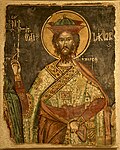 James the PersianGreat Martyr · Martyr of PersiaNov 27
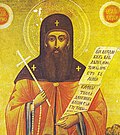 Theodosius of TarnovoVenerable · Bulgarian hermit and clericNov 27
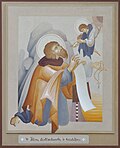 Damaskinos the StuditeSaint · Patriarchal exarch of AitoliaNov 27
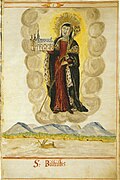 Bilihildis of AltmünsterVenerable · Abbess of AltmünsterNov 27
 Roman Olgovich of RyazanRight-Believing · Grand Prince of RyazanNov 27
 James of RostovSaint · Bishop of RostovNov 27
 Acacius of SebasteHieromartyr · Priest of SebasteNov 27
 Kronid LyubimovHieromartyr · Superior of the Trinity LavraNov 27
 Alexis GavrinVenerable Martyr · MonkNov 27