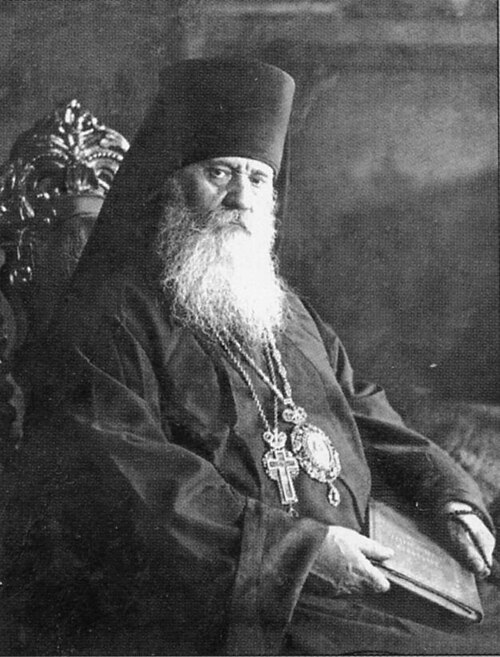
Hieromartyr
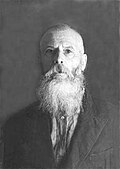
Kronid Lyubimov
Superior of the Trinity Lavra
Archimandrite, superior of the Trinity Lavra, shot at the Butovo firing range in 1937; glorified in 2000.
- Feast
- November 27old style December 10
- Reposed
- 193720th century
- Place
- Moscow
- Order
- Martyrs
Life
Holy Hieromartyr Kronid Lyubimov (in the world Konstantin Petrovich Lyubimov) was born on 13 May 1859 in the village of Levkievo, in the Volokolamsk district, and was shot at the Butovo firing range, near Moscow, on 10 December 1937. He was archimandrite and vicar of the Lavra of the Holy Trinity of Saint Sergius. He was glorified among the saints in August 2000, at the Jubilee Council of Bishops of the Russian Orthodox Church. He is remembered on 27 November.
Youth and monastic life
He was born in the family of a psalm-reader. His brother, Luke, later became a priest. At seven he was put in the theological school at Volokolamsk, which he did not finish. In 1878 he entered on trial the Lavra of the Holy Trinity of Saint Sergius, and in 1880 he was taken into the army. On 2 February 1883 he was received among the novices of the Lavra and named cell attendant to the vicar of the Lavra, Archimandrite Leonid (Kavelin). On 28 March 1888, in the Gethsemane skete, the hieromonk Abraham tonsured him a monk with the name Kronid. He was ordained hierodeacon on 25 September 1889 by Bishop Christopher (Smirnov) of Volokolamsk and hieromonk on 23 May 1892 by Metropolitan Leontius of Moscow, in the Cross Kazan house church.
In the service of the Lavra
He was supervisor of the workshop of lithographs and photographs (1892), a member of the commission that tested the brethren before ordination and, from 1896, supervisor, then, from 1904, inspector and member of the council of the diocesan school of icon painting. From January 1902 he was assistant to the sacristan of the Lavra, and in November 1903 he was confirmed in the post of assistant treasurer and member of the Spiritual Council of the Lavra. On 17 January 1905 he was appointed steward of the Trinity metochion in Saint Petersburg, on 11 May 1906 raised to hegumen and on 9 May 1908 to archimandrite. On 9 January 1915 he was appointed vicar of the Lavra of the Holy Trinity of Saint Sergius. He was not only a skilled administrator but also an experienced spiritual guide for his flock and above all for the brethren of the Lavra. His care for those near him showed itself in guiding them to a pious life, in healing the sicknesses of sin and in strengthening courage in temptations. Many eminent people of his day came to him for help and counsel. He received several distinctions, among them the orders of Saint Anna (1911 and 1914) and Saint Vladimir (1916). In 1917 and 1918 he was a member, by office, of the Local Council of the Russian Orthodox Church, in the third, eleventh and sixteenth sections.
Persecution
In the autumn of 1918 the confiscation of the Lavra's property began, and for the authorities Archimandrite Kronid remained only the warden of the Lavra. On 4 March 1919 he asked the chairman of the Council of People's Commissars to forbid the opening of the shrine with the relics of Saint Sergius of Radonezh. From 1920 to 1926 he was warden of the guard of the Lavra after its closing. He lived from 1920 to 1922 in the village of Bratovshchina, with the church warden, from 1922 to 1926 in the Gethsemane skete, from 1926 to 1929 in the Paraclete skete, and from 1929 until his death near the Kukuevo cemetery in Sergiev Posad.
On 11 November 1937 the NKVD opened a case against Archimandrite Kronid. On 21 November he was arrested, accused of counter-revolutionary activity, of founding a monarchist group and of keeping an illegal monastery, and did not admit guilt. On 7 December the NKVD troika for the Moscow region sentenced him to death by shooting. He was shot on 10 December 1937 at the Butovo firing range and buried in an unknown grave. He was rehabilitated on 14 November 1958.
Writings
He wrote, among other things, The Heavenly Abbot (1903), Providence Saved (1909), Good Counsels for Dear Christ-loving Soldiers (1915), How the Lord Calls Sinners to Repentance (1915) and Beware of Slanderers (1916), as well as talks and sermons, published in two volumes in 1998.
Commemorated the same day November 27
 Barlaam and JoasaphHoly VenerablesNov 27
 Virgil of SalzburgSaint · Bishop of SalzburgNov 27
 Palladius of HelenopolisSaint · Bishop of HelenopolisNov 27
 James the PersianGreat Martyr · Martyr of PersiaNov 27
 Theodosius of TarnovoVenerable · Bulgarian hermit and clericNov 27
 Damaskinos the StuditeSaint · Patriarchal exarch of AitoliaNov 27
 Bilihildis of AltmünsterVenerable · Abbess of AltmünsterNov 27
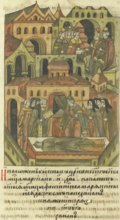 Roman Olgovich of RyazanRight-Believing · Grand Prince of RyazanNov 27
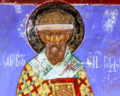 James of RostovSaint · Bishop of RostovNov 27
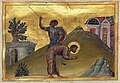 Acacius of SebasteHieromartyr · Priest of SebasteNov 27
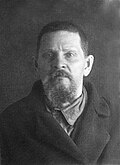 Alexis GavrinVenerable Martyr · MonkNov 27
 Joasaph BoevVenerable Martyr · ArchimandriteNov 27