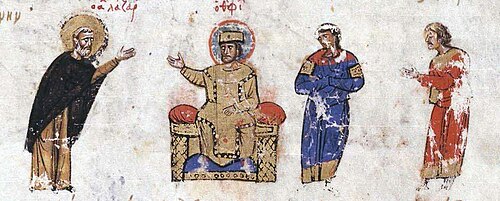
Confessor
Lazarus the Iconographer
Iconographer of Constantinople
Icon painter born in Armenia, confessor of the veneration of icons in the age of iconoclasm; died in 867.
- Feast
- November 17old style November 30
- Reposed
- 8679th century
- Place
- Galata
- Order
- Confessors
Life
Saint Lazarus the Iconographer was a monk and icon painter in Constantinople in the ninth century, a confessor of the veneration of holy icons in the time of iconoclasm. He is said to have been born in Armenia on 17 November 810, though other sources say he was of Khazar origin. He is counted as the first saint canonized specifically as an iconographer. He fell asleep in 867 and is commemorated on 17 November, and in the Roman Catholic Church on 23 February.
He was tonsured a monk young and is thought to have learned the art of painting at the Stoudios monastery. He was known for love of Christ, asceticism, prayer and rejection of the vanities of the world, for self-control and almsgiving. He was ordained a priest, and his gift for painting icons was seen as a gift from God. In the time of the iconoclast emperor Theophilos he continued to paint icons and began to restore those defaced by heretics. Theophilos, wishing to make an example of him, ordered him brought to trial. Lazarus refused to destroy the icons and was not swayed by flattery or bribes. He was threatened with death, but being a monk he was thrown into prison instead. There he was put to such torture that his flesh melted away with his blood, and he was left to die, but recovered. From his prison cell he began again to paint holy faces on panels. Hearing of this, Theophilos ordered red-hot plates of iron applied to his palms, until he collapsed, more dead than alive.
As he lay on his deathbed, Empress Theodora, who honoured the icons, urged Theophilos to release him from prison. Lazarus took refuge in the church of Saint John the Forerunner at Phoberos on the Asiatic shore of the Bosporus, where, despite his wounds, he painted an icon of Saint John, held to work miracles. When Theodora asked him, after the death of Theophilos in 842, to pray that God forgive her husband, Lazarus replied, according to tradition, that God is just and will not forget his love and labour for the emperor, nor value the emperor's hatred and madness above them. After the restoration of the icons in 843 he restored the icon of Christ above the Chalke Gate of the Great Palace, called Christ Chalkites. Neither work survives. Pilgrims tell that he also made the mosaic in the apse of Hagia Sophia, showing the Mother of God holding the Christ Child between two angels, but those accounts are several centuries later.
Lazarus also served as envoy of Emperor Michael III, son of Theophilos and Theodora, to Pope Benedict III, around 856, to discuss reconciliation between Rome and Constantinople. He died in 867 on return from his second mission to Rome, or according to other sources on 28 September 865. His relics were brought to Constantinople and placed in the church of Saint Evander, near the city.
Commemorated the same day November 17
 Hilarius of RomeSaint · Bishop of RomeNov 17
 Gregory of ToursSaint · Bishop of ToursNov 17
 Gregory the WonderworkerSaint · Bishop of NeocaesareaNov 17
 Hilda of WhitbyVenerable · Abbess of WhitbyNov 17
- Maximus III of ConstantinopleSaint · Patriarch of ConstantinopleNov 17
 GobronMartyr · Georgian military commanderNov 17
 Nikon of RadonezhVenerable · Abbot of the Trinity MonasteryNov 17
 Eugenius of FlorenceSaint · Deacon at FlorenceNov 17
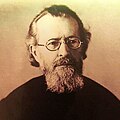 Sebastian DabovichVenerable · Archimandrite and missionary in AmericaNov 17
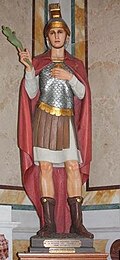 Laverius of GrumentumMartyrNov 17
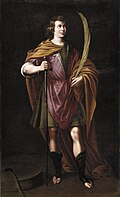 Acisclus of CordobaMartyr · Martyr of CordobaNov 17
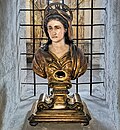 Victoria of CordobaMartyrNov 17