Saint
Maximus III of Constantinople
Patriarch of Constantinople
Ecumenical Patriarch from 1476 to 1482, born Manuel Christonymos, a scholar; remembered on 17 November.
- Feast
- November 17old style November 30
- Reposed
- 148215th century
- Place
- Constantinople
- Order
- Hierarchs
Life
Saint Maximus III (in the world Manuel Christonymos) was Ecumenical Patriarch of Constantinople from 1476 until his death on 3 April 1482, and a scholar, also called the Philosopher. He is honoured as a saint in the Orthodox Church and commemorated on 17 November; other sources give 20 November, 17 or 19 April.
Before the patriarchate
Manuel was probably a native of the Peloponnese. His family name Gounaris was changed, in Greek, to Christonymos, more learned and more orthodox, after the custom of his time. He was learned, a linguist and austere in asceticism. He became Grand Ecclesiarch of the patriarchate, a ministry that soon after the Fall of Constantinople to the Ottomans (1453) also took the functions of skeuophylax, guardian of the holy vessels, treasures and relics of the patriarchate. In this post he clashed over money matters with Patriarch Gennadius Scholarius. Under the patronage of Demetrios Kyritzes, secretary of the sultan, Manuel, together with the Great Chartophylax George Galesiotes, influenced the life of the Church of Constantinople for more than twenty years. In 1463 (or 1462) he supported Patriarch Joasaph I against the request of the politician George Amiroutzes, a Greek nobleman of the former Empire of Trebizond, to marry a second time, since it was a case of bigamy under canon law. As punishment Sultan Mehmed II ordered Manuel's nose cut off (according to the Greek source, because he refused to be bribed and pressed the patriarch not to bless Amiroutzes's unlawful second marriage). In autumn 1465 (or early 1466) he sponsored the election as patriarch of Mark II, and later opposed patriarchs backed by other factions, such as Symeon of Trebizond and Dionysius I, who on 15 January 1467 removed him and Galesiotes from their posts in church administration. Soon, however, they regained their influence. Manuel succeeded in recovering the sultan's trust and in spring 1476 was himself elected patriarch.
The patriarchate
He was still a layman, so he first took monastic tonsure, with the name Maximus, the next day was consecrated bishop (according to some sources on the third day patriarch) and was enthroned by the metropolitan of Heraclea. He also paid the tax of 2,500 florins to the state treasury. His reign ended a period of troubles for the Church in the region and was a time of peace and concord. He was prudent, calmed quarrels among clergy, issued canonical regulations and letters, preached regularly in churches and translated the Creed into Turkish. In January 1480 he wrote to the doge of Venice, Giovanni Mocenigo, asking that the oppression of the Orthodox in the Venetian territories cease, and in the same letter justified the Ottoman tax system, by which Christians paid tax through the Church, writing that at least now Christians give money instead of blood to keep their faith. In 1481 he called a synod for the revocation of the decisions of the Council of Ferrara-Florence, to which the other patriarchates were invited and twenty metropolitans came; toward the end of 1480 (or about 1481) he sent Metropolitan Daniel of Smyrna (later of Ephesus) to the patriarchates of the East, with an invitation to the council of Constantinople (1482 to 1484), also to settle disputes with the Latins, who had made their way into Jerusalem and obtained permission to serve in the southern part of Golgotha, like the Orthodox. One source says that by this Maximus laid the foundations of the later Orthodox church policy in the Near East, of Patriarch Jeremias I. He died in office on 3 April 1482. His main literary work is the "Monody on the Capture of Constantinople".
Commemorated the same day November 17
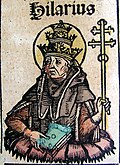 Hilarius of RomeSaint · Bishop of RomeNov 17
 Gregory of ToursSaint · Bishop of ToursNov 17
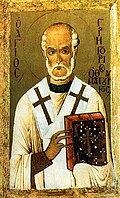 Gregory the WonderworkerSaint · Bishop of NeocaesareaNov 17
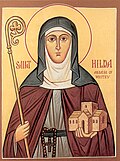 Hilda of WhitbyVenerable · Abbess of WhitbyNov 17
 Lazarus the IconographerConfessor · Iconographer of ConstantinopleNov 17
 GobronMartyr · Georgian military commanderNov 17
 Nikon of RadonezhVenerable · Abbot of the Trinity MonasteryNov 17
 Eugenius of FlorenceSaint · Deacon at FlorenceNov 17
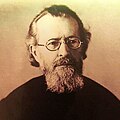 Sebastian DabovichVenerable · Archimandrite and missionary in AmericaNov 17
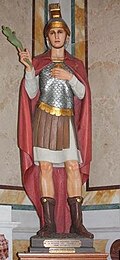 Laverius of GrumentumMartyrNov 17
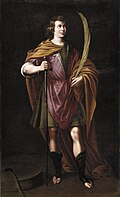 Acisclus of CordobaMartyr · Martyr of CordobaNov 17
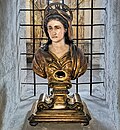 Victoria of CordobaMartyrNov 17