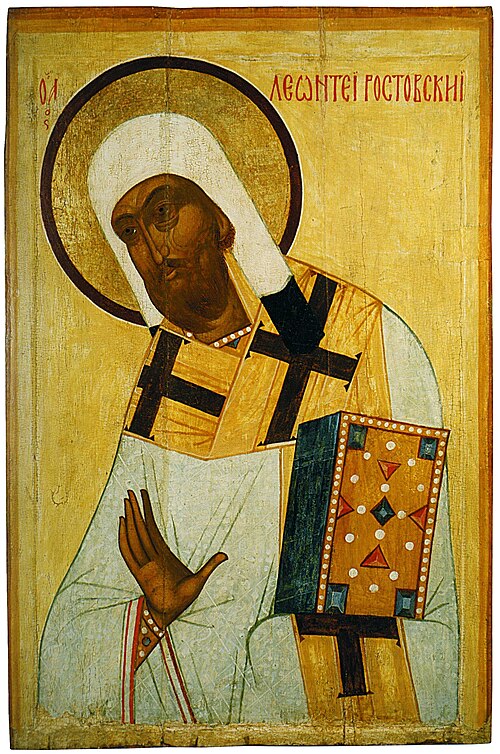
Saint
Leontius of Rostov
Bishop of Rostov
Bishop of Rostov and Suzdal, who died by 1077 at the latest; commemorated on May 23.
Life
Saint Leontius, Bishop of Rostov and Suzdal, was one of the first enlighteners of north-eastern Rus' in the eleventh century. A disciple of the Kiev Caves Lavra, he preached the Gospel in the pagan land of Rostov among the Merya people and has been honoured as equal-to-the-apostles for that region. His relics were found incorrupt in 1162. He should not be confused with another Bishop Leontius of Rostov, of the years 1172-1185.
Origins
His origin is debated. Saint Simon, Bishop of Vladimir and Suzdal, in an epistle included in the Kiev Caves Patericon, counts him among those tonsured in the Caves Lavra and calls him the third “citizen of the Rus' world” crowned by Christ. His life, preserved in many copies, says however that he was a Greek, born in Constantinople. Metropolitan Macarius tried to reconcile the two reports, suggesting that he might have been a Greek who later came to Rus', while the historian Vasily Klyuchevsky held that he was of Rus' origin.
His service, composed by Bishop John of Rostov (1190-1214), a contemporary and acquaintance of Saint Simon, says that he shone like the sun from the imperial city upon Rostov, but also that he loved Christ from his youth, mocking the idols, which suggests a Rus' origin. Some versions of his life say that he knew both the Rus' and Greek languages well and was skilled in Rus' and Greek books from his youth.
Youth and monastic life
He was baptised as an infant and then, by order of Prince Vladimir or Yaroslav, given to book learning to be prepared for church service. From youth he felt drawn to monastic life and went, whether sent or of his own accord, to Constantinople for study, where he may have been tonsured. On his return he came to Saint Anthony in the Kiev Caves Monastery, no earlier than 1032.
From there he was called to the see of Rostov as a learned Rus' monk, the first of the monks of the Caves to become a bishop, before 1051, when the second, Hilarion, became Metropolitan of Kiev.
Bishop in a pagan land
In Rostov Leontius was a lonely champion of the faith. After the death of Saint Boris the city had no prince of its own for a long time. In 1054, on the death of Yaroslav the Wise, Rostov passed to Vsevolod, who however lived in Pereyaslavl and Kiev, while his son Vladimir Monomakh spent his youth at war. The first bishop of Rostov, Theodore, had built in the time of Saint Vladimir, in 991, a great and wonderful oak cathedral of the Dormition, but Christians were few, and Theodore and his successor Hilarion had been driven out of the city in disgrace.
Received with hostility by the city elders, Leontius settled by the cathedral and first devoted himself to enlightening the clergy. Two manuscripts ascribe to him an “Instruction to priests” on how they should guide their spiritual children and give them penances according to the commandments of the holy Fathers, which speaks of the dignity of the priesthood, repentance, penance, baptism, the resurrection of the dead and faith in one God; Professor Nikolai Nikolsky notes, however, that most copies attribute it to Metropolitan Cyril in the thirteenth century. So greatly did he love the clergy he had formed that he took with him to the grave a scroll with the names of the priests and deacons he had ordained, which was found in his hand when the relics were uncovered.
Preacher to the Merya
At the same time he preached the Gospel to the pagan inhabitants of Rostov, of the numerous Finno-Ugric Merya people, whose language, according to his life, he knew. His preaching met first with silent resistance and then with open revolt: several times they drove him away in disgrace, until they expelled him from the city altogether.
He then settled outside the city by the stream of Brutovshchitsa, where he built a small wooden church of the Archangel Michael. Labouring there in fasting and prayer, he sowed the faith in the hearts of the children of Rostov, whom he invited to him and fed with wheat boiled with honey. In time he returned to the city, preaching zealously and baptising many children and adults.
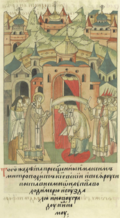
The fruits of his work enraged the pagans, who resolved to kill him. They came armed to the cathedral and demanded that the bishop come out to them. The terrified priests and deacons begged him not to go out but to hide. He, however, put on his episcopal vestments, ordered the priests and deacons to vest as well, and went out with them before the crowd. Struck by his courage and by the heavenly light shining from his face, the pagans fell to the ground, powerless, as if dead at his feet. The bishop prayed, raised them up and healed them, and at his urging they accepted the faith and were baptised. From then on the Church in Rostov began to grow, and an ancient homily in his praise says that the darkness of the idols began to depart and the light of true faith shone forth.
His end
The accounts of his death disagree. According to some he died in peace, according to others he was killed by a pagan mob; some place his death in 1070, others in 1073, while the historian Yevgeny Golubinsky says he died around 1077. All the copies of his life known to Metropolitan Macarius, as well as the first redactions of Saint Simon's epistle, speak of a peaceful death, and Bishop John in his canon praises him as most blessed and venerable, not as a martyr.
In a later redaction of his epistle, however, Saint Simon writes that Leontius, the great hierarch whom God glorified with incorruption, was killed by unbelievers after many torments, the third citizen of the Rus' world crowned by Christ after the two Varangian martyrs. Some historians believe that this change came when Prince Vladimir began to be honoured as the baptiser of all Rus', and Leontius passed from the rank of baptisers of Rostov to that of martyrs.
Relics and veneration
His body was buried in the Dormition Cathedral of Rostov. In 1162, while the foundations were being dug for the new stone cathedral of Grand Prince Andrei Bogolyubsky, in place of the oak one burned in 1160, the body was found incorrupt and was placed in a stone sarcophagus sent by the prince, in a chapel built in his honour to the south of the altar. Bishop John I of Rostov established his feast on the day of the finding of the relics, 23 May, and wrote his canon, found in the Menaion for May.
The vaults of the cathedral, raised by unskilled builders, soon collapsed, and the relics were moved to the church of Saint John the Theologian, where they remained until 1231. On 25 February 1231 they were brought into the new Dormition Cathedral, into a chapel dedicated to the saint. In 1609 the Poles and Lithuanians who ravaged Rostov stole the saint's golden shrine and precious icon; since then the relics have rested hidden beneath the floor, with a shrine bearing his icon above them. In 1800 the people of Rostov made a silver shrine with a gilded bronze canopy.
During the restoration of the cathedral in 1884, beneath the floor of the chapel of Saint Leontius, the old chapel dedicated to him was uncovered, with a niche adorned with frescoes showing the saint, his repose and the finding of his relics, and beneath the silver shrine a walled tomb of white stone in which the relics are believed to rest. On 20 December 2019 a new silver shrine made by craftsmen from Nizhny Novgorod was placed above them.
His memory also entered folklore: in one bylina the father of the hero Alyosha Popovich is called “the Rostov priest Leonty”, and local traditions sometimes identified him with the saint. Saint Leontius is commemorated on 23 May.
Commemorated the same day May 23
 Mary of ClopasSaint · MyrrhbearerMay 23
 Euphrosyne of PolotskVenerable · Abbess of PolotskMay 23
 Demetrius I of GeorgiaRight-Believing · King of GeorgiaMay 23
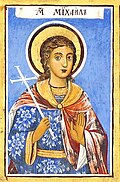 Michael of SynnadaSaint · Metropolitan of SynnadaMay 23
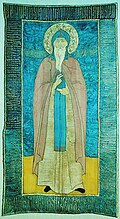 Nicetas the Stylite of PereslavlStylite · Founder of Saint Nicetas MonasteryMay 23
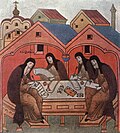 Epiphanius the WiseVenerable · Monk and hagiographerMay 23
 Desiderius of LangresHieromartyr · Bishop of LangresMay 23
 Euphebius of NaplesSaint · Bishop of NaplesMay 23
 Arsenius MatsievichHieromartyr · Metropolitan of RostovMay 23
 Cyril II of RostovSaint · Bishop of RostovMay 23
 Dimitry of UglichRight-Believing · Prince of UglichMay 23
 Simeon of VladimirSaint · Bishop of VladimirMay 23