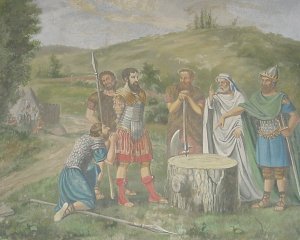
Martyr
Livier of Marsal
Martyr of Metz
Martyr of Metz, venerated in the Western Church.
Uncertain source. We are looking to verify this information as soon as we can.
Life
Livier of Marsal (also called Livarius) was born at Metz at the beginning of the 5th century, of a noble family, the son of Honstrand, lord of the Metz region, and of Guinarde of Gournay. At the age of seventeen he accompanied his father against the barbarians in Lombardy; in a battle he captured two enemy chiefs but released them out of gentleness. He then set out on pilgrimage to Jerusalem. The German source adds that he married a daughter of the king of Armenia, with whom he had two children.
About 450 he returned to Metz and fought against the Huns. In 451 he was taken prisoner in the battle for Metz, on 7 April, and was brought to Marsal, into the enemy camp. He is said to have begged mercy for prisoners and freedom for orphans. One day he threatened a barbarian chief, even to striking him, if he did not return a girl to her weeping mother; the chief ordered his head to be cut off. After several months of torment he was led in chains to the top of Mount Saint-Jean, opposite Marsal, and beheaded with an axe, together with his companions Purgentius and Agentius, because they would not deny Christ.
The legend says that Livier picked up his head and walked a few steps holding it in his hands; the staff planted in the ground is said to have become the oak of Saint Livier, and where he laid his head a spring is said to have gushed up that has never ceased to flow. Impressed, the Huns left their camp. Scholars regard the story as legendary, of the cephalophore type, and a cartulary of the 10th century gives the year 329, which shows that the time is uncertain. He is commemorated on 17 July, in the Western calendar (new style). Venerated locally, as a saint of the undivided Church.
Commemorated the same day July 17
 Leo IV of RomeSaint · Bishop of RomeJul 17
 MarinaGreat Martyr · of Antioch in PisidiaJul 17
- Ennodius of PaviaSaint · Bishop of PaviaJul 17
 Andrew ZorardVenerable · Hermit and Benedictine monkJul 17
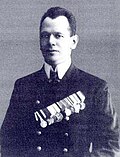 Ivan KharitonovPassion-Bearer · Head cook of the imperial courtJul 17
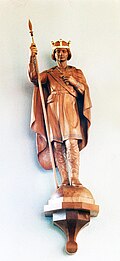 KenelmRight-Believing · Anglo-Saxon king of MerciaJul 17
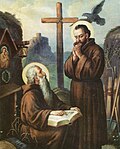 Benedict of SkalkaVenerable · Hermit of SkalkaJul 17
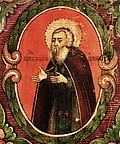 Irinarkh of SolovkiVenerable · Abbot of Solovki MonasteryJul 17
- Lazaros of GalesiosStylite · Stylite of Mount GalesiosJul 17
 Leonid of UstnedumskVenerable · HieromonkJul 17
 Justa of SevilleMartyrJul 17
 Rufina of SevilleMartyrJul 17