Venerable
Macarius of Vysokoozero
A venerable father of the Vysokoozero lake region, commemorated in the Orthodox calendar.
- Feast
- January 19old style February 1
- Reposed
- 168317th century
- Place
- Vysokoozero Hermitage, Karelia
- Order
- Venerables
Life
The Venerable Macarius of Vysokoozero, in the world Mark Sokirin, founded in the north of Russia the hermitage that bears his name. Born in a village on the river Oyat, he was taken at fifteen into the tsar Alexis Mikhailovich's musketeers and served twenty years. Then he left everything, went to the Kirillo-Belozersky monastery and was tonsured a monk with the name Macarius. For a long time he kept secret his wish to found a monastery, not knowing whether it came from God.
The place shown
On 9 June, the day of the Venerable Cyril, returning from the night vigil, he was wrapped in light and heard that his prayer had been heard and that he must go west. He saw a pillar of fire and, with the abbot's blessing, set out into the wilderness. He came to Lake Vysokoe, round, with an island in its middle, where he felt that his hermitage was. He dug a channel toward Lake Varyozero so that he could reach the villages by water; the lake's water dropped, the island became a peninsula, and the lake "crooked". He built there a church of the Renewal of the church of the Resurrection and lived some seven years alone. In 1670 other monks joined him, and in time a monastery formed.
His end and what followed
In 1673 robbers attacked the monastery, beat and robbed the brethren, and Macarius, wounded, was left almost dead. The priest Joseph Titov found him, gave him Communion and buried his body when he died, on 19 September 1683. The same priest wrote his life in the hermitage's chronicle. In the eighteenth century the monastery was attached to the Alexander-Svirsky monastery and in 1764 abolished. In Soviet times the churches were closed and have not survived; a worship cross stands at the site of the church of the Renewal, and of the monastery only the remains of a wall stand.
He is commemorated on the movable day around 11 July, in the new style, in the Synaxis of the Saints of Vologda.
Commemorated the same day January 19
 JosephRighteous · Betrothed of the Virgin MaryJan 19
 AaronProphet · The High PriestJan 19
 Macarius of EgyptVenerable · Father of the Scetis DesertJan 19
 Mark of EphesusSaint · Metropolitan of EphesusJan 19
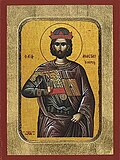 Anastasius of SinaiVenerable · Abbot on Mount SinaiJan 19
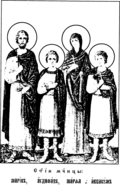 Marius, Martha, Audifax and AbachumHoly MartyrsJan 19
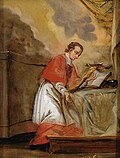 Agricius of TrierSaint · Bishop of TrierJan 19
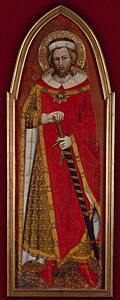 Pontianus of SpoletoMartyr · Martyr of SpoletoJan 19
 Contentius of BayeuxSaint · Bishop of BayeuxJan 19
 Euthymius the Confessor of GeorgiaConfessor · Georgian ascetic monk and scholarJan 19
 Anton of MartqopiStylite · One of the Syrian FathersJan 19
- Arsenius of CorfuSaint · Archbishop of CorfuJan 19