Martyr
Macrobius of Scythopolis
Martyr of Scythopolis, who suffered for Christ.
Life
Holy Martyr Macrobius of Scythopolis suffered at the beginning of the fourth century, at Scythopolis in Palestine, among sixty other martyrs mentioned in various calendars. Of their own will they appeared before the governor of the region, exposed his merciless character and then overturned and smashed the altars of the gods. The angry pagans beat them to death. Christians buried their bodies, and later a church was raised at the place of the killing.
A short life of the martyrs of Scythopolis is found in a manuscript from Athos (Ath. Laur. I 70, fol. 208). It is possible that they are the same as the six youths mentioned by Eusebius of Caesarea, who came before the proconsul Urban, confessed themselves Christians and were beheaded. In the Synaxarion of the Church of Constantinople and in the Typikon of the Great Church (tenth century), under 4 May, is found the commemoration of the martyrs of Scythopolis and the note that the synaxis in their honour is held in the church of the Mother of God at Chalkoprateia, in the side chapel of the holy Apostle James, the brother of the Lord. Under 5 May the commemoration is recorded in the Synaxarion of Peter (eleventh century) and in other synaxaria.
The earliest evidence of their veneration in Russia is their mention in the calendars of the Ostromir Gospel of 1056-1057 and in a Gospel of the twelfth century. In the first half of the twelfth century the prose Prologue was translated in Russia, and in it their commemoration was included under 4 May. In the Great Menaion Reader are found the commemoration and a verse for the martyrs.
The memory of Macrobius is kept on 17 May, in the new style, which is 4 May in the old style. His name is not in today's Menologion of the Russian Church.
Commemorated the same day May 4
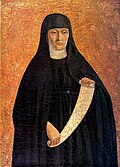 MonicaFool-for-Christ · Mother of Augustine of HippoMay 4
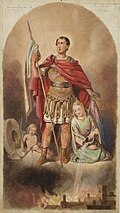 FlorianMartyr · of LauriacumMay 4
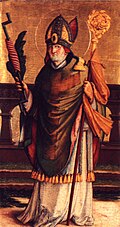 Erasmus of FormiaHieromartyr · Bishop of FormiaMay 4
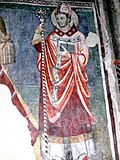 Godehard of HildesheimSaint · Bishop of HildesheimMay 4
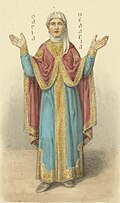 Pelagia of TarsusMartyrMay 4
 Sylvanus of GazaHieromartyr · Bishop of GazaMay 4
 Alvian of AneaHieromartyr · Bishop of AneaMay 4
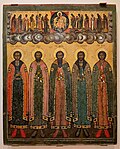 Alfanov Brothers of NovgorodHoly Venerables · Five monk brothers of NovgorodMay 4
 Trendafil KerelovNew Martyr · Priest of BatakMay 4
 Mavra of Mount CeahlăuVenerable · Schemanun of Mount CeahlăuMay 4
- New Martyrs of BatakHoly New MartyrsMay 4
- Nikephoros the SolitaryVenerable · Athonite monkMay 4