Holy Martyrs
Martyrs of Scilli
Twelve Christians of Scilli in Africa, sentenced to death at Carthage in the year 180.
Life
The Martyrs of Scilli were a group of Christians of North Africa, put to death by beheading at Carthage, on 17 July 180, in the time of Marcus Aurelius. The group takes its name from the nearby town of Scillium (today in the governorate of Kasserine, Tunisia). They are venerated as martyrs by the Catholic and the Orthodox Church.
They were twelve persons, seven men and five women: Speratus, Nartzalus, Cintinus (Cittinus), Veturius, Felix, Aquilinus, Laetantius, Januaria, Generosa, Vestia, Donata and Secunda. They were brought before the proconsul of Africa, Publius Vigellius Saturninus, a short time after their arrest. The trial is notable in that the accused were not tortured. Speratus spoke for the group: they had lived quietly and honestly, paid their taxes and done no wrong to anyone. Called to swear by the name of the emperor, he answered: "I recognize not the empire of this world; but rather do I serve that God whom no man hath seen, nor with these eyes can see" (alluding to 1 Timothy). Cittinus said that they feared no one but the Lord their God in heaven, and Donata: "We honor Caesar as Caesar, but we fear only God". The proconsul condemned them to death and had them beheaded at once.
The Acts of the Scillitan Martyrs are, according to the scholar Herbert Musurillo, the earliest dated document of the Latin Church and the first to mention a Latin Bible, and one of the earliest documents of Christianity in Africa. The oldest text is regarded as a nearly faithful reproduction of the official record of the interrogation; it was later rewritten several times, with marvelous additions. A basilica dedicated to them was built at Carthage. According to Agobard, archbishop of Lyon (about 779-840), the relics of Speratus and of Saint Cyprian were brought from Africa to Lyon by order of Charlemagne; by another source, the relics were taken to Arles at the beginning of the ninth century, then the body of Speratus to Lyon, and from there, at an uncertain time, to Rome, to the church of Saints John and Paul on the Caelian hill, where they are kept in a marble sarcophagus.
Commemorated the same day July 17
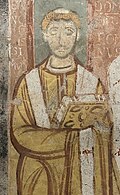 Leo IV of RomeSaint · Bishop of RomeJul 17
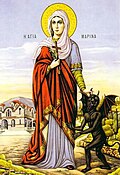 MarinaGreat Martyr · of Antioch in PisidiaJul 17
- Ennodius of PaviaSaint · Bishop of PaviaJul 17
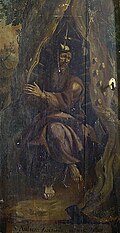 Andrew ZorardVenerable · Hermit and Benedictine monkJul 17
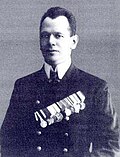 Ivan KharitonovPassion-Bearer · Head cook of the imperial courtJul 17
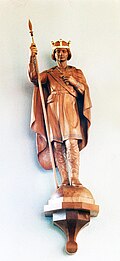 KenelmRight-Believing · Anglo-Saxon king of MerciaJul 17
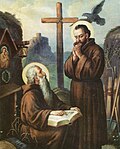 Benedict of SkalkaVenerable · Hermit of SkalkaJul 17
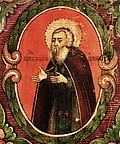 Irinarkh of SolovkiVenerable · Abbot of Solovki MonasteryJul 17
- Lazaros of GalesiosStylite · Stylite of Mount GalesiosJul 17
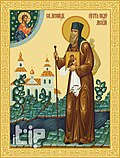 Leonid of UstnedumskVenerable · HieromonkJul 17
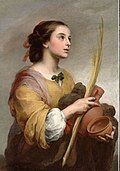 Justa of SevilleMartyrJul 17
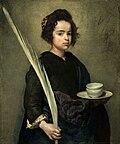 Rufina of SevilleMartyrJul 17