Saint
Masona of Mérida
Bishop of Mérida
Bishop of Mérida in Spain, who died around the year 605.
- Feast
- November 14old style November 27
- Reposed
- 6057th century
- Order
- Hierarchs
Life
Masona of Mérida was bishop of Mérida in Spain from 575 to 582 and from 587 until his death, in the early seventh century. He is honoured as a saint by several Christian confessions, as one of the Holy Fathers of Mérida, together with Bishops Paul and Fidelis.
He was a Goth and at first an Arian. He converted to the Catholic faith and around the year 573 became Catholic bishop of Mérida, succeeding Fidelis the Greek. He drove the Arian bishop out of the city (around 579) and supported the rebellion of Hermenegild against Leovigild. He was a very charitable man, who made no distinction between Jews and pagans in his aid. His biographer says that "he was indeed a Goth, but wholly devoted to God with all his heart", that is, he was Catholic. He entered the Church young and served from youth at the basilica of Saint Eulalia of Mérida, rebuilt in her honour by Bishop Fidelis around 560. It is said that Masona had so close a bond with the saint that through his prayers and intercession a plague that ravaged all Lusitania ceased. No writing of his that survived is known; he was probably educated like men of classical learning, such as his contemporary Leander of Seville, with whom he shared exile for a time.
In 582 Mérida was occupied by Leovigild, who tried to persuade the bishop to return to Arianism. Masona refused and was deposed, and the Arian Sunna was named bishop of the city, though the Catholic community received another bishop appointed by the king, named Nepopis. Summoned to Toledo, Masona again refused to convert and would not hand over the tunic of Saint Eulalia (which the king wished to place in a church of the capital, but which probably belonged by right to the Arians), for which he was exiled. He could return to Mérida only around 585, in any case before the king's death in April or May 586. Nepopis left the city when Masona came back, with the conversion of Reccared, in 587. The Arian Sunna stayed in Mérida for a time.
He took part in the Third Council of Toledo (589) and later in the Fourth. He died after the year 606. He built a xenodochium (in 580), an inn for travellers with a hospital for the sick, open to Jews as well; he showed kindness even to pagans, which his biographer clearly considered praiseworthy. He built many churches and monasteries in and around the city, among them one dedicated to the Mother of God. Long honoured together with the Holy Fathers of Mérida, he was forgotten for centuries and revived at the end of the twentieth century, when his feast was fixed on 14 November.
Commemorated the same day November 14
 Justinian the GreatRight-Believing · Byzantine EmperorNov 14
 PhilipApostle · The ApostleNov 14
 TheodoraRight-Believing · Byzantine EmpressNov 14
 Gregory PalamasSaint · Archbishop of ThessalonicaNov 14
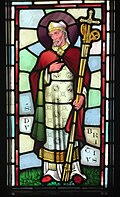 DubriciusSaint · Welsh bishopNov 14
- Alberic of UtrechtSaint · Bishop of UtrechtNov 14
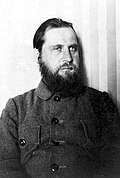 Dimitry BenevolenskyHieromartyr · ArchpriestNov 14
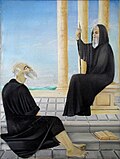 Fantinus the YoungerVenerableNov 14
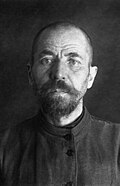 Alexander BykovHieromartyr · PriestNov 14
- Anna ZertsalovaMartyr · Spiritual writerNov 14
 George IzvekovHieromartyr · Archpriest and composerNov 14
 Prokopy TitovHieromartyr · Archbishop of Kherson and NikolaevNov 14