Saint
Monan
Missionary in Fife, Scotland
Gaelic missionary of the 6th century, who lived in a cave near Pittenweem in Fife.
- Feast
- March 1old style March 14
- Era
- unknown
Life
Monan was a Christian missionary in Fife, in Scotland, probably a Gael, in the sixth century according to one source (according to another, the sixth or seventh or even the ninth). Little is known of him, and his veneration, commemorated on 1 March, comes from medieval Scottish tradition, not from a known act of canonization. Opinions differ about his historicity.
The only description of his life is in the Aberdeen Breviary (Brevarium Aberdonense), printed at Edinburgh in 1509 and 1510. The account has numerous demonstrable errors. According to it, Monan was brought up by Saint Adrian of Scotland, from whom he also received ordination as priest. For a long time he served at the church of Saint Adrian, and then he was sent to preach on the Isle of May, in the Firth of Forth. Having overcome there the superstitions and many other crimes and evil customs and left the churches of the island in good condition, the saint went to the region of Fife, in south-eastern Scotland. There he was killed, fighting, together with more than six thousand other Christians, against the pagan army of the Danes, who were ravaging those lands in 874 and 875.
His relics were greatly venerated at Inverey (today St Monans, in Fife), the place of his death. Many miracles were shown through them. King David II of Scotland, who himself experienced his powerful intercession before God and healed his battle wounds through the saint's prayers, rebuilt his church at Inverey in stone, between 1329 and 1371, giving it a majestic aspect, and founded a college of canons for its service. Another source says that Monan lived in the monastery at Pittenweem, from which he withdrew to a small cave near the site of the present church.
Alban Butler follows the Aberdeen Breviary: he makes Monan a companion of Adrian and a survivor of the Viking attack of 874, killed at Inverey. Other accounts have him martyred with Adrian in May. William Forbes Skene rejects the account in the Breviary and believes that Monan is none other than Moinenn, bishop of Clonfert. Because of the devastation wrought by the Dane Thorgest, many Scottish clerics left Ireland to find refuge with Kenneth MacAlpin, bringing Monan's relics with them. Skene also notes that the two share the same feast day, 1 March. There was a chapel of the Culdees dedicated to Saint Monan at Portmoak before the middle of the eleventh century; the name comes from the Port of Saint Moak (another name for Monan), a port on Loch Leven.
Commemorated the same day March 1
 David of WalesSaint · Patron of WalesMar 1
 Eudokia of HeliopolisVenerable MartyrMar 1
 Suitbert of KaiserswerthVenerable · Missionary to GermanyMar 1
 Domnina of SyriaVenerable · Ascetic of CyrrhusMar 1
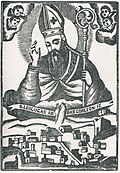 Leoluca of CorleoneVenerable · Abbot in CalabriaMar 1
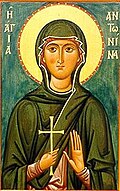 Antonina of NicaeaMartyr · Martyr of NicaeaMar 1
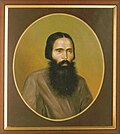 Basil of Pavlovsky PosadRighteous · Righteous man of Pavlovsky PosadMar 1
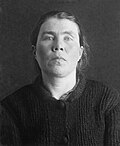 Anna MakandinaVenerable Martyr · NunMar 1
 Martyrius of ZelenetsVenerable · Founder of Zelenets MonasteryMar 1
 Basil NikitskyHieromartyr · PriestMar 1
 Daria ZaitsevaVenerable Martyr · NunMar 1
 Anthony PankeevHieromartyr · Bishop of BelgorodMar 1