
Venerable
Nikodim of Kozheozero
Born Nikita near Rostov to a well-off peasant family, a monk at Kozheozero; died in 1640.
- Feast
- July 3old style July 16
- Reposed
- 164017th century
- Place
- Kozheozersky Monastery
- Order
- Venerables
Life
Venerable Nikodim of Kozheozero (in the world Nikita) was a Russian hermit and monk of the seventeenth century, who died in 1640. He is also known as Nikodim of Khozyuga, after the river by which he had his cell. He has been venerated as a saint in the Russian Church since 1662. He is commemorated on 3 July, the day of his death, on 3 August, and on 31 October, in the synaxis of the saints of Arkhangelsk, Novgorod and Rostov-Yaroslavl.
Youth and calling
Nikita was born in the village of Ivankovo, near Rostov, in some year between 1545 and 1575, to a well-off and pious peasant family. He lost his parents young, went to Yaroslavl and learned the trade of nail-making, by which he earned his living. The church historian B. V. Titlinov says he led a temperate and hard-working life. From Yaroslavl he came to Moscow and, after a time, asked Abbot Pafnuty to receive him among the brethren of the Chudov Monastery.
Monk and hermit
After a trial, on 31 October 1595 he was tonsured a monk with the name Nikodim. For eleven years he lived at Chudov under the guidance of Archimandrite Pafnuty, standing out among the brethren by his labours. When Pafnuty was named Metropolitan of Krutitsy in 1606, Nikodim left the monastery. He stayed a year with him at Krutitsy, then chose the hermitage at Kozheozero, on the shore of Lake Kozhozero in the Arkhangelsk region. He remained there a year and a half, for he longed for complete solitude.
In the summer of 1609 he withdrew to the empty country on the bank of the river Khozyuga. He built a small cell with his own hands, worked the soil, caught fish and lived on these, giving himself to prayer. The fame of the hermit spread as far as Moscow. Patriarch Joasaph I heard of his struggles and sent him, as a mark of respect, an arctic fox fur coat, but Nikodim would not accept it and sent it to the monastery.
His repose and veneration
A few months before his death, at the request of the brotherhood of Kozheozero, he left his cell in the wilderness and settled in the monastery. He fell asleep in the Lord on 3 July 1640 and was buried beneath the floor of the monastery's Church of the Theophany. In 1662 he was numbered among the saints, and in 1695 his relics were found incorrupt. The Russian Church commemorates him on three dates: 3 July, 3 August and 31 October.
Commemorated the same day July 3
 Leo II of RomeSaint · Bishop of RomeJul 3
 Anatolius of ConstantinopleSaint · Patriarch of ConstantinopleJul 3
- Anatolius of LaodiceaSaint · Bishop of LaodiceaJul 3
 Hyacinth of CaesareaMartyr · Martyr of CaesareaJul 3
 Heliodorus of AltinoSaint · First bishop of AltinumJul 3
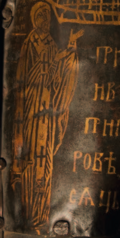 Basil KalikaSaint · Archbishop of NovgorodJul 3
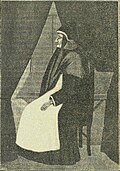 Euphrosyne of KolyupanovoFool-for-Christ · Fool for Christ and hermitJul 3
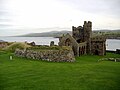 Germanus of ManSaint · First bishop of the Isle of ManJul 3
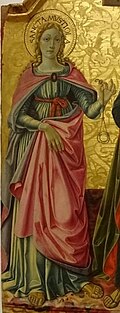 MustiolaMartyr · Martyr of ChiusiJul 3
 Basil Vsevolodovich of YaroslavlRight-Believing · Prince of YaroslavlJul 3
 Anatolius the RecluseVenerable · Recluse of the Kiev CavesJul 3
 John of YarenskVenerableJul 3