Saint
Paul III of Constantinople
Patriarch of Constantinople
Ecumenical Patriarch of Constantinople from 688 to 693, who died on 20 August 693.
Life
Saint Paul III was patriarch of Constantinople in the late seventh century, between 687 or 688 and 693 or 694. The sources do not agree on the exact dates, but tradition places his repose in August, on the 20th or 21st. He presided over the Quinisext Council, also called the Council in Trullo, of 691-692. The Church of Constantinople honours him as a saint.
Before the patriarchate
The sources say little of his past. It is known that before becoming patriarch he was a layman of high learning, a secretary at the imperial court, among the so-called asekretis. At the Sixth Ecumenical Council of 680-681, which confessed two wills and two natural operations in Christ, he was one of the officials who managed the proceedings: he read the acts of earlier councils and, with the other secretaries, examined the documents of Patriarch Macarius of Antioch, a defender of monothelitism.
Ministry
He ascended the throne under the emperor Justinian II, after the second tenure of Theodore I. In 691-692 he prepared the Council in Trullo, led it in the emperor's absence and signed its canons. They concerned the discipline of the Church and the order of services. Canon 13 allowed married priests and deacons to keep their family life, canon 36 confirmed the place of Constantinople as second after Rome, and canon 55 rejected the Roman custom of fasting on Saturdays in Great Lent. From his time it is also said that the Parthenon in Athens was dedicated as a church of Saint Sophia, the Wisdom of God.
Pope Sergius I refused to accept the council's canons, and the emperor tried in vain to bring him by force to Constantinople. Paul died before troubled times, in which the emperor was overthrown and the empire passed through a period of crisis. His successor was Callinicus I.
Veneration
Paul III is honoured as a saint by the Patriarchate of Constantinople. In the Constantinopolitan synaxarion he appears on 20 and 30 August, and in earlier times also on 2 September, together with John IV the Faster. His memory is kept on 30 August. The calendar of the Russian Church no longer has him today.
Commemorated the same day August 30
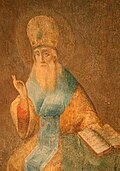 John the FasterSaint · Patriarch of ConstantinopleAug 30
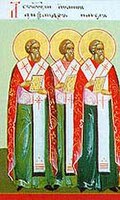 Alexander of ConstantinopleSaint · First Bishop of ConstantinopleAug 30
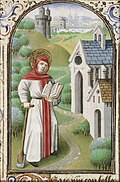 Fiacre of BreuilVenerable · Hermit and gardenerAug 30
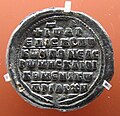 John VIII XiphilinosSaint · Patriarch of ConstantinopleAug 30
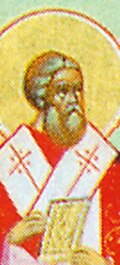 Paul IV of ConstantinopleSaint · Patriarch of ConstantinopleAug 30
 Felix and AdauctusHoly MartyrsAug 30
 Makarije SokolovićSaint · Patriarch of PećAug 30
- Agilus of RebaisVenerable · Abbot of RebaisAug 30
 Ignatius LebedevVenerable Martyr · Schema-archimandriteAug 30
 Spiridon of PećSaint · Patriarch of PećAug 30
 Varlaam MoțocSaint · Metropolitan of MoldaviaAug 30
- Gregory II of RasSaint · Bishop of RasAug 30