Saint
Varlaam Moțoc
Metropolitan of Moldavia
Metropolitan of Moldavia from 1632 to 1653, scholar and printer, editor of the Book of Learning of 1643.
Life
Saint Varlaam, Metropolitan of Moldavia (in the world Vasile Moțoc, about 1580-1657), the hierarch, was Metropolitan of Moldavia from 1632 to 1653, in the reign of Vasile Lupu, a writer, a man of culture and the founder of the first printing house in Moldavia. He is the author of the "Cazania" (Romanian Book of Learning) of 1643 and of the "Reply against the Calvinist Catechism". He died at Secu monastery on 18 August 1657 (other sources: 1657, in August) and was entered in the calendar of the Romanian Orthodox Church by the Holy Synod on 12 February 2007, with commemoration on 30 August. The Russian Church entered him in its calendar on 7 March 2018, with commemoration on 12 September.
Youth and monasticism
He was born around 1580 (according to other sources 1585 or 1590), in a family of free peasants (răzeși) of Bolotești, Putna. His secular name was Vasile Moțoc. As a youth he went to Zosim Skete, in the valley of the Secu stream, where he learned letters, developed his gift for speaking and writing, and learned Slavonic, Latin and Greek. On the site of the skete, the high steward Nestor Ureche and his wife Mitrofana founded in 1602 the Secu monastery, where a school also began to work. The young Vasile Moțoc entered the community of the new monastery, where he was tonsured with the name Varlaam. Being a good guide, he rose to the highest ranks, being appointed abbot of the monastery. He went on studying books, especially spiritual ones, translating the "Ladder" of Saint John Climacus (1618). For his labours and virtues he was honoured with the rank of archimandrite.
In 1628, as a trusted counsellor of Prince Miron Barnovschi, he was sent on a mission to Moscow and Kyiv. Back in the country, he learned of the death of Metropolitan Anastasie Crimca (1629) and of the removal of Miron Barnovschi, and withdrew to the Secu monastery. Soon, in 1632, in the reign of Alexandru Iliaș, Archimandrite Varlaam was called to Iași and placed at the head of the Metropolis of Moldavia, in place of the deceased Metropolitan Atanasie (1629-1632).
Metropolitan of Moldavia
As metropolitan, Varlaam had many achievements, above all because he also won the support of Prince Vasile Lupu. Supported also by Metropolitan Peter Mogila of Kyiv, he founded the first Romanian printing house in Moldavia, in 1640, at the monastery of the Three Hierarchs in Iași (the Russian source says that between 1637 and 1643 Vasile Lupu opened the first Moldavian printing house at Iași, with the help of Moscow, Kyiv and Lviv, from which the equipment and paper were brought). Eight books were printed there, among them the "Cazania of Varlaam" (1643) and the first Moldavian code of laws, the "Code of Vasile Lupu" (1646). Political troubles led to the closing of the press in 1653. In 1642 he convened a synod of the hierarchs of Moldavia and Wallachia, known as the Synod of Iași. In 1639 he was among the three candidates proposed for the throne of Ecumenical Patriarch of Constantinople. In his time the beautiful church of the monastery of the Three Hierarchs at Iași was built, the best-known foundation of Prince Vasile Lupu, into which in 1641 he brought the relics of Saint Paraskeva, given to the prince by the Ecumenical Patriarchate. In 1640, with the prince's help, he founded at Iași the first school of higher level in Moldavia, on the model of the Kyiv Spiritual Academy, founded by Metropolitan Peter Mogila. He fought for the national and religious rights of the Romanians of Transylvania and was a champion of enlightenment and of friendship with Russia.
Writings
The "Cazania, or Romanian Book of Learning for the Royal Doors" (1643), regarded by Iorga as the most popular work of our old literature, contains the first verses in Romanian, "Verses on the Coat of Arms of the Reign of Moldavia", by which the merit of Prince Vasile Lupu in the printing of the book is acknowledged. The prince's preface says that it is addressed to the entire Romanian nation everywhere. It was the first book printed in Moldavia and spread in large numbers in the neighbouring provinces inhabited by Romanians. The Cazania has two parts: the first contains extracts from the Gospel and their commentary for thirty-two Sundays; the second tells the lives of saints, ordered by the calendar, from Symeon the Stylite (1 September) to the Beheading of Saint John the Baptist (29 August). The critic Nicolae Manolescu noted the beauty of the language (understandable to all, with rhetorical questions and exhortations) and the art of storytelling, with which he presents theological questions in a peasant manner. The lives of the saints also supplied folk painters with inspiration: Saint Nicholas, hearing that a poor father wants to push his daughters toward prostitution, throws through the window a kerchief with three hundred gold coins for each maiden; Saint Theodore Tiro looks for a dragon in a forest and, not finding it, lies down under a tree, and a "housewife" wakes him and tells him where the beast was hiding.
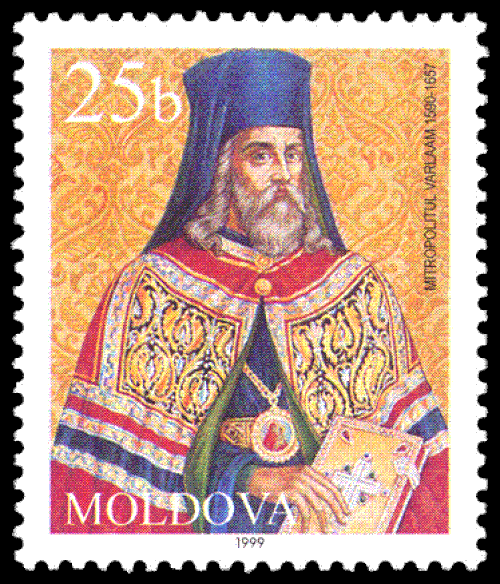
He is also the author of "Seven Mysteries of the Church" and of the "Reply against the Calvinist Catechism", a polemical work, the first of its kind in Romanian, composed to defend the Transylvanians from Calvinism and the danger of denationalization, written free of any source, and which "boils with indignation under the sober wrappings of its phrasing". In April 1653 he withdrew to the Secu monastery, where he ordered several Slavonic manuscripts to be copied with beautiful ornament, and he died there in 1657. He was buried there too. In 2015 a bust of him was placed on the Alley of Church Figures in Chișinău; in 1999 Moldova issued a postage stamp in his memory, and streets in Chișinău and Bălți bear his name.
Commemorated the same day August 30
 John the FasterSaint · Patriarch of ConstantinopleAug 30
 Alexander of ConstantinopleSaint · First Bishop of ConstantinopleAug 30
 Fiacre of BreuilVenerable · Hermit and gardenerAug 30
 John VIII XiphilinosSaint · Patriarch of ConstantinopleAug 30
 Paul IV of ConstantinopleSaint · Patriarch of ConstantinopleAug 30
 Felix and AdauctusHoly MartyrsAug 30
 Makarije SokolovićSaint · Patriarch of PećAug 30
- Paul III of ConstantinopleSaint · Patriarch of ConstantinopleAug 30
- Agilus of RebaisVenerable · Abbot of RebaisAug 30
 Ignatius LebedevVenerable Martyr · Schema-archimandriteAug 30
 Spiridon of PećSaint · Patriarch of PećAug 30
- Gregory II of RasSaint · Bishop of RasAug 30