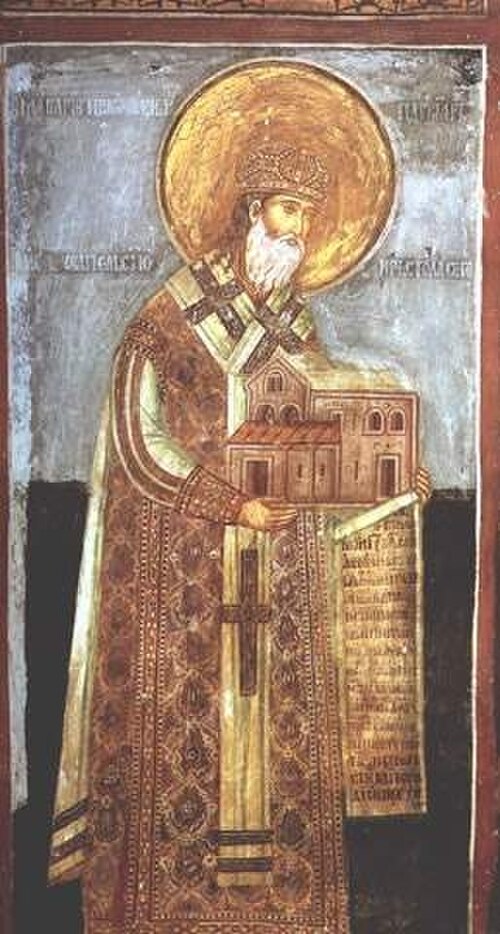
Saint
Makarije Sokolović
Patriarch of Peć
Patriarch of Peć from 1557 to 1571, first head of the patriarchate restored after 1463.
Life
Saint Makarije Sokolović was Patriarch of Peć in Serbia from 1557 to 1571, the first head of the patriarchate restored after it had been abolished in 1463 by the Ottoman conquest of Serbia. He fell asleep in 1574. The Serbian Orthodox Church honours him as a saint. He is commemorated on 30 August by the old calendar, that is 12 September.
Beginnings
He was born in the first half of the sixteenth century, into a family of the Piva clan of Old Herzegovina. He was a close kinsman, brother, nephew or first cousin according to different sources, of the Ottoman grand vizier Mehmed-pasha Sokolović, who used his power to restore the Serbian Patriarchate with its seat at the monastery of Peć. He studied from childhood at the monastery of Mileševa, with the future vizier, then Bojko Sokolović. When his kinsman was taken as a janissary, he stayed in the monastery and continued his studies, then went to Athos, where he was abbot and then archimandrite of Hilandar. On returning to Serbia he was ordained bishop.
Patriarch of Peć
Until the restoration of the patriarchate, Orthodox Serbs were under the jurisdiction of the Archbishopric of Ohrid, which had managed to control only a few Serbian dioceses. Metropolitan Pavle of Smederevo had been one of those who did not recognize the state of things and sought to restore the independence of the Serbian Church, between 1526 and 1541. The Patriarchate of Peć was restored in 1557, with the grand vizier's support, and Makarije was the first patriarch. The sultan gave him the same rights as the patriarch of Constantinople. The patriarchate's jurisdiction covered the lands of the medieval Serbian state, with Bačka, Banat, Baranya, Syrmia, Slavonia, Bosanska Krajina, Bosnia, Lika, Krbava and Dalmatia, up to the border, including cities like Sofia in the east and Skopje in the south. It had over forty dioceses, among them the newly founded Trebinje and Požega, and others at Buda, Pécs, Szeged, Arad, Timișoara, Vršac, at Orahovica monastery and Rmanj monastery, for Dalmatia, as well as Samokov, Tetovo and Maška. Makarije supported the rebuilding of ruined churches and reopened monasteries, among them Banja at Priboj, Gračanica, Studenica, the patriarchal monastery of Peć, Mileševa and Budisavci in Kosovo and Metohija. The renewal began a renaissance of Serbian culture in art and literature.
The end
Because of illness he withdrew in 1571, leaving as successor his nephew Antonije Sokolović. He fell asleep in 1574. He is regarded as one of the most notable religious leaders in the history of the Serbs and appears in the book The 100 Most Prominent Serbs.
Commemorated the same day August 30
 John the FasterSaint · Patriarch of ConstantinopleAug 30
 Alexander of ConstantinopleSaint · First Bishop of ConstantinopleAug 30
 Fiacre of BreuilVenerable · Hermit and gardenerAug 30
 John VIII XiphilinosSaint · Patriarch of ConstantinopleAug 30
 Paul IV of ConstantinopleSaint · Patriarch of ConstantinopleAug 30
 Felix and AdauctusHoly MartyrsAug 30
- Paul III of ConstantinopleSaint · Patriarch of ConstantinopleAug 30
- Agilus of RebaisVenerable · Abbot of RebaisAug 30
 Ignatius LebedevVenerable Martyr · Schema-archimandriteAug 30
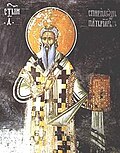 Spiridon of PećSaint · Patriarch of PećAug 30
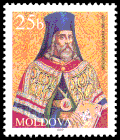 Varlaam MoțocSaint · Metropolitan of MoldaviaAug 30
- Gregory II of RasSaint · Bishop of RasAug 30