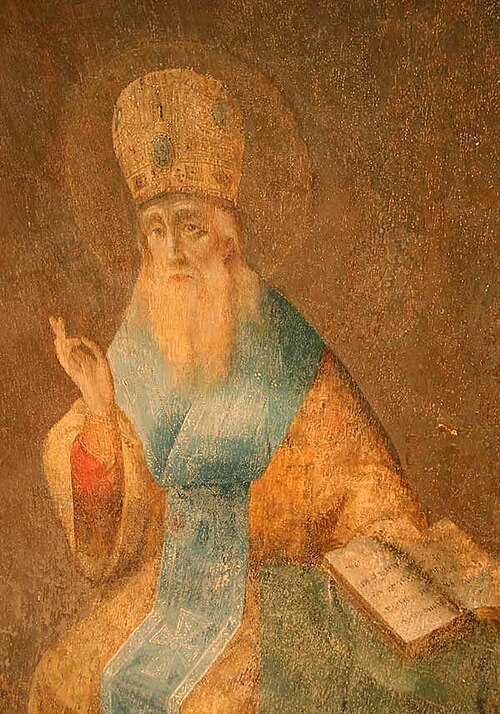
Saint
John the Faster
Patriarch of Constantinople
Patriarch of Constantinople from 582 to 595, the first to bear the title of Ecumenical Patriarch.
Life
Saint John the Faster, hierarch, was patriarch of Constantinople from 582 until his death in 595, and was the first to bear the title of ecumenical patriarch. He is known for his austere life and his love for the poor. He is commemorated on 2 September.
His life
John was born at Constantinople, in the family of an artisan, and worked as a goldsmith. He was a deacon at Hagia Sophia under Patriarch John Scholasticus, then sakellarios, that is, patriarchal vicar for monasteries. He was known for his asceticism and called “the Faster”. Under Patriarch Eutychius he became an important man among the clergy of the city, and at Eutychius’ death he was made patriarch by the emperor Tiberius II, on 11 or 12 April 582. After he became patriarch, he continued to live as a hermit, in fasting and prayer. It is said that he ate nothing in the first six days of the week and that only on Sunday he tasted greens and fruit, and he slept very little. Testimonies from his time say that through his prayers miracles were worked, such as the casting out of demons or the halting of an epidemic of plague. It is told that, on the eve of Pentecost, a horse show was set for the hippodrome; the patriarch judged that the faithful’s attendance was unacceptable, and through his fervent prayer a terrible storm arose, with rain and hail, and all dispersed in fear and understood that the entertainment was unsuitable.
The title of ecumenical patriarch
Under the emperor Maurice, John remained in favour at court. In 587 or 588 he gathered the bishops of the East, in the name of the “ecumenical patriarch”, to examine some charges brought against Gregory, patriarch of Antioch, who was found innocent. The title “ecumenical” aroused the opposition of Popes Pelagius II and Gregory the Great, who judged that it diminished the primacy of Rome; Gregory wrote letters on the matter and, in answer, took for himself the title “servant of the servants of God”. In 593 Pope Gregory rebuked John for having allowed a priest accused of heresy to be beaten with ropes in the church.
Writings and his end
Isidore of Seville attributes to him a letter on baptism, and manuscripts preserve other writings of his, among them a collection of canons and works on the departure of the soul and on the Liturgy. He died on 2 September 595 and was buried in the church of the Holy Apostles. It is said that he had great love for the poor and remained poor all his life.
Commemorated the same day August 30
 Alexander of ConstantinopleSaint · First Bishop of ConstantinopleAug 30
 Fiacre of BreuilVenerable · Hermit and gardenerAug 30
 John VIII XiphilinosSaint · Patriarch of ConstantinopleAug 30
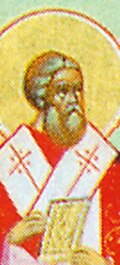 Paul IV of ConstantinopleSaint · Patriarch of ConstantinopleAug 30
 Felix and AdauctusHoly MartyrsAug 30
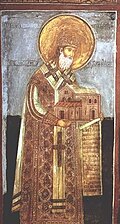 Makarije SokolovićSaint · Patriarch of PećAug 30
- Paul III of ConstantinopleSaint · Patriarch of ConstantinopleAug 30
- Agilus of RebaisVenerable · Abbot of RebaisAug 30
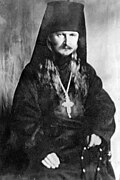 Ignatius LebedevVenerable Martyr · Schema-archimandriteAug 30
 Spiridon of PećSaint · Patriarch of PećAug 30
 Varlaam MoțocSaint · Metropolitan of MoldaviaAug 30
- Gregory II of RasSaint · Bishop of RasAug 30