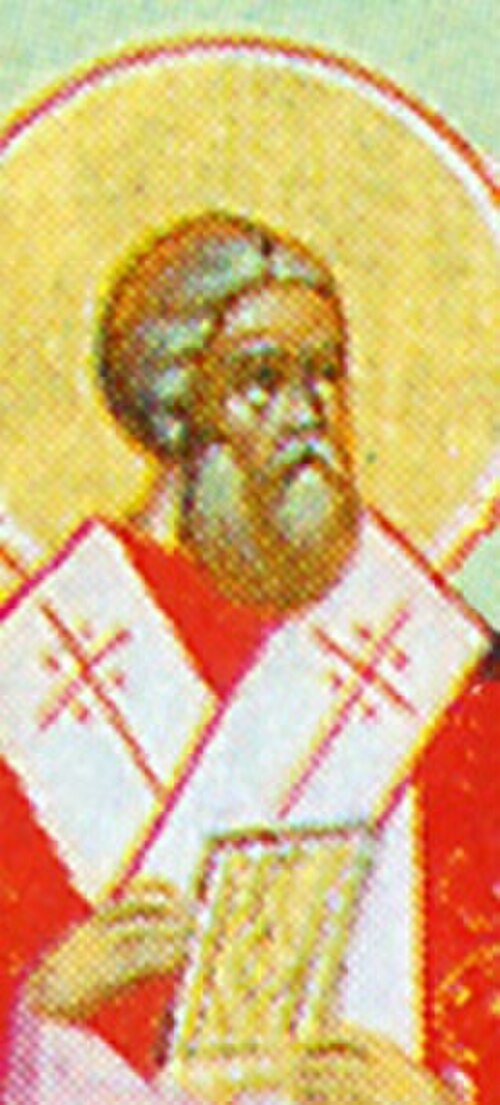
Saint
Paul IV of Constantinople
Patriarch of Constantinople
Ecumenical Patriarch from 780 to 784, who urged the calling of an ecumenical council on the icon question.
Life
Saint Paul IV of Constantinople, called Paul the New, was Ecumenical Patriarch from 780 to 784. He led the Church in the age of iconoclasm and, at the end of his life, urged that an ecumenical council be called to end the turmoil over the holy icons. His feast is on 30 August.
Early life
Paul came from Cyprus, from Salamis (also called Constantia). Theophanes the Confessor calls him a reader, while the catalogue of Patriarch Nikephoros calls him a deacon. Little is known of his youth.
Patriarch in the age of iconoclasm
He received the throne in February 780, after the death of Patriarch Nicetas, when the iconoclast Leo IV the Khazar was emperor. To take the throne at that time he had to accept the iconoclast confession. The tradition of those who venerate icons says that he did so against his will and hid his true faith in his heart, and Theophanes writes that he resisted his election. Some modern scholars think, on the contrary, that he belonged to the moderate iconoclast circle around Leo. Little has been preserved about his day-to-day government.
On Leo's death in 780 power passed to his widow Irene, who ruled in the name of her son Constantine VI. The decisions of the council of Hieria of 754, which had condemned the veneration of icons, remained in force.
Retirement and last witness
In 784, ill and advanced in years, Paul left the throne and withdrew to the monastery of Saint Florus, where, according to some sources, he received the monastic schema. One source says that he regarded his illness as a reproach for his past mistakes. The message later sent to the council of Nicaea (787) states that when Irene and Constantine visited him he declared his repentance for supporting iconoclasm and his unwillingness to remain outside communion with the rest of the Church. According to Theophanes, the call for an ecumenical council has its origin in these conversations. The Life adds that he told them that without an ecumenical council the error would not be corrected.
His successor was Tarasios, whom tradition says Paul himself recommended. Paul passed to the Lord shortly after his retirement. The council that restored the veneration of icons, the Seventh Ecumenical Council, met in 787, but there is no evidence of his personal part in its work.
Veneration
Saint Paul the New is commemorated on 30 August. Medieval calendars are not uniform: in some he is remembered on 31 August or 2 September.
Commemorated the same day August 30
 John the FasterSaint · Patriarch of ConstantinopleAug 30
 Alexander of ConstantinopleSaint · First Bishop of ConstantinopleAug 30
 Fiacre of BreuilVenerable · Hermit and gardenerAug 30
 John VIII XiphilinosSaint · Patriarch of ConstantinopleAug 30
 Felix and AdauctusHoly MartyrsAug 30
 Makarije SokolovićSaint · Patriarch of PećAug 30
- Paul III of ConstantinopleSaint · Patriarch of ConstantinopleAug 30
- Agilus of RebaisVenerable · Abbot of RebaisAug 30
 Ignatius LebedevVenerable Martyr · Schema-archimandriteAug 30
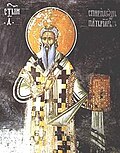 Spiridon of PećSaint · Patriarch of PećAug 30
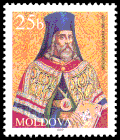 Varlaam MoțocSaint · Metropolitan of MoldaviaAug 30
- Gregory II of RasSaint · Bishop of RasAug 30