Saint
Philo of Carpasia
Bishop of Carpasia
Bishop of Carpasia in Cyprus from 401, called the wonderworker; he lived in the fifth century.
- Feast
- January 24old style February 6
- Reposed
- 4505th century
- Order
- Hierarchs
Life
Saint Philo of Carpasia was bishop of Carpasia in Cyprus, from 401 (by another date, ordained by Saint Epiphanius before 382), called the wonderworker, who died in the fifth century (the Russian source says 410; the record gives 400 to 450). He is commemorated in Cyprus on 24 January (6 February by the Gregorian calendar, according to the Serbian source). The Russian source notes that he is not included in the present calendar of the Russian Orthodox Church, and the Russian source wrongly places him on Crete; the others say Cyprus.
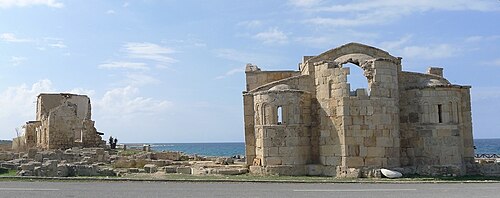
We do not have much information about Saint Philo. It seems that he was from Cyprus, although it was thought that he was from Carpathos, but this was probably a mistaken impression because of the similarity of the names of the two islands. He practised the profession of rhetor; according to the Russian source, he was a deacon of the Church of Rome and a renowned orator and wonderful preacher. Epiphanius of Salamis in Cyprus ordained him bishop of Carpasia in 382 and appointed him deputy of his own see when he was away on a journey to Rome; the Serbian source says that Philo was ordained by Saint Epiphanius when the latter was summoned to Rome to help by prayer the sister of the emperor Honorius. Philo is the first bishop of the diocese of Carpasia mentioned in the sources. Ancient Carpasia was on the peninsula of the same name, 5 km north of present-day Rizokarpaso in northern Cyprus. The main source on his life is the Life of Saint Epiphanius of Cyprus.
We know with certainty one work of Philo, dedicated to the presbyter Eustathius and the deacon Eusebius: the Interpretation of the Song of Songs. For the edification of the faithful he presents the Church as the bride of Christ and the martyrdom of Christ as a model of the martyrdom of Christians. He interprets the work allegorically, following in this Philo of Alexandria, and regards it as the supreme spiritual work of the Old Testament. Philo is the only one up to his time who interpreted the whole Song of Songs verse by verse. The work was translated into Latin by Epiphanius Scholasticus; Procopius of Gaza used it, and it was printed in Rome in 1792. A commentary on the Pentateuch is also attributed to him. The Letter to Eucarpius was also attributed to him, printed as Letter 42 of Saint Basil the Great and belonging to the monk Chilo, as well as the works Ecclesiastical History and Interpretation of the Hexaemeron.
Commemorated the same day January 24
 Xenia of St. PetersburgFool-for-Christ · Patron of St. PetersburgJan 24
 Xenia of RomeVenerableJan 24
 Cadoc of LlancarfanVenerable · Abbot of LlancarfanJan 24
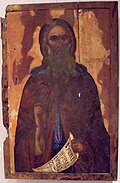 Neophytos the RecluseVenerable · Monk and priest of CyprusJan 24
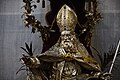 Felician of FolignoHieromartyr · Bishop of FolignoJan 24
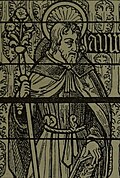 Savinianus of TroyesMartyr · Martyr of TroyesJan 24
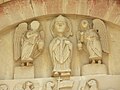 Exuperantius of CingoliSaint · Bishop of CingoliJan 24
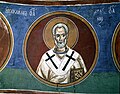 Macedonius the Barley-EaterVenerable · Hermit of SyriaJan 24
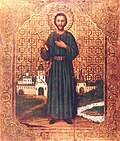 John of KazanMartyr · Martyr of KazanJan 24
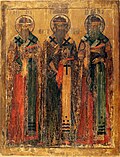 Gerasim of PermSaint · Bishop of PermJan 24
- Babylas of SicilyHieromartyr · Hermit in SicilyJan 24
- Alexander TelemakovHieromartyr · PriestJan 24