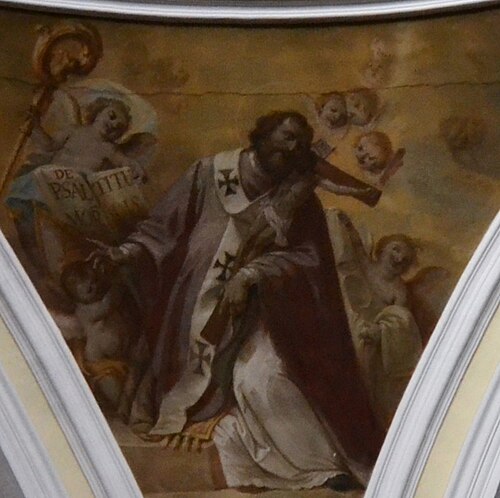
Saint
Serapion of Antioch
Patriarch of Antioch
Patriarch of Antioch at the turn of the 3rd century, known for his theological writings, of which only fragments survive.
- Feast
- October 31old style November 13
- Reposed
- 2113rd century
- Place
- Antakya
- Order
- Hierarchs
Life
Serapion of Antioch was bishop of Antioch at the turn of the second and third centuries, known from his theological writings, of which only fragments survive. He died in the year 211. He is regarded as a saint in the Catholic Church, and his commemoration is on 31 October (according to one source, 30 October).
The sources do not agree on the beginning of his episcopate: one gives the year 191, another 198. He is known chiefly as a denouncer of the Montanist heresy, for which he wrote a letter to the clergy, To Pontius and Caricus, signed by other bishops: Aurelius Quirinus the martyr; Aelius Publius Julius, bishop of Debeltum, a colony of Thrace; Sotas, blessed bishop of Anchialus. Serapion's letter To Domnus is addressed to a man who in time of persecution had fallen away from the Christian Church and joined Judaism. Denouncing the false and apocryphal writing, the Gospel of Peter, Serapion wrote for the members of the Church of Rhossus in Cilicia his work On the So-called Gospel of Peter. The members of that Church had gone astray in doctrine, contrary to the Church, falling into Docetism, because they relied on that apocryphon. None of Serapion's writings has survived; only small fragments remain, quoted by Eusebius of Caesarea in the Ecclesiastical History and by Jerome in On Illustrious Men, chapter 41, which is devoted to him. Fragments of his writings are published in volume five of the Greek Patrology.
Commemorated the same day October 31
 StachysApostle · Bishop of ByzantiumOct 31
 Quentin of AmiensMartyrOct 31
- Urban of MacedoniaApostle · Bishop of MacedoniaOct 31
 Hundred Thousand Martyrs of TbilisiHoly MartyrsOct 31
 Narcissus of AthensApostle · Apostle of the SeventyOct 31
 John KochurovHieromartyr · Archpriest at Tsarskoye SeloOct 31
 Epimachus of PelusiumMartyr · Martyr of EgyptOct 31
 Peter KalnishevskyConfessor · Last Koshovy Otaman of the Zaporozhian SichOct 31
 Spyridon the Prosphora-bakerVenerable · Prosphora-baker of the Kiev CavesOct 31
 Nicodemus of the Kiev CavesVenerable · Prosphora-baker of the Kiev CavesOct 31
 Basil ArkhangelskyHieromartyr · ArchpriestOct 31
- Mantuanus of MilanSaint · Archbishop of MilanOct 31