Righteous
Simeon the God-receiver
The Righteous of the Temple
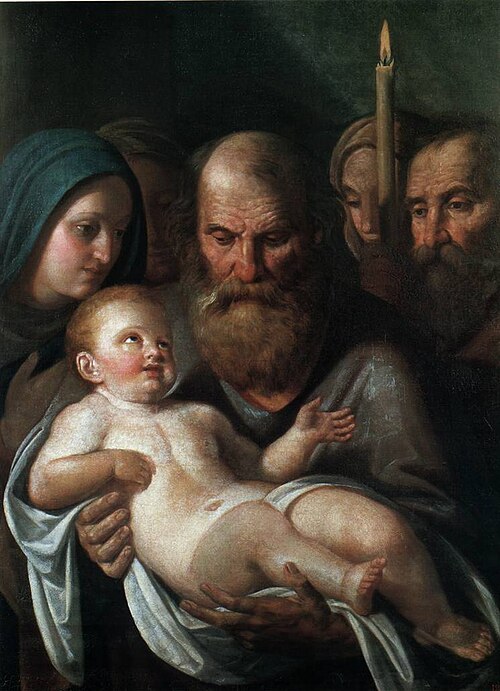
Just and devout man of Jerusalem who took the infant Jesus in his arms when He was brought to the Temple.
- Feast
- February 3old style February 16
- Reposed
- 1001st century
- Place
- Galilee
- Order
- The Righteous
Life
The Righteous Simeon, called the God-receiver, was a just and devout man of Jerusalem who took the infant Jesus in his arms in the Temple on the day He was brought there. The Gospel of Luke is the only biblical source about him, and the Church commemorates him on 3 February, the day after the feast of the Meeting of the Lord.
In the Gospel
The Holy Spirit had revealed to Simeon that he would not see death until he had seen the Lord’s Christ. On the day when the Mother of God and Joseph brought the child to the Temple, forty days after His birth, to fulfil the Law of Moses, the Spirit led Simeon there as well. He took the child in his arms and glorified God with the words of his canticle, “Lord, now lettest Thou Thy servant depart in peace, according to Thy word”, which are still said at Vespers.
He then told the Mother of God that the child was set for the fall and rising of many in Israel and as a sign that would be spoken against, and that “a sword will pierce through your own soul”, so that the thoughts of many hearts would be revealed. From this prophecy comes the icon of the Mother of God called “Simeon’s Prophecy”. The prophetess Anna, eighty-four years old, was also there and spoke of the child. The Gospel says nothing of Simeon’s age, but tradition shows him as an old man.
Tradition of the Church
According to tradition, Simeon was one of the seventy-two scholars who, at the command of King Ptolemy, translated the Scriptures from Hebrew into Greek (the Septuagint). When he came to Isaiah’s words “Behold, a virgin shall conceive and bear a son”, he wanted to erase “virgin” and write “young woman”. An angel appeared and stopped him, telling him that he would not taste death until he saw the prophecy fulfilled. Another tradition says that on his return from Egypt he threw his ring into a river, saying he would believe the prophet’s word exactly if he found it. The next day he bought a fish, and the ring was inside it.
Tradition gives him an old age of nearly three hundred years; Dimitry of Rostov speaks of 360. The hymns of the Church sometimes call him a priest, but some fathers, such as Blessed Theophylact, say he was not a priest, only a man who loved God. According to the Protoevangelium of James, he became a priest in the Temple after the murder of Zechariah, father of Saint John the Baptist. Tradition holds that he reposed after the meeting in the Temple.
Relics and veneration
The deacon Theodosius, in the sixth century, mentioned his tomb on the Mount of Olives. According to another tradition, his relics were brought to Constantinople between 565 and 578. Around the siege of 1203 they were seized and sent toward Venice, but a storm forced the ship into the harbour of Zadar in Dalmatia. They were placed in the church of Saint Simeon there, and Simeon is one of the four patron saints of the city. Honoured as an intercessor for the blessing of children, he is commemorated on 8 October at Zadar. Another tradition places his relics in Venice, in the church of San Simeone Profeta. In 2010 a small portion was given to the monastery of Saint Simeon the God-receiver in Jerusalem.
The Serbs also honour him as protector of small children, and for them 3 February on the old calendar is a family feast. The Song of Simeon is said at Vespers in the Orthodox Church and at Compline in the Catholic Church, and many composers have set it to music.
Commemorated the same day February 3
 Anna the ProphetessProphet · Prophetess of the TempleFeb 3
 AnsgarSaint · Archbishop of Hamburg-BremenFeb 3
 Nicholas of JapanEqual-to-the-Apostles · Archbishop of JapanFeb 3
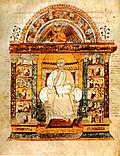 Laurence of CanterburySaint · Archbishop of CanterburyFeb 3
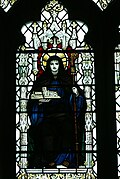 WerburghVenerable · Abbess, patron of ChesterFeb 3
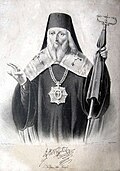 Ignatius of MariupolSaint · Metropolitan of Gothia and KaffaFeb 3
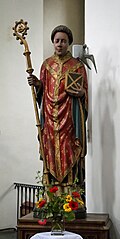 HadelinVenerable · Missionary monk in BelgiumFeb 3
 Roman of UglichRight-Believing · Prince of UglichFeb 3
 Simeon of TverSaint · First bishop of TverFeb 3
 Oliver of AnconaVenerableFeb 3
 Alexius of NovgorodSaint · Archbishop of NovgorodFeb 3
- Celerinus of CarthageConfessor · Deacon of CarthageFeb 3