Fool-for-Christ
Theodore of Novgorod
Fool for Christ
A fool for Christ of Novgorod, who died in 1392.
- Feast
- January 19old style February 1
- Reposed
- 139214th century
- Order
- Fools-for-Christ
Life
Holy Blessed Theodore of Novgorod, fool for Christ, was born in the fourteenth century in Great Novgorod, on the Trade Side of the city, near the market. Of his parents it is known only that they were pious people. The fact that he could read and that, before his great struggle, he was free to give himself to preparatory ascetic labours and to give much alms suggests that he came from a well-off family of good standing in the city.
Youth
His parents raised him in the fear of God and good habits, taught in the Holy Scriptures. Coming of age, Theodore resolved to devote himself wholly to the service of God. Following the lives of the saints, he took on a strict fast: he ate once a day, after sunset, and on Wednesday and Friday tasted nothing at all. He went often to church services, visited the surrounding monasteries to pray, and cared for the poor, giving generous alms, especially to fools for Christ. Strengthened by these God-pleasing exercises, he took upon himself the struggle of foolishness for Christ.
Foolishness for Christ
He carried it out in the same place where he had lived before, on the Trade Side of Novgorod. He spent all his time in the open air, with no roof or shelter, half naked and barefoot in rain and snow, in heat and frost. Keeping complete poverty and wearing himself out with fasting, he gave to the poor all the alms he received from his fellow citizens who honoured him. At night he slept little but went round the churches, praying for his native city and for those who lived in it, asking for deliverance from the invasion of foreigners, from civil strife, from famine and fire. By day he played the fool in the crowded streets and markets. According to the chronicler, his earthly homeland was more than once saved from misfortunes by the prayers of the saint.
It is told that Saint Nicholas, learning that Theodore was on his side of the city, began to chase him. Theodore ran through the streets, then through the gardens and finally over the river Volkhov, walking on the water as on dry land. Nicholas pursued him as far as the middle of the river, and from there threw at the fugitive a cabbage head pulled from a garden. Seeing that Theodore had taken the cabbage with him, he stood a long time shouting after him to give it back. Since then the people have nicknamed Nicholas "Cabbage-head." This apparent enmity between the saints was meant to show the Novgorodians the folly of their quarrels with one another, which often ended in clashes with bloodshed.
The gift of prophecy
Theodore received from the Lord the gift of foresight and prophecy. He foretold famine to the Novgorodians ("Keep the bread, bread will be dear") and a fire ("This place will be clean, it will be good to sow bread and turnips"), and afterwards these came to pass. To childless women he said that they should pray to God, who would give them a son or a daughter. Of the time of his death he was told beforehand by an angel of God and, rejoicing, he went on playing the fool by day in the streets, saying to everyone, "Farewell, I am going far." The nights he spent sleepless, going round the churches and praying for himself and the citizens. He departed to the Lord on 19 January 1392 (old style).
Veneration
His body was buried, as he had asked, near the market at the church of the Holy Great Martyr George. In time a chapel with a stone tomb was built over the grave, and the sick who came with faith received healing. In the new stone chapel, built in 1832 on the site of the old one, the relics of the blessed Theodore now rest beneath the ground. The merchants of Novgorod regard him as their patron and honour his memory especially. A handwritten service survives, composed no earlier than the second half of the sixteenth century, perhaps at the same time as the establishment of a local feast, on 19 January, that is 1 February, new style. He is also commemorated in the Synaxis of the Saints of Novgorod on 11 July, on a movable day.
Commemorated the same day January 19
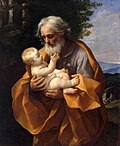 JosephRighteous · Betrothed of the Virgin MaryJan 19
 AaronProphet · The High PriestJan 19
 Macarius of EgyptVenerable · Father of the Scetis DesertJan 19
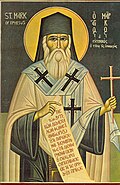 Mark of EphesusSaint · Metropolitan of EphesusJan 19
 Anastasius of SinaiVenerable · Abbot on Mount SinaiJan 19
 Marius, Martha, Audifax and AbachumHoly MartyrsJan 19
 Agricius of TrierSaint · Bishop of TrierJan 19
 Pontianus of SpoletoMartyr · Martyr of SpoletoJan 19
 Contentius of BayeuxSaint · Bishop of BayeuxJan 19
 Euthymius the Confessor of GeorgiaConfessor · Georgian ascetic monk and scholarJan 19
 Anton of MartqopiStylite · One of the Syrian FathersJan 19
- Arsenius of CorfuSaint · Archbishop of CorfuJan 19