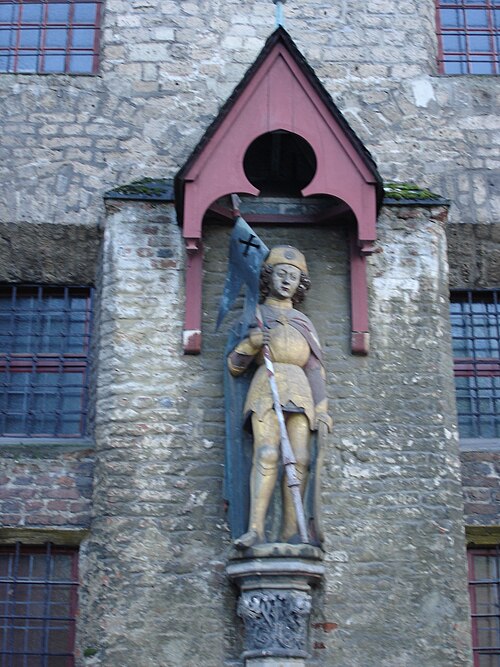
Martyr
Victor of Xanten
Martyr of the fourth century, whose relics have been kept since the twelfth century in Xanten Cathedral.
- Feast
- October 10old style October 23
- Reposed
- 4004th century
- Order
- Martyrs
Life
The Holy Martyr Victor of Xanten was a martyr of the fourth century, venerated by the Catholic and the Orthodox Church. Since the twelfth century his bones, held to be the saint's, have been kept in a shrine set into the high altar of Xanten cathedral. His feast is on 10 October.
According to tradition, Victor was a cohort commander in the Theban Legion, who escaped the decimation at Agaunum but then fell victim to the persecution under the emperor Maximian, with other companions, at Xanten. He was killed in the amphitheatre at Castra Vetera (now Xanten) because he would not sacrifice to the Roman gods; in one version he was beheaded, and the body taken out of the city and thrown into a swamp. He is linked with Saint Ursus of Solothurn and is said to have been a relative of Saint Verena; in other traditions he was a companion of Gereon of Cologne. He is first mentioned by Gregory of Tours, in connection with the finding of the bones of a martyr, Mallosus, in the village of Birten, now a suburb of Xanten. The name Xanten comes from ze santen, which points to a well-known and venerated burial place. Legend says that the empress Helena found the bones of Victor and his legion and raised a chapel in their honour; a stone chapel existed until the early fifteenth century, when it was replaced by a new one, of 1401. The veneration of Victor is mixed with that of Victor of Agaunum and Victor of Solothurn, martyrs of the same Legion.
In his honour are dedicated, besides the cathedral of Xanten, the church at Birten and at least seven more churches in Germany, three in the Netherlands and one in Luxembourg. He is shown as a soldier in a knight's armour.
Commemorated the same day October 10
 Paulinus of YorkSaint · First Bishop of YorkOct 10
 Gereon of CologneMartyr · Martyr of CologneOct 10
 Ambrose of OptinaVenerable · Elder of Optina MonasteryOct 10
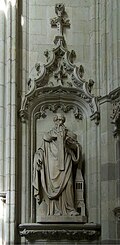 Clarus of NantesSaint · First Bishop of NantesOct 10
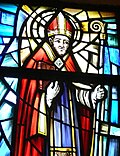 Cerbonius of PopuloniaSaint · Bishop of PopuloniaOct 10
 Eulampius and EulampiaHoly MartyrsOct 10
- Pinytus of KnossosSaint · Bishop of KnossosOct 10
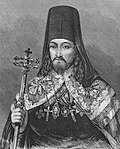 Innocent of PenzaSaint · Bishop of Penza and SaratovOct 10
 Martyrs of ZographouHoly Venerable Martyrs · Monks of Mount AthosOct 10
- Andrew of TotmaFool-for-Christ · Fool for ChristOct 10
 Methodius of PochaivVenerable · First abbot of Pochaiv MonasteryOct 10
- 200 MartyrsHoly MartyrsOct 10