
Hieromartyr
Vladimir Lozina-Lozinsky
Archpriest
Archpriest born at Dukhovshchina, who died a martyr in Novgorod on 26 December 1937; canonized in 2000.
- Feast
- December 13old style December 26
- Reposed
- 193720th century
- Place
- Veliky Novgorod
- Order
- Martyrs
Life
Saint Vladimir Lozina-Lozinsky (1885-1937), hieromartyr, was a lawyer, poet and archpriest of the cathedral in Novgorod, a confessor in the Solovki camp and a martyr, shot on 26 December 1937. He was glorified in 2000 among the New Martyrs and Confessors of Russia. He is commemorated on 26 December (13 December by the old calendar).
Family and youth
He was born on 26 May 1885 in the town of Dukhovshchina in Smolensk province, into a family of district doctors. His father, Konstantin Lozina-Lozinsky, came from an old noble family of Podolia, and his mother, Varvara Karlovna, was the daughter of a lieutenant general, a hero of the Crimean War. In 1888 his mother caught typhus while nursing the sick and died. The family moved to Saint Petersburg, where his father became a doctor at the Putilov works. Vladimir was an unusually kind and unselfish child, with a natural nobility.
In 1904 he graduated from the gymnasium and entered the law faculty of Saint Petersburg University. From 1910 he worked at the Senate, and in 1912 he graduated from the Archaeological Institute. When the First World War began he wished to go to the front but was not accepted for health reasons, and he directed the transport of the wounded from the stations to the hospitals. He spoke European languages well and wrote verse, some of it in French.
Ordination and first sufferings
After the Bolsheviks came to power he worked as a statistician on the railway. His family lived in a church house, next to the church of Saint Catherine. At the beginning of the Red Terror, Archpriest Alexander Vasiliev, rector of that church, and its clergy were shot, and Vladimir then decided to become a priest. In 1920 he was ordained priest and served at the University church, then as its rector, when it had been moved to an apartment and consecrated in honour of All Saints. For a short time he was second priest at the church of Saints Cosmas and Damian, under Bishop Manuel. In 1923 he graduated from the Petrograd Theological Institute.
In 1924 he was arrested in the case of the Spassky Brotherhood but was released at his relatives' request on grounds of acute mental illness. None of his acquaintances thought him mad, and his testimony at the investigation was considered and cautious, that of a legally trained man who did not wish to betray anyone. In February 1925 he was arrested again, accused of a monarchist conspiracy and of serving memorial services with commemoration of the tsar's family, and was sentenced to death, commuted to ten years' imprisonment. He was held in the Solovki camp.
Solovki and exile
Father Vladimir's personality remained in the memory of those imprisoned with him. Elegant, with a small handsome beard, he differed in appearance from the usual type of Russian clergy. His nobility of conduct did not disappear even when he weighed salt fish at a food stall, carried parcels or washed latrines. His innate tact and above all the deep love of people that shone in him made him one of their own among the others. A contemporary said he was so luminous and so gentle that he seemed the embodiment of a sinless purity that nothing could stain.
In November 1928 the camp term was replaced by five years of exile in Siberia. After the transit prison in Leningrad he was sent to the village of Pyanovo, 150 kilometres from Bratsk, where Bishop Basil (Zelentsov) was also serving his exile.
Novgorod and martyrdom
Released from exile, he served from 1934 at Novgorod, under Archbishop Venedikt. From 1935 he was rector of the cathedral of the Archangel Michael. Contemporaries described him as cheerful and unusually strong in spirit, an ascetic who lived forgetting himself and his body, for his neighbour and for love of the suffering, and the strength of his soul in an exhausted body amazed them.
On 14 May 1936 he was arrested and sent for examination to the psychiatric hospital, where he was found sane. On 8 December 1937 he was arrested again, accused of taking part in an anti-Soviet group with an invented name. He admitted no guilt and denied the existence of the group. On 19 December he was sentenced to death by the NKVD troika of the Novgorod region, and on 26 December 1937 he was shot.
Veneration
He was numbered among the New Martyrs and Confessors of Russia at the Jubilee Council of Bishops in August 2000, for veneration throughout the Church. He left behind a small body of poetry.
Commemorated the same day December 13
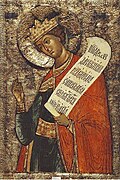 SolomonProphet · King of IsraelDec 13
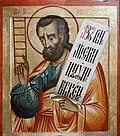 JacobRighteous · The Patriarch IsraelDec 13
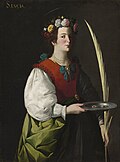 LucyMartyr · of SyracuseDec 13
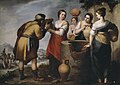 RebeccaRighteous · The MatriarchDec 13
 DeborahProphet · Prophetess and JudgeDec 13
 BenjaminRighteous · The PatriarchDec 13
 MiriamProphet · Sister of Moses and AaronDec 13
 RuthSaint · Ancestor of the LordDec 13
 NathanProphet · The ProphetDec 13
 JudocVenerable · Hermit of Breton birthDec 13
 HezronRighteous · Ancestor of the SaviorDec 13
 JudithSaint · Widow who saved BethuliaDec 13