
Hieromartyr
Vladimir Proferansov
Archpriest
Russian archpriest executed at the Butovo firing range in 1937; canonized in 2000.
- Feast
- December 2old style December 15
- Reposed
- 193720th century
- Place
- Butovo firing range
- Order
- Martyrs
Life
Saint Vladimir Proferansov (1874-1937), hieromartyr, was an archpriest in Moscow, a teacher of religion and personal secretary to Patriarch Tikhon. He refused to become an informer for the secret police, was exiled, and in 1937 was shot at the Butovo firing range. He was numbered among the saints in 2000. He is commemorated on 2 December.
Family and beginnings
He was born into a church servant's family: his father, Alexander Ivanovich, was a psalm-reader at Novodevichy Convent, and his mother, Maria Fyodorovna, born Malinina, was a housewife. The family had four children, three sons and a daughter, and lived in their own house on Malaya Tsaritsynskaya (now Pirogovskaya) street. In 1897 he married Maria, daughter of the priest Pyotr Malinin, and their son died at the age of eleven.
He graduated from the Moscow seminary in 1898 and for many years taught religion in various Moscow schools, receiving several awards for his work in public education. At the same time he served as altar server and, from 1902, psalm-reader at the church of the Great Martyr George in Starye Luchniki in Moscow, where he later became church warden (1915), deacon (1916) and, from 1918, clerk at the Moscow diocesan council. On 25 July 1920 he was ordained priest and assigned to the same church. From 1923 he was personal secretary to Patriarch Tikhon and was raised to archpriest. In 1924 he received a pectoral cross for his work in the Patriarch's chancery. Later he received the right to wear the mitre. He was rector of the church of Saint George until it was closed in 1932, and he worked in the Synod beside Metropolitan Sergius.
The first arrest
His high position, the fact that he knew Patriarch Tikhon and Metropolitan Sergius well, and the closeness of his church to the OGPU building on the Lubyanka led the authorities to try to draw him into cooperation. On 9 January 1932 he was summoned for interrogation and pressed to become an informer, but neither persuasion nor threats had any effect. The investigator demanded that he sign a statement promising to keep the conversation in absolute secrecy on pain of the severest punishment. After his refusal he was arrested on 8 February 1932 and imprisoned in Butyrka.
At the interrogations he denied any grouping around him, any illegal meetings or any word against Soviet power. He admitted only that when notes with the names of prisoners were handed in, he always commemorated them. Even when asked whether he admitted the charge, he answered calmly that he did not consider himself guilty of anti-Soviet agitation. On 14 March 1932 he was sentenced to three years of exile at Semipalatinsk, where he worked as a hospital accountant and met the priest Konstantin Nekrasov, who then invited him to Mozhaisk.
The last years and martyrdom
He returned from exile in 1935 already gravely ill and, not being allowed to live in Moscow, settled in Mozhaisk in a house on Krasnoarmeiskaya street. On Sundays and feast days he served with Father Konstantin at the church of the Prophet Elijah in a nearby village, walking there on foot. He lived alone, leaving his family in Moscow, and in all questionnaires he wrote that he was "alone", to protect his relatives from persecution.
On 5 December 1937 he was arrested again, with ten other priests of Mozhaisk, accused of hidden counter-revolutionary activity. He admitted no guilt and answered at interrogation as before, that he knew of no counter-revolutionary activity and had carried out none. On 9 December 1937 an NKVD troika sentenced him to death, and on 15 December, ten days after his arrest, he was shot at the Butovo firing range together with Father Konstantin Nekrasov and others. His grave is unknown.
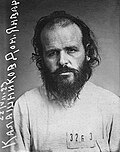
His only surviving photograph carries a counsel in his own hand: when you are weighed down, when you fear people and yourself, when you are tangled in thoughts and affairs, tell yourself that you will love those with whom life brings you together, and you will see how everything eases and is untangled. In 2000 the Council of Bishops of the Russian Orthodox Church numbered him among the New Martyrs and Confessors of Russia. He is especially venerated at the church of the Great Martyr George in Starye Luchniki, where his icon and an exhibition devoted to him are found.
Commemorated the same day December 2
 HabakkukProphet · The ProphetDec 2
 Stefan Uroš VRight-Believing · Tsar of the SerbsDec 2
 Chromatius of AquileiaSaint · Bishop of AquileiaDec 2
 BibianaMartyrDec 2
 Jovan BrankovićRight-Believing · Despot of SerbiaDec 2
 NonnusSaint · Bishop of EdessaDec 2
 Cleopa of SihăstriaVenerable · Archimandrite and abbot of SihăstriaDec 2
 Mirope of ChiosMartyrDec 2
 Ise of TsilkaniVenerable · One of the Syrian FathersDec 2
 Danact KalashnikovVenerable Martyr · HieromonkDec 2
- Avitianus of RouenSaint · Bishop of RouenDec 2
- Tadec of LandevennecHieromartyr · Hieromonk of LandevennecDec 2