Saint
Wilgefortis
A virgin of Western tradition, also called Liberata.
Uncertain source. We are looking to verify this information as soon as we can.
- Feast
- July 20old style August 2
- Era
- 8th century
Life
Wilgefortis (Liberata, Livrade, Kümmernis, Uncumber) is not a historical person but a legendary folk saint, whose story arose in the 14th century. Her distinguishing feature is a large beard. She has not been canonized, and her veneration is of popular tradition; she is commemorated, according to the record, on 20 July.
The legend, set in Portugal and Galicia, says that she was a noblewoman whom her father had promised in marriage to a Moorish king. To thwart the unwanted wedding she had taken a vow of virginity and prayed to become repulsive. Her prayer was answered, she grew a beard, and the engagement was broken. In anger, her father had her crucified. Her name is thought to derive from the Latin virgo fortis, "courageous virgin". In England she was called Uncumber, in Dutch Ontkommer, in German Kümmernis ("grief"), in Poland Frasobliwa, in the Czech lands Starosta. She was sometimes confused with a female martyr called Liberata in Italy and Librada in Spain, whose feast is on 10 July; Liberata is crucified, beardless and usually crowned, while Wilgefortis is always shown with a beard.
Scholars point to the artistic origin of the legend: the Holy Face of Lucca, an old wooden crucifix of the 11th century, showed a bearded crucified Christ in a long tunic, which north of the Alps seemed to people an androgynous figure; to explain it, the story of a saint was born. Some older images of the crucified Christ were repurposed as Wilgefortis. She is recorded here as a figure of legend, not as a historical person.
Commemorated the same day July 20
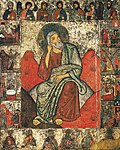 ElijahProphet · The TishbiteJul 20
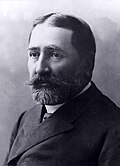 Ilia ChavchavadzeMartyr · Georgian writer and public figureJul 20
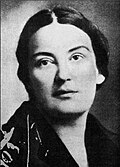 Maria of ParisVenerable Martyr · Nun and member of the ResistanceJul 20
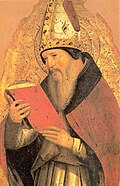 Aurelius of CarthageSaint · Bishop of CarthageJul 20
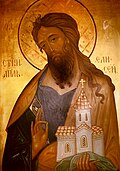 Elisaeus of Caucasian AlbaniaSaint · First bishop of Caucasian AlbaniaJul 20
- Flavian II of AntiochSaint · Patriarch of AntiochJul 20
 Dimitri KlepininHieromartyr · Russian priest of ParisJul 20
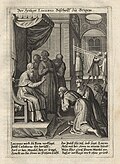 Lucanus of SabionaSaint · Bishop of SabionaJul 20
 Alexis of UgineRighteous · Priest at Ugine, FranceJul 20
- Yuri SkobtsovMartyr · SubdeaconJul 20
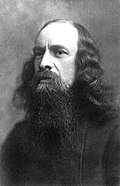 John Steblin-KamenskyHieromartyr · ArchpriestJul 20
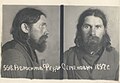 Theodore AbrosimovVenerable Martyr · Novice of PechengaJul 20