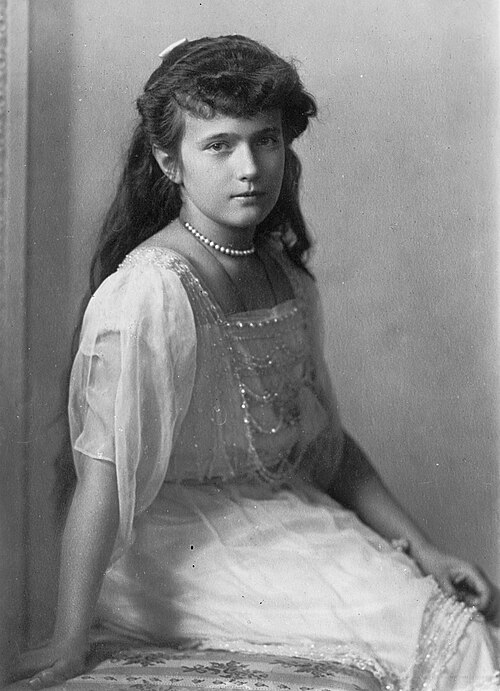
Passion-Bearer
Anastasia
Grand Duchess of Russia
Youngest daughter of Tsar Nicholas II, killed with her family at Yekaterinburg in 1918.
Life
Grand Duchess Anastasia Nikolaevna of Russia was the youngest daughter of Tsar Nicholas II and Tsarina Alexandra Feodorovna. She was killed with her parents, her brother and four faithful servants in the night of 16 to 17 July 1918, in the Ipatiev House at Yekaterinburg, at the age of seventeen. The Russian Orthodox Church canonized all the members of the imperial family in 2000 as holy passion-bearers, after the Russian Church Outside of Russia had done the same in 1981, as new martyrs. Their commemoration is on 4 July by the old calendar, which is 17 July by the civil one.
Childhood
She was born on 18 June 1901 (5 June, old style) at Peterhof, the fourth child and fourth daughter of the imperial family. Her parents and relatives had hoped for a son, an heir to the throne, so her birth caused disappointment. Her name, Anastasia, is Greek and means of the Resurrection; she was named for a martyr of the fourth century. She was the sister of the Grand Duchesses Olga, Tatiana and Maria, known together by the nickname OTMA, and the elder sister of the Tsarevich Alexei. With Maria she formed the little pair in the family; they shared a room and often wore similar dresses.
The tsar's children were raised simply: they slept on hard camp cots without pillows, washed in cold water in the morning, tidied their own rooms and sewed things that were sold at charity events. The servants called her Anastasia Nikolaevna, without a title. Those who knew her describe a lively, merry, witty girl with a gift for mimicry, rather unruly, who climbed trees and played tricks on her tutors. She also had small ailments: a weakness in the back, for which she had massages, and pain in her feet.
The war and the arrest
During the war she and Maria, too young to be nurses like their mother and older sisters, visited the wounded soldiers in the hospital at Tsarskoye Selo and played checkers and billiards with them to cheer them. After the revolution broke out, in February 1917, the family was put under arrest at the Alexander Palace, and the tsar abdicated on 15 March. In August 1917 they were moved to Tobolsk, in Siberia, where the days passed with lessons, walks, plays staged at home and services. Anastasia helped to cut firewood, sewed and drew.
In April 1918 her parents and Maria were taken to Yekaterinburg, to the house of the engineer Ipatiev. Anastasia, Olga, Tatiana and Alexei followed on 23 May. The family lived on a prison timetable, but quietly: they sewed, walked in the garden, played cards and read spiritual books to their mother. They also learned to bake bread. Anastasia kept her last birthday, the seventeenth, on 18 June 1918. While imprisoned, she and her sisters sewed jewels into the corsets of their dresses, hoping they might buy their way to freedom.
The last night
According to the official account, the Ural regional soviet decided on 16 July to kill the family, for fear that the White army would enter the city. In the night of 16 to 17 July the family was woken and taken down to the cellar under the pretext of a move. Anastasia took with her her little dog, Jimmy. The firing squad, led by Yakov Yurovsky, shot at them. According to testimony gathered later, the jewels in the corsets stopped part of the bullets, and Anastasia resisted longest, so that the killers had to finish her with bayonets. The bodies were taken to a spot in the forest, disfigured and thrown into a pit. In the sisters' room her last drawing was found, a swing between two birches.
The remains and the truth about survival
The place of burial stayed secret for a long time. From 1991 the remains of the tsar, the tsarina and three of the daughters were found, and in 2007 those of the Tsarevich Alexei and of one of the sisters, officially identified as Maria (specialists have debated which of the two sisters was the one found in 2007). Genetic tests, published in 2009, showed that no one in the family escaped. Rumours of Anastasia's rescue led several women to claim to be her, the best known being Anna Anderson, and DNA analysis in 1994 showed that she had no connection with the imperial family. The remains of the family, apart from Alexei and one daughter, were buried in the Cathedral of Saints Peter and Paul in Saint Petersburg in 1998.
Veneration
The tsar's family was canonized in 1981 by the Russian Church Outside of Russia and in 2000 by the Russian Orthodox Church, as holy passion-bearers, for the way they received death, with meekness and faith. The Church on the Blood was built on the site of the Ipatiev House. At Ganina Yama, where the bodies were hidden, a monastery was founded in honour of the family. Anastasia is commemorated on the day of the killing and in the synaxis of the new martyrs and confessors of Russia, as well as in the synaxes of the saints of Yekaterinburg, Kostroma, Saint Petersburg and Moscow.
Commemorated the same day July 4
 Andrei RublevVenerable · The IconographerJul 4
 MariaPassion-Bearer · Grand Duchess of RussiaJul 4
 OlgaPassion-Bearer · Grand Duchess of RussiaJul 4
 TatianaPassion-Bearer · Grand Duchess of RussiaJul 4
 Andrei BogolyubskyRight-Believing · Grand Prince of VladimirJul 4
 Andrew of CreteSaint · Archbishop of CreteJul 4
 Eugene BotkinPassion-Bearer · Physician of the imperial familyJul 4
 Michael ChoniatesSaint · Metropolitan of AthensJul 4
 Anastasia of KievVenerable · Grand Duchess, later a nunJul 4
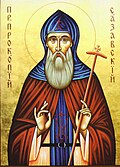 Procopius of SázavaVenerable · Abbot of Sázava MonasteryJul 4
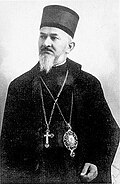 Sava of Gornji KarlovacHieromartyr · Bishop of Gornji KarlovacJul 4
- Elias of JerusalemSaint · Patriarch of JerusalemJul 4