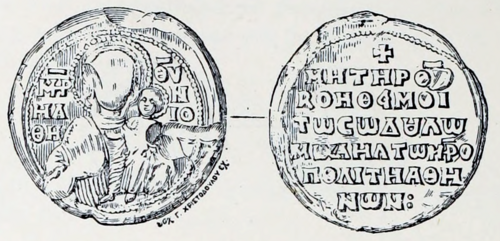
Saint
Michael Choniates
Metropolitan of Athens
Byzantine cleric and writer born at Chonae, Metropolitan of Athens, who died around 1220.
Life
Saint Michael Choniates, also called Acominatus, was Metropolitan of Athens from 1182 to 1204, a notable Byzantine cleric and writer who shepherded the city in hard times and defended the Acropolis against invaders. The Church commemorates him on 4 July, the day of his repose.
Youth and learning
He was born around 1138 at Chonae, the ancient Colossae in Phrygia in Asia Minor, into a well-to-do family, the Acominati. His brother was the historian Niketas Choniates. His father sent him young to Constantinople to be educated, where he became the pupil and protégé of the learned Eustathius, later Metropolitan of Thessalonica. He thus came to know classical culture, Homer, Pindar, Demosthenes, Thucydides and other ancient authors, and entered the higher circles of the Church in the capital. He was gentle, diligent and full of kindness.
Metropolitan of Athens
He served first under Patriarch Theodosius as under-secretary and was ordained archbishop of Athens, according to some accounts in 1175, and in 1182 as metropolitan. He reached Athens in September 1182, to succeed Metropolitan George Xeros. The metropolis then had under it many dioceses, among them Davleia, Euripos, Koroneia, Andros, Oreos, Skyros, Karystos, Syros, Serifos and Kea, and its seat was in the church of the Mother of God Atheniotissa, that is, the Parthenon. His ministry is one of the few bright pages in the dark history of medieval Athens.
He worked to raise his flock, fallen into poverty, in material and spiritual ways, writing constantly to Constantinople and working with the governors of the theme of Hellas and with local officials. By his preaching he tried to awaken again in the people the Christian spirit and manner of life, from which poverty had drawn them away, and he sought to bring order among clergy and Church servants caught up in misgovernment and scandals. His memorial to the emperor Alexios III Angelos on the abuses of Byzantine administration is among his most notable writings.
Defence of the Acropolis and exile
In 1204, after the capture of Constantinople by the Latins in the Fourth Crusade, Michael defended the Acropolis of Athens against the Greek commander Leo Sgouros and held it until 1205, when the Crusaders led by Marquis Boniface of Montferrat arrived. Without bloodshed the metropolitan surrendered the city to Boniface and withdrew to the island of Kea, to the monastery of Saint John the Baptist, where he spent a long time in solitude and study. His pupil George Bardanes accompanied him into exile and later became a distinguished bishop. About 1217 he moved to the monastery of Vodonitsa near Thermopylae, where he fell asleep in the Lord on 4 July 1222.
Writings
Michael left homilies, speeches of praise and funeral orations, nearly two hundred letters and poems. His sermons rest almost entirely on the Bible and are full of deep thought and ardour. His letters and speeches are a precious witness to life in Athens and Attica under the Latin Empire. In his writings he defends the interests of provincial towns, rises against the officials of the capital and against imperial oppression, and describes Byzantine life with a keen eye. He also wrote a poetic lament over the decline of Athens and monodies on his brother Niketas and on Eustathius of Thessalonica. Among classical scholars he is known as the last owner of the complete Hecale and Aitia of Callimachus. It is believed that his daughter Constantina taught Greek and science to John of Basingstoke, Archdeacon of Leicester.
His commemoration is on 4 July.
Commemorated the same day July 4
 Andrei RublevVenerable · The IconographerJul 4
 AnastasiaPassion-Bearer · Grand Duchess of RussiaJul 4
 MariaPassion-Bearer · Grand Duchess of RussiaJul 4
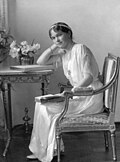 OlgaPassion-Bearer · Grand Duchess of RussiaJul 4
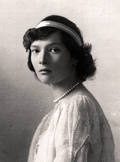 TatianaPassion-Bearer · Grand Duchess of RussiaJul 4
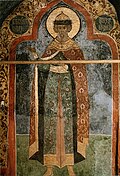 Andrei BogolyubskyRight-Believing · Grand Prince of VladimirJul 4
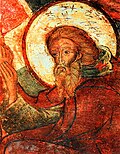 Andrew of CreteSaint · Archbishop of CreteJul 4
 Eugene BotkinPassion-Bearer · Physician of the imperial familyJul 4
 Anastasia of KievVenerable · Grand Duchess, later a nunJul 4
 Procopius of SázavaVenerable · Abbot of Sázava MonasteryJul 4
 Sava of Gornji KarlovacHieromartyr · Bishop of Gornji KarlovacJul 4
- Elias of JerusalemSaint · Patriarch of JerusalemJul 4