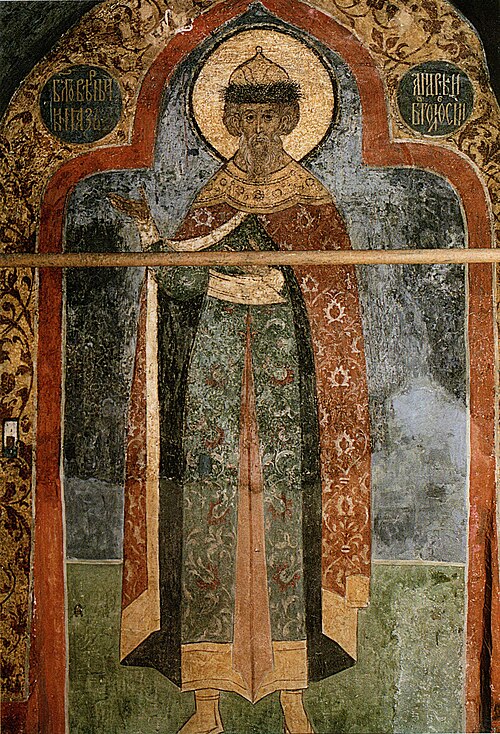
Right-Believing
Andrei Bogolyubsky
Grand Prince of Vladimir
Prince of Vladimir-Suzdal from 1157 to 1174, builder of churches, killed in a plot of boyars.
- Feast
- July 4old style July 17
- Reposed
- 117412th century
- Place
- Bogolyubovo
Life
Saint Andrei Bogolyubsky, the devout prince, was prince of Vladimir-Suzdal from 1157 until his death in 1174, a builder of churches, maker of the power of north-eastern Rus, and a martyr, killed in a conspiracy of the boyars. The Russian Orthodox Church placed him among the saints in 1702. His commemoration is on 4 July, Old Style (17 July by the civil calendar), and he is also remembered among the saints of Vladimir at another day in summer.
Early life
He was born around 1110 or 1111, the son of Yuri Dolgoruky, prince of Rostov and Suzdal, and of a Cuman princess, named Maria in baptism. The chroniclers say that from childhood he loved the Church services and gave alms. He took part in many campaigns of his father. When Yuri became grand prince of Kiev, he gave his son Vyshgorod, near Kiev.
In the spring of 1155 Andrei left Vyshgorod for the land of Suzdal, taking with him the icon of the Mother of God that tradition attributes to Saint Luke the Evangelist. The Kievan Chronicle regarded the act as theft, while the Suzdalian one passed no judgment. According to tradition, the horses carrying the icon stopped near Vladimir and would go no further, and the Mother of God appeared to him and commanded him to set the icon at Vladimir and build a church at that place. There Bogolyubovo was born, from which comes his nickname Bogolyubsky, "lover of God." The icon became the most venerated in Russia, the Vladimir Icon of the Mother of God.
Prince and builder
After his father's death in 1157 he received Suzdal, Rostov and Vladimir, and in 1162 he drove out his younger brothers and their stepmother, becoming sole ruler. He made Vladimir his seat, rather than the older cities. He built the walls of Vladimir (1158 to 1164) and the cathedral of the Dormition of the Mother of God, and at Bogolyubovo the palace and church. Other white-stone churches were raised in his time. The church of the Intercession of the Mother of God on the River Nerl, of 1165, is one of the most beautiful of Russia. A later tradition says he built it in memory of his son Izyaslav, who died in the war with the Volga Bulgars, but the chronicles do not link the two, and the church may be older. In 1162 or 1164 he asked Constantinople to establish a metropolis at Vladimir, but the patriarch refused.
In March 1169 his troops, led by his son Mstislav, took and plundered Kiev. Andrei did not take part in the battle and did not wish to rule in Kiev, but set his brother Gleb there. His attempts to take control of Novgorod and Kiev ended in defeats: at Novgorod in 1170, and at Vyshgorod in 1173.
Martyrdom
The prince had quarrelled with many boyars. In the night between 28 and 30 June 1174, about twenty conspirators, led by the Kuchkovichi brothers, entered the palace at Bogolyubovo and killed him. The Church's account says he fought, was struck from behind, that the murderers fled and then came back and found him. His last words, according to the chronicles, were: "Lord, into your hands I commit my spirit." The chronicles say his right hand was cut off, but when his remains were examined in 1965, cuts were found on the bones of the left arm. His death led to a war of succession.
His body lay at first unguarded, then was buried at Bogolyubovo by a faithful servant and the abbot Arsenius. On the sixth day the people of Vladimir carried him with honour to the Dormition cathedral, his own foundation.
Veneration
Andrei was honoured by the people as a saint from the days of the chroniclers. In 1702, when the relics of Saint Alexander Nevsky were brought to the new capital, those of Andrei were found in the Dormition cathedral, and he was canonized by the Russian Church. He is shown as a prince with a cross in his hand. The church of the Intercession on the Nerl remains a masterpiece of Russian architecture today.
Commemorated the same day July 4
 Andrei RublevVenerable · The IconographerJul 4
 AnastasiaPassion-Bearer · Grand Duchess of RussiaJul 4
 MariaPassion-Bearer · Grand Duchess of RussiaJul 4
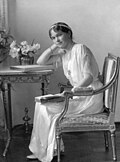 OlgaPassion-Bearer · Grand Duchess of RussiaJul 4
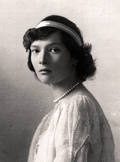 TatianaPassion-Bearer · Grand Duchess of RussiaJul 4
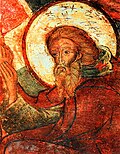 Andrew of CreteSaint · Archbishop of CreteJul 4
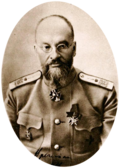 Eugene BotkinPassion-Bearer · Physician of the imperial familyJul 4
 Michael ChoniatesSaint · Metropolitan of AthensJul 4
 Anastasia of KievVenerable · Grand Duchess, later a nunJul 4
 Procopius of SázavaVenerable · Abbot of Sázava MonasteryJul 4
 Sava of Gornji KarlovacHieromartyr · Bishop of Gornji KarlovacJul 4
- Elias of JerusalemSaint · Patriarch of JerusalemJul 4