Saint
Bardo of Mainz
Archbishop of Mainz
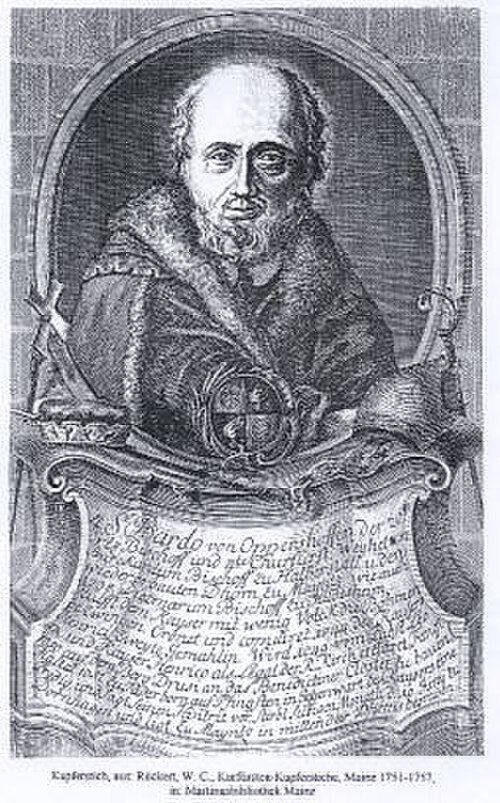
Archbishop of Mainz from 1031 until his death in 1051, earlier abbot of Werden and Hersfeld.
Life
Saint Bardo (about 980 to 10/11 June 1051) was archbishop of Mainz from 1031 until his death, earlier abbot of Werden (1030 to 1031) and of Hersfeld (1031). He is commemorated on 10 June, as a saint of Mainz. The English source says he is venerated as a saint in the Roman Catholic Church and in the Orthodox Church, but gives no details about the Orthodox veneration; in our sources it appears only in this mention.
Life
He was born at Oppershofen, in the Wetterau, in Upper Hesse. He was brought up and trained at the abbey of Fulda, where in 1018 he was chosen deacon and provost of Neuenberg. Toward the end of March 1029 Emperor Conrad II visited Fulda and the next year appointed him abbot of Werden; he is said to have given special attention to the obedience of the monks and the quality of their service and established a service of hospitality and care for those wounded in war. At the beginning of 1031 he was moved as abbot to Hersfeld, and on 30 May of the same year, through kinship with Empress Gisela, wife of Conrad, he was made archbishop of Mainz, after the death of Aribo.
As archbishop he spent much time with the emperors of the Franconian house. He completed the cathedral of Mainz in 1037. A count of Thuringia, Louis the Bearded, ancestor of the Ludowingian dynasty, was in his service, and in 1034 he gave him permission to build the castle of Schauenburg. In 1040, with the margrave of Meissen Eckard II, he led the Thuringian army that attacked from the north the Bohemia of Bretislav I, but the advance, begun well, ended without result. In 1041 he accompanied King Henry III the Black on the campaign against Bohemia. He consecrated churches and chapels in the sees of Germany left without a bishop and presided in 1049 over the synod of Mainz, before Henry, which condemned simony and the marriage of priests. He met Henry again in May 1051 at Paderborn. On the way back to Mainz he fell ill and died at present-day Oberdorla; he was buried in the cathedral of Mainz. He is regarded as patron of Mainz and is venerated in the diocese of Mainz and especially in his native land, Upper Hesse.
Commemorated the same day June 10
 Etheldreda of ElyVenerable · Abbess of ElyJun 10
 Olivia of PalermoMartyrJun 10
 John of TobolskSaint · Metropolitan of TobolskJun 10
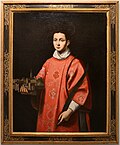 Maximus of AveiaMartyr · Deacon and martyrJun 10
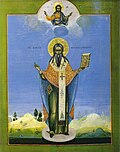 Basil of RyazanSaint · Bishop of Ryazan and MuromJun 10
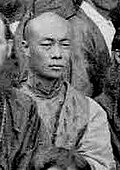 Mitrophan Chi SungHieromartyr · First Chinese Orthodox priestJun 10
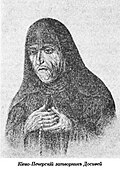 Dosifei of KyivVenerable · Rassophore at the Kiev Caves LavraJun 10
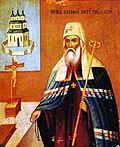 Philotheus of TobolskSaint · Metropolitan of Siberia and TobolskJun 10
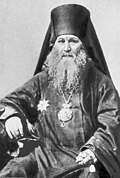 Gerasim DobroserdovSaint · Bishop of AstrakhanJun 10
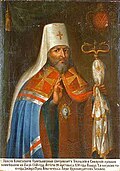 Paul of TobolskSaint · Metropolitan of TobolskJun 10
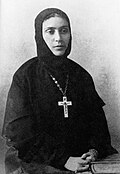 Schema-abbess Tamar MarjanishviliConfessor · Georgian schema-abbessJun 10
 Dalmat of IsetskVenerable · Founder of Dalmatov MonasteryJun 10