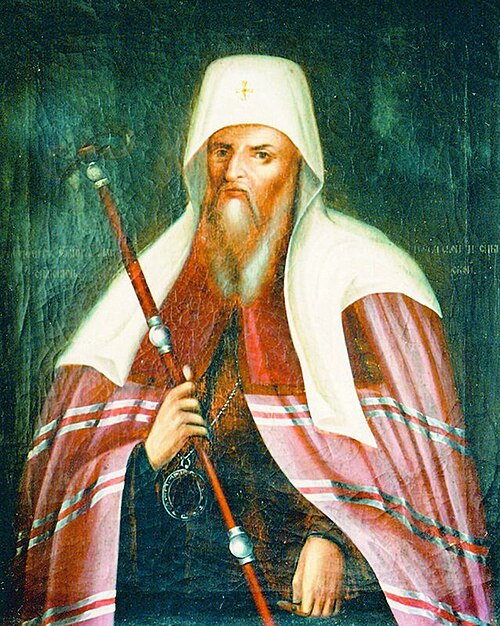
Saint
John of Tobolsk
Metropolitan of Tobolsk
Scholar and Metropolitan of Tobolsk and Siberia, of Ukrainian origin, who died in 1715.
Life
Saint John, Metropolitan of Tobolsk and all Siberia, was a Ukrainian-born scholar, poet and missionary, born in 1651. He was archbishop of Chernigov and then a missionary hierarch in Siberia, where he fell asleep in 1715. His feast is on 10 June, the day of his repose, and since 1984 all the saints of Siberia are also commemorated on that day.
He was born in December 1651 at Nizhyn, son of the nobleman Maxim Vasilkovsky, who moved to Kiev, leased mills and land from the Kiev Caves Lavra, and became known for gifts toward the building of many churches. His mother was named Euphrosyne. The family, with many sons, was under the protection of Hetman Ivan Mazepa. Nothing is preserved about his childhood, except what he says himself in his work The Traveller, that from youth he gathered a great multitude of books as a precious treasure. He studied at the Kiev Academy and, after graduating in 1673 or 1675, stayed there as a teacher of poetics, rhetoric and Latin. In 1676 he was tonsured a monk at the Kiev Caves Lavra, and by 1678 he was administering it. Soon he was sent to Chernigov, where he taught Latin. When Archbishop Theodore of Uglich wanted a successor, he named him in 1695 archimandrite of the Yelets monastery. After Theodore's repose in 1696, John became archbishop of Chernigov in 1697. In his pastorate he founded the Chernigov Collegium, a model for the spiritual seminaries, and wrote prose and poetry. His best-known work is the Iliotropion ("Sunflower"), translated and adapted from the Latin of the German Jesuit Jeremias Drexel. The book teaches that the soul must always turn toward God as the sunflower turns toward the sun. He is also the author of a great poem in honour of the Mother of God, from 1707, with some twenty-three thousand lines.
In 1711, by order of Tsar Peter the Great, he was made Metropolitan of Tobolsk and all Siberia, in place of Metropolitan Philotheus. There he laboured for schools and for mission among the non-Christian peoples of Siberia, many of whom were still pagan. He brought the customs of the Church in Ukraine, inviting icon painters from Ukraine to adorn the churches and monasteries of Tobolsk and Tyumen. In 1714 he organised the Russian mission to Beijing. According to tradition he foretold to Tsar Peter a victory over the Swedes. Already in his lifetime he was regarded as a saint by the local people.
On 10 June 1715 he served his last Liturgy, then invited the clergy and the poor of the city to a meal, which he served himself, and withdrew to his cell, where he fell asleep in peace, at prayer. After his repose many wonders were told at his grave. He was venerated as a saint in Siberia, and in 1916 the Russian Church glorified him for veneration throughout the Church, the last canonization of the synodal era. His memory is also kept on the third Sunday after Pentecost, in the Synaxis of the Saints of Galicia and that of the saints of Bryansk. He is a distant relative of Saint John of Shanghai and San Francisco, who bears his name.
Commemorated the same day June 10
 Etheldreda of ElyVenerable · Abbess of ElyJun 10
 Olivia of PalermoMartyrJun 10
 Maximus of AveiaMartyr · Deacon and martyrJun 10
 Basil of RyazanSaint · Bishop of Ryazan and MuromJun 10
 Mitrophan Chi SungHieromartyr · First Chinese Orthodox priestJun 10
 Dosifei of KyivVenerable · Rassophore at the Kiev Caves LavraJun 10
 Philotheus of TobolskSaint · Metropolitan of Siberia and TobolskJun 10
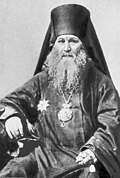 Gerasim DobroserdovSaint · Bishop of AstrakhanJun 10
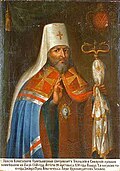 Paul of TobolskSaint · Metropolitan of TobolskJun 10
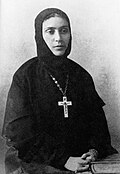 Schema-abbess Tamar MarjanishviliConfessor · Georgian schema-abbessJun 10
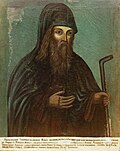 Dalmat of IsetskVenerable · Founder of Dalmatov MonasteryJun 10
 Antonia and AlexanderHoly MartyrsJun 10