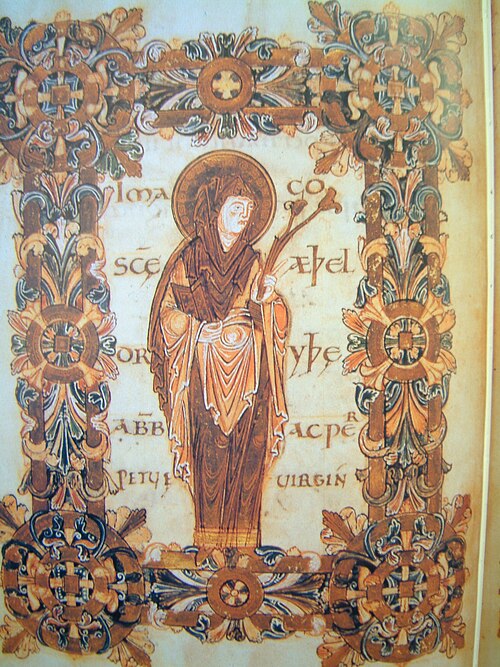
Venerable
Etheldreda of Ely
Abbess of Ely
East Anglian princess and queen in Northumbria, abbess of Ely, who died in 679.
- Feast
- June 10old style June 23
- Reposed
- 6797th century
- Place
- Ely
- Order
- Venerables
Life
Venerable Etheldreda of Ely (Æthelthryth, Audrey) was a princess of East Anglia, a queen in Northumbria and an abbess at Ely, in the seventh century. She was born in 636 and died on 23 June 679. She is one of the best-known Anglo-Saxon saints, called by Bede the virgin mother of many virgins. She is commemorated on 23 June.
Family and marriages
Etheldreda was born, most probably at Exning, near Newmarket in Suffolk, a daughter of King Anna of East Anglia. Her sisters Seaxburh and Wendreda, as well as Withburga, also founded monasteries. Around 652 she was married to Tondberct, chief of the South Gyrwe, but she kept all along the vow of perpetual virginity that she had made before. Her husband, a devout man, respected her will. When he died, in 655, she withdrew to the Isle of Ely, which she had received from him as a wedding gift.
In 660 she was married for political reasons to Ecgfrith of Northumbria, who was only fourteen or fifteen. After he came to the throne, in 670, she wished to enter monastic life. This led to the quarrel between Ecgfrith and Bishop Wilfrid of York, who was her confessor. According to one account the king at first agreed that she should remain a virgin, but around 672 he asked the bishop to restore his rights as husband. Wilfrid nevertheless persuaded him to let her live for a time in peace as a sister at the monastery of Coldingham, founded by the king's aunt, Æbbe. In the end, for fear of being taken by force, she fled towards Ely with two nuns. They were not caught, helped, according to tradition, by the rising of the tide.
Another version of the legend says that she halted at a place called Stow and sheltered under an ash tree that grew miraculously from her staff planted in the ground. Ecgfrith then married Eormenburg and in 678 expelled Wilfrid.
Abbess of Ely
Around 671 or 672 she became abbess at Ely, and in 673 she founded there a double monastery, with a church. It was destroyed by the Danes in 870, and on its site the cathedral was later begun.
Death and relics
According to Bede she died of a tumour on her neck, which she regarded as sent by God in kindness, to relieve her of the vanity of having worn heavy necklaces in her youth. Sixteen years after her death, in 695, her sister and successor Seaxburh moved her from the common grave to the new church at Ely. When the tomb was opened her body was found incorrupt, and the coffin and clothes had power to work miracles. A sarcophagus of white marble was taken from the Roman ruins at Grantchester for her, and it proved a fit. Seaxburh washed the body and wrapped it in new robes, then laid it again in the tomb. After Seaxburh, her niece and great-niece were abbesses at Ely.
Veneration
The Church of England commemorates her on 23 June, and according to the Book of Common Prayer also on 17 October. In London the church of Saint Etheldreda is the oldest surviving Catholic church in England. Part of her relics is at Colchester.
Commemorated the same day June 10
 Olivia of PalermoMartyrJun 10
 John of TobolskSaint · Metropolitan of TobolskJun 10
 Maximus of AveiaMartyr · Deacon and martyrJun 10
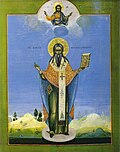 Basil of RyazanSaint · Bishop of Ryazan and MuromJun 10
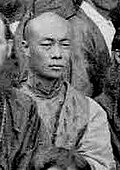 Mitrophan Chi SungHieromartyr · First Chinese Orthodox priestJun 10
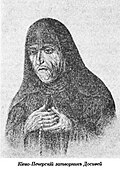 Dosifei of KyivVenerable · Rassophore at the Kiev Caves LavraJun 10
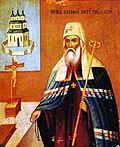 Philotheus of TobolskSaint · Metropolitan of Siberia and TobolskJun 10
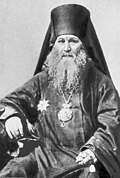 Gerasim DobroserdovSaint · Bishop of AstrakhanJun 10
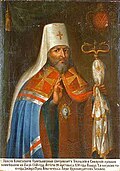 Paul of TobolskSaint · Metropolitan of TobolskJun 10
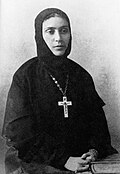 Schema-abbess Tamar MarjanishviliConfessor · Georgian schema-abbessJun 10
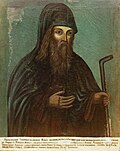 Dalmat of IsetskVenerable · Founder of Dalmatov MonasteryJun 10
 Antonia and AlexanderHoly MartyrsJun 10