
Confessor
Basil of Kineshma
Bishop of Kineshma
Russian bishop born in Kineshma in 1876, who died in 1945 in the village of Birilyussy in the Krasnoyarsk region.
- Feast
- July 31old style August 13
- Reposed
- 194520th century
- Place
- Krasnoyarsk Krai
- Order
- Confessors
Life
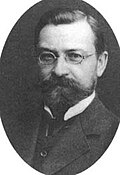
Saint Basil of Kineshma (Vasily Kineshemsky), in the world Veniamin Sergeyevich Preobrazhensky, was bishop of Kineshma, then of Ivanovo-Voznesensk and of Vyazniki, a confessor bishop of the Russian Church in the twentieth century. He was born on 7 January 1876 at Kineshma, in the family of an archpriest, and fell asleep on 13 August 1945 in the village of Birilyussy in the Krasnoyarsk region, after years of exile and camp. He was a scholar, teacher, educator and preacher, and his writings, above all the "Homilies on the Gospel of Mark", are read to this day. He was numbered among the saints in August 2000, but the fate of his veneration after 2012 has remained unclear.
Childhood and studies
In 1885 he entered the ecclesiastical school at Kineshma, which he finished in 1890 with top marks, then the seminary at Kostroma, from which in 1896 he was sent at state expense to the Theological Academy of Kiev. He finished in 1900 as candidate of theology, with the work "The Slavic-Russian Skete Paterikon". Between 1901 and 1910 he taught at the Voronezh seminary polemical theology, history and the refutation of the Russian schism and the local sects. In that time he wrote the work "On the Skete Paterikon", with which he gained the title of master of theology. In 1910 to 1911 he studied in London, deepening his knowledge of European culture, and he knew foreign languages, ancient and modern, well. While in England he was drawn to the Scout movement and spoke personally with its founder, Robert Baden-Powell, and heard him lecture.
Returned to Russia, he taught foreign languages and world history at the boys' gymnasium at Mirgorod, and from 1914 Latin at the Petropavlovsk gymnasium in Moscow, in those years also graduating from the pedagogical institute. After a special trip to England in 1914, where he studied the Scout method closely, two books of his on Scouts appeared, judged the best at the first Scout congress of 1915, which decided that they should be made known in all schools and lyceums of Russia. He took part in two pre-revolutionary Scout congresses, and in a book of 1917 he adapted the system of "scouting" for Orthodox Russia.
It is told that one summer, boating with friends, the boat capsized. About to perish, he prayed to God to spare his life, promising to devote himself wholly to the service of the Church. At that moment he saw a long, thick plank, caught hold of it and reached the shore, while all the others died.
Service at Kineshma
In the autumn of 1917 he returned to Kineshma and became a psalm-reader at the church of the Ascension, where his aged father served. Soon he began to set up in the town and its surroundings Orthodox circles, whose chief aim was the study of Holy Scripture. On 16 July 1920, at Kostroma, Archbishop Seraphim Meshcheryakov of Kostroma and Galich ordained him a celibate priest. In 1921 he received monastic tonsure with the name Basil, after Saint Basil the Great. In the same year he was arrested by the Cheka of the Ivanovo-Voznesensk province as "politically unreliable", as a hostage in the days of the Kronstadt rising.
Bishop
On 14 September 1921 he was consecrated bishop of Kineshma, vicar of the Kostroma diocese, by Archbishop Seraphim, Bishop Hierotheus Pomerantsev of Ivanovo-Voznesensk and Bishop Sebastian Vesti of Nerekhta. He lived in great poverty on the edge of the town, in a small bathhouse, sleeping on the bare floor with a log under his head. He was a gifted preacher, and his sermons drew crowds to church. When famine began at Nizhny Novgorod, he urged the faithful in his sermons to take in children left orphaned. He himself rented a house in which he settled five orphan girls and gave them a woman teacher, a devout Christian. He set up Orthodox spiritual circles, which united the faithful, in which Holy Scripture and the teaching of the Church were studied. He was a firm opponent of the Renovationist movement, which drew the authorities' hostility.
On 4 March 1923 he was appointed bishop of Ivanovo-Voznesensk, but could not stay long in that see. The OGPU plenipotentiary wrote on 22 March 1923 that, to paralyse his persistent effort to raise religious feeling among the masses, among whom he had great influence, it would be well to send him out of the Ivanovo-Voznesensk province to a remote place in the RSFSR. In May 1923 he was arrested and sent for two years to the settlement of Ust-Kulom in the Zyrian region. In July 1925 he returned to Kineshma and gathered around him his spiritual children, but after half a year the authorities asked him to leave the town. He lived in the village of Anapol, in a house built by his cell attendant, Alexander Chumakov, who accompanied him in both exiles.
From 1926 he was bishop of Vyazniki, vicar of the Vladimir diocese. According to Metropolitan Sergius Stragorodsky, the appointment was provisional, since the bishop could not return to Kineshma to govern his vicariate. Of his stay at Vyazniki he wrote: "I feel quiet here for now: I do not take spiritual children yet, for I am not sure of a long stay. There are very few administrative cares." At Vyazniki he finished the "Homilies on the Gospel of Mark". In the spring of 1927 he was sent to Kineshma. In the same year he was appointed bishop of Ivanovo, but did not enter into the governance of the diocese, for the authorities sent him to Kineshma, and in July 1927, to prevent the strengthening of "reactionary Tikhonism", forced him to leave for Kostroma.
Against Metropolitan Sergius's Declaration
He took a dim view of the "Declaration" of 29 July 1927 of Metropolitan Sergius, which called for complete loyalty to Soviet power. He sided with Metropolitans Agathangel Preobrazhensky and Cyril Smirnov. On 19 November 1928 the OGPU board decided to send him for three years to the Urals. He and his spiritual children were found guilty, among other things, that they "were not content with the spiritual enslavement of the backward strata of believers, especially women, but drew them into circles and sisterhoods". He served the exile in the village of Malorechka, 25 kilometres from the town of Taborovo, where he served daily.
After his return, from 1932 he lived at Orel. In March 1933 he was arrested again and sent by stages to the prison at Kineshma. He was sentenced to five years of imprisonment (together with him his faithful disciple Alexander Chumakov was condemned) and was held in a camp near Rybinsk, where he worked on the construction of a canal. In January 1938 he was released and lived at Rybinsk, then in the village of Kotovo in the Yaroslavl region, with Iraida Tikhova. He formed a small religious circle and served secretly in a small church made in a bathhouse.
Last arrest and repose
On 5 November 1943 he was arrested again and held in the internal prison at Yaroslavl. In January 1944 he was taken by stages to Moscow, to the NKVD internal prison, then to Butyrka prison, and sentenced to five years of exile. He was then gravely ill, and after the sentence was read he had a severe heart attack. He was sent to the prison at Krasnoyarsk, then to the distant village of Birilyussy, where he died on 13 August 1945. Before death he asked a nun exiled in the same village to read the canon for the departure of the soul. When she read the last prayer, the saint himself said, in a firm voice, "Amen", and rested quietly.
Canonization and veneration
His name was entered in a provisional list of new martyrs and confessors in preparing the canonization made by the Russian Church Outside Russia in 1981, but the list with his name was published only at the end of the 1990s. On 18 October 1985 his relics were found and brought to Moscow, then moved to the Vvedensky convent at Ivanovo. In 1993 he was numbered among the locally venerated saints of the Ivanovo diocese, and in August 2000 the Jubilee Council of Bishops of the Russian Church glorified him among the New Martyrs and Confessors of Russia. In 2011 a chapel of Saint Basil was opened at Kineshma, beside the church of the Ascension of the Lord.
In June 2012 the relics were taken from the Vvedensky monastery by Hegumen Damaskin Orlovsky, secretary of the synodal commission for canonizations, on the basis of an instruction from Patriarch Kirill, and carried to an undisclosed place; at the same time the convent was given the relics of the hieromartyr Vladimir Vvedensky. In the desk calendar of the Russian Church printed that year his commemoration on 31 July (13 August) and 5 (18) October was missing, as were the names of 35 other new martyrs, and he does not appear in the synaxis of saints of the Ivanovo metropolis of 2015 either. Yet neither the Holy Synod nor the Council of Bishops of February 2013, the only bodies that can decide canonizations or decanonizations in the name of the Church, decided to remove him from the ranks of the saints. Andrei Kuraev thought that new documents might have been found, with facts that would not fit the conduct proper to a saint at interrogation, and Tikhon Shevkunov, who regretted this step, said that the commission's representatives had shown that it was not a "decanonization" but additional research.
On 4 April 2014 a museum of Saint Basil was opened at Kineshma, in a building that exactly repeats the outline of the burned house in which he served in the years of exile. Among the exhibits are his cassock, censer, manuscripts and other personal things kept for more than fifty years in the families of his spiritual children.
Writings
He left the thesis "On the Skete Paterikon", books on the education of Scouts, among them "Boy Scouts" (Moscow, 1915 and 1917) and "The Moral Education of a Scout", and above all the "Homilies on the Gospel of Mark", printed several times since 1996, as well as collections of counsel, among them "The Seed of Love" and "The Spiritual Alphabet".
Commemorated the same day July 31
 Joseph of ArimatheaRighteous · Disciple of the LordJul 31
 Germanus of AuxerreSaint · Bishop of AuxerreJul 31
 John the ExarchSaint · Bulgarian scholarJul 31
 Benjamin of PetrogradHieromartyr · Metropolitan of PetrogradJul 31
 Calimerius of MilanSaint · Bishop of MilanJul 31
 Neot of CornwallVenerable · Hermit in CornwallJul 31
 George NovitskyMartyr · Professor of lawJul 31
 John KovsharovMartyr · Lawyer of Alexander Nevsky LavraJul 31
 Sergius SheinHieromartyr · Archimandrite and former Duma deputyJul 31
- Arsen of NinotsmindaVenerable · Georgian bishop and calligrapherJul 31
- Anna SerovaMartyrJul 31
- Julitta of CaesareaMartyrJul 31