
Martyr
George Novitsky
Professor of law
Legal historian, professor at Saint Petersburg University and associate of Metropolitan Benjamin, shot in 1922.
Life
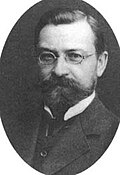
Saint Yuri (George) Novitsky (1882-1922), martyr, was a layman, a legal historian and professor at Petrograd University, chairman of the council of the Society of United Orthodox Parishes of the city and an associate of Metropolitan Benjamin. He was shot on 13 August 1922 after the Petrograd trial for resisting the confiscation of church valuables. The Russian Orthodox Church numbered him among the new martyrs in 1992. He is commemorated on 31 July (13 August).
Formation
He was born at Uman, in Kiev province, in an old noble family of Polish origin. His father, a graduate of Saint Petersburg University, was a justice of the peace. In youth he was raised in the house of his uncle, the philosopher Orest Novitsky, professor at Kiev University and the Theological Academy. He graduated from the first gymnasium in Kiev, then from the law faculty of Saint Vladimir University (1908), was kept on the faculty in 1911 and studied at Göttingen. He also worked as a judicial investigator and took part in the investigation of Stolypin's murder, writing a report critical of General Kurlov. In 1911 he founded a shelter for orphans of exiled convicts, in 1912 a juvenile court in Kiev, and between 1910 and 1914 he worked in prison in the Patronage of prisoners. From 1913 he was a docent at Kiev, from 1914 at Petersburg and later professor, lecturing on the history of West European and Russian law, of the prosecutor's office and of press legislation. He was loved by students. He wrote on judicial evidence under the Lithuanian Statute and on the right of vengeance in the Russian Justice, and his monograph, History of Russian Criminal Law, finished in 1922, was lost. He was a friend of the historians Priselkov and Karsavin and the sociologist Sorokin and raised money for the families of arrested professors. He also organized an institute for the education of children with disabilities and, in 1919, helped found a workers' university at Kostroma.
Church life
He was devout from childhood, had served in the altar as a boy and read and sang in the choir. Under the influence of Dostoevsky he was an active opponent of the death penalty and a supporter of Christian socialism. He was a member of the council of the Petrograd Theological Academy and was elected chairman of the council of the Society of United Orthodox Parishes of Petrograd, founded with the support of Metropolitan Benjamin. He considered politicization of the society inadmissible. He was among those who pleaded for compromise with the authorities on aid to the starving, through voluntary donations.
Trial and martyrdom
Arrested in 1922, he was from 10 June one of the principal accused in the Petrograd trial for resistance to the confiscation of church valuables. He conducted himself very calmly, with clear answers. He did not admit guilt but described in detail the work of the council he led, which dealt only with church matters and parish life. He tried to take upon himself part of the guilt attributed to Father N. K. Chukov, the future Metropolitan Gregory, to save his life for the sake of his small children. In his last word he said that if a sacrifice was needed in this case he was ready to accept death without murmur and asked only that the others be spared. Defence counsel Ravich said that all his life he had fought against the death penalty. He was sentenced to death and shot on 13 August 1922, together with Metropolitan Benjamin, Archimandrite Sergius (Shein) and the lawyer I. M. Kovsharov. A witness says that before the shooting he wept.
Veneration
He was numbered among the new martyrs in 1992, at the Council of Bishops of the Russian Orthodox Church. Since 2013 the law faculty of Kostroma University bears his name, and in 2026 the building of a monument to the jurist new martyrs began in Polyustrovo Park in Saint Petersburg.
Commemorated the same day July 31
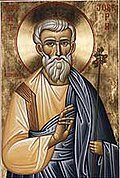 Joseph of ArimatheaRighteous · Disciple of the LordJul 31
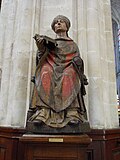 Germanus of AuxerreSaint · Bishop of AuxerreJul 31
 John the ExarchSaint · Bulgarian scholarJul 31
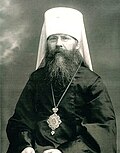 Benjamin of PetrogradHieromartyr · Metropolitan of PetrogradJul 31
 Calimerius of MilanSaint · Bishop of MilanJul 31
 Neot of CornwallVenerable · Hermit in CornwallJul 31
 John KovsharovMartyr · Lawyer of Alexander Nevsky LavraJul 31
 Basil of KineshmaConfessor · Bishop of KineshmaJul 31
 Sergius SheinHieromartyr · Archimandrite and former Duma deputyJul 31
- Arsen of NinotsmindaVenerable · Georgian bishop and calligrapherJul 31
- Anna SerovaMartyrJul 31
- Julitta of CaesareaMartyrJul 31