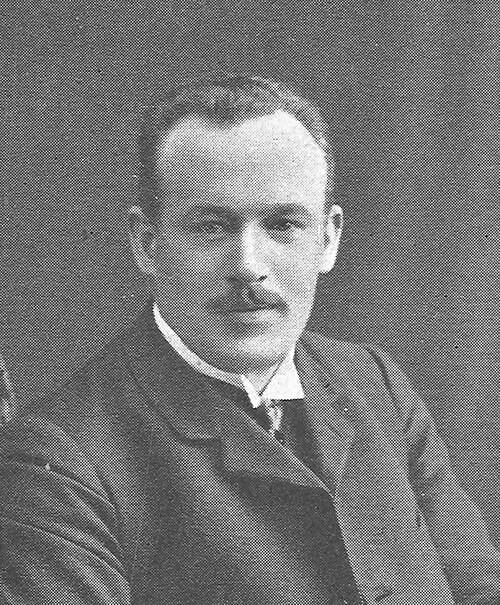
Martyr
John Kovsharov
Lawyer of Alexander Nevsky Lavra
Lawyer and legal adviser of the Alexander Nevsky Lavra, shot at Petrograd in 1922; glorified in 1992.
Life
Holy Martyr John Kovsharov (in Russian Ivan Mikhailovich Kovsharov, 26 July 1878 to 13 August 1922) was a Russian jurist, lawyer and legal adviser of the Alexander Nevsky Lavra in Petrograd, a layman. He was shot on 13 August 1922 by decision of the revolutionary tribunal of Petrograd, in the "case of resistance to the seizure of church valuables". He was numbered among the saints as a new martyr by the Council of Bishops of the Russian Orthodox Church in 1992. He is commemorated on 31 July, Old Style (13 August New Style).
Family and formation
He was born at Odessa into the family of a townsman, Mikhail Ivanovich Kovsharov. His grandfather, Ivan Ivanovich Kovsharov, was the most notable icon painter and interior painter of Odessa in the second third of the nineteenth century; among his works is the painting of the Transfiguration cathedral of Odessa and of the palace of M. S. Vorontsov. At the law faculty of the University of Odessa he studied church law with A. I. Almazov and Roman law with M. Ya. Pergament, who for his art of speech was called "the Golden Mouth of Odessa"; perhaps his influence weighed in the choice of the profession of lawyer. After graduating, in 1903, he was assistant to a sworn attorney at Odessa; according to some data, he took part as defence counsel in political trials of Bolsheviks and anarchists.
Lawyer and legal adviser of the Church
In 1906 he moved to Petersburg, assistant to the sworn attorney K. I. Valitsky; in 1908 he was registered as a sworn solicitor at the commercial court of the capital, and from 1911 was a sworn attorney of the district of the Judicial Chamber of Petersburg. He kept ties with the bar of Odessa. He conducted property cases of church organizations and several times was defence counsel in political trials. Between 1907 and 1912 he was assistant to the legal adviser of the Alexander Nevsky Lavra, Vasily Sokolov. After the February Revolution of 1917 he took part in reviving the People's Socialist Party. From 1918 he was a member of the Spiritual Council and legal adviser of the lavra. In the spring of 1918, at the congress of clergy and laity of the diocese of Petrograd, he was elected commissar for diocesan affairs, "for representing and defending the common rights and interests" of the diocese. The man who had earlier defended revolutionaries before the tsarist government now defended the Church, its servants and its property before the new power, and persistently opposed the closing of churches, which did not go unnoticed. He was among the board members of the Society of Orthodox Parishes of Petrograd and the province who spoke for a compromise with the authorities on aid to the starving. On 6 March 1922 he accompanied Metropolitan Benjamin to Smolny, to the negotiations on the seizure of church valuables with members of the "Pomgol" commission of the Petrograd Soviet, in which the representatives of the Church succeeded in reaching an agreement.
Trial and martyr's death
In March 1922 he was arrested and from 10 June 1922 was one of the main defendants at the Petrograd trial for resistance to the seizure of church valuables. He was described as a clever, convinced and resolute man. Protopresbyter Michael Polsky says that, though he clearly foresaw from the first minute the inevitable end of the trial, he answered the questions coolly, to the point and often sharply. In his speech he analyzed the charges at length, did not admit guilt and ended by saying that for a common grave of sixteen people the material of the accusation was too little (the prosecution had asked for sixteen death sentences). Together with Metropolitan Benjamin (Kazansky), Archimandrite Sergius (Shein) and Professor Yuri Novitsky he was sentenced to death by shooting. The sentence on all four was carried out in the night of 12 to 13 August 1922 (according to one version, the execution took place at the Rzhev firing range). He was posthumously rehabilitated on 31 October 1990 by decision of the Presidium of the Supreme Court of the RSFSR, and in 1992 was numbered among the saints as a new martyr. In 2026, in Polyustrovsky Park, at the place where the road to the Rzhev range began, work was started on a monument to the new martyr jurists, Archimandrite Sergius (Shein), John Kovsharov and Yuri Novitsky; on 23 June 2026 Metropolitan Barsanuphius of Saint Petersburg and Ladoga blessed the foundation stone.
Commemorated the same day July 31
 Joseph of ArimatheaRighteous · Disciple of the LordJul 31
 Germanus of AuxerreSaint · Bishop of AuxerreJul 31
 John the ExarchSaint · Bulgarian scholarJul 31
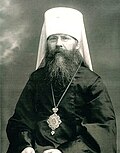 Benjamin of PetrogradHieromartyr · Metropolitan of PetrogradJul 31
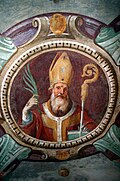 Calimerius of MilanSaint · Bishop of MilanJul 31
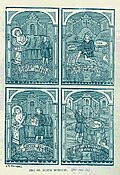 Neot of CornwallVenerable · Hermit in CornwallJul 31
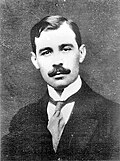 George NovitskyMartyr · Professor of lawJul 31
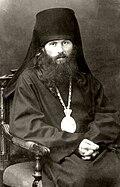 Basil of KineshmaConfessor · Bishop of KineshmaJul 31
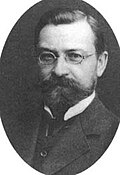 Sergius SheinHieromartyr · Archimandrite and former Duma deputyJul 31
- Arsen of NinotsmindaVenerable · Georgian bishop and calligrapherJul 31
- Anna SerovaMartyrJul 31
- Julitta of CaesareaMartyrJul 31