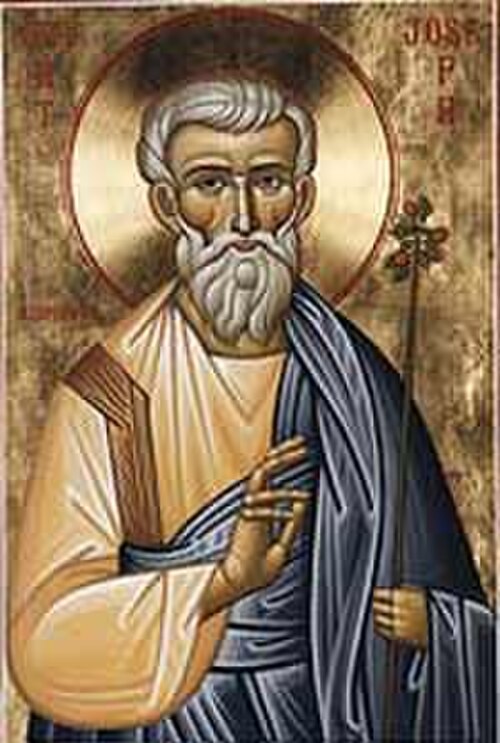
Righteous
Joseph of Arimathea
Disciple of the Lord
Member of the Sanhedrin and disciple of Christ, who asked Pilate for the Lord's body and laid it in his own tomb.
- Feast
- July 31old style August 13
- Born
- 1001st century
- Place
- Arimathea
- Order
- The Righteous
Life
The Holy Righteous Joseph of Arimathea was the secret disciple of the Lord Jesus Christ, a rich and honourable member of the Sanhedrin, who after the Crucifixion asked Pilate for the body of the Lord and laid it in his own new tomb. He is mentioned by all four evangelists. The Orthodox Church commemorates him on 31 July and on the Sunday of the Myrrh-Bearing Women, the third after Pascha.
In the Gospels
The Gospel of Matthew calls him simply a rich man from Arimathea and a disciple of Jesus. According to Mark he was an honourable counsellor who was himself waiting for the kingdom of God. Luke adds that he was a good and righteous man who had not consented to the decision and deed of the others. John says that he was a disciple of Jesus, but secretly, for fear of the Jews. The place of Arimathea is not known with certainty, and some regard it as Ramah in the land of Ephraim.
When Jesus died on the cross, Joseph went boldly to Pilate and asked for the body of the Lord. Pilate marvelled that He was already dead, asked the centurion, and gave permission. Joseph bought a clean linen shroud and took the body down from the cross.
The burial
Together with Nicodemus, who had once come to Jesus by night and who now brought myrrh and aloes, Joseph wrapped the body in linen cloths with spices, according to the Jewish custom of burial. They laid it in a new tomb hewn in the rock, in a garden near the place of the Crucifixion, in which no one had yet been laid. According to Matthew the tomb was Joseph's own. They rolled a great stone to its door. The Sabbath was drawing on, and Mary Magdalene and the other Mary sat opposite the tomb.
Christians have seen in this the fulfilment of the word of the prophet Isaiah, who says of the Servant of the Lord that his grave was given with the rich in his death.
Myrrh-bearer
The Church numbers Joseph among the myrrh-bearers, together with Nicodemus, and remembers them on the Sunday of the Myrrh-Bearing Women, when it sings of the noble Joseph who laid the body of the Lord in a new tomb. Saint John Chrysostom is the first to write that Joseph was one of the seventy disciples sent out by the Lord.
Tradition and legend
The apocryphal accounts, in the Acts of Pilate or Gospel of Nicodemus, say that the Jewish elders imprisoned Joseph for burying Christ, but in the night the risen Lord brought him out of prison and appeared to him. These writings are not received by the Church as Scripture.
The Orthodox life published by the Orthodox Church in America adds that Joseph travelled through the world proclaiming the Gospel and departed to the Lord in peace in England. The legends of his coming to Glastonbury with the cup of the Holy Grail, however, appear only in the Middle Ages. The Christian writers of the first centuries, who speak of the preaching of the Gospel in Britain, do not mention Joseph. The first note of his voyage to Glastonbury dates from 1247, and Robert de Boron made him guardian of the Grail in his romance written between 1190 and 1199. These stories have no basis in the Gospels.
In the East he is commemorated on 31 July. The Roman Catholic Church commemorates him on 31 August, together with Nicodemus; the old Roman calendar had him on 17 March.
Commemorated the same day July 31
 Germanus of AuxerreSaint · Bishop of AuxerreJul 31
 John the ExarchSaint · Bulgarian scholarJul 31
 Benjamin of PetrogradHieromartyr · Metropolitan of PetrogradJul 31
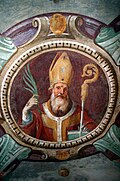 Calimerius of MilanSaint · Bishop of MilanJul 31
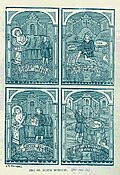 Neot of CornwallVenerable · Hermit in CornwallJul 31
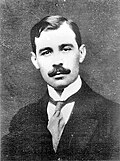 George NovitskyMartyr · Professor of lawJul 31
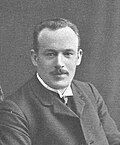 John KovsharovMartyr · Lawyer of Alexander Nevsky LavraJul 31
 Basil of KineshmaConfessor · Bishop of KineshmaJul 31
 Sergius SheinHieromartyr · Archimandrite and former Duma deputyJul 31
- Arsen of NinotsmindaVenerable · Georgian bishop and calligrapherJul 31
- Anna SerovaMartyrJul 31
- Julitta of CaesareaMartyrJul 31