
Hieromartyr
Benjamin of Petrograd
Metropolitan of Petrograd
Hierarch of the Russian Church, born Vasily Kazansky, put to death by the Soviet authorities in August 1922.
Life
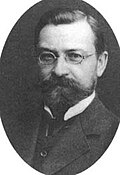
Saint Benjamin the Hieromartyr, in the world Vasily Pavlovich Kazansky, was Metropolitan of Petrograd and Gdov from 1917 to 1922 and was put to death by the Soviet authorities on 13 August 1922. He led the nonviolent resistance of the Church to the anti-religious laws. The Russian Church canonized him in 1992, with other martyrs executed alongside him. He is commemorated on 13 August.
He was born on 17 April 1873 at Nimensky Pogost in the Kargopol district of Olonets province, to the priest Pavel Kazansky. As the best graduate of the Olonets seminary he was sent in 1893 at state expense to the Saint Petersburg Theological Academy, graduating in 1897 with a thesis on Archbishop Arcadius of Olonets as a fighter against schism. In 1895 he was tonsured a monk and ordained hierodeacon, and in 1896 hieromonk. He taught Holy Scripture at the seminary in Riga, was inspector at Kholm and Saint Petersburg, rector of the seminary in Samara, as archimandrite, from 1902, and of the Saint Petersburg seminary from 1905. In 1910 he was consecrated bishop of Gdov, vicar of Petersburg, by Metropolitan Anthony Vadkovsky. He often served in the farthest and poorest churches in the suburbs of the capital, at the Putilov and Obukhov factories, organized the charitable foundation of the Mother of God for the aid of abandoned women, and was called "the indefatigable bishop".
After the arrest of Metropolitan Pitirim he administered the diocese as bishop of Gdov, and in 1917 he was elected by clergy and people archbishop of Petrograd, the first bishop democratically elected in the Russian Church. He was then raised to metropolitan. At the start of Soviet power the country was struck by famine. The metropolitan gave the state the Church's valuables, on condition that they remain donations, strictly overseen by clergy and faithful, which satisfied the local authorities. He held a firm position against the arbitrary creation of a schismatic church, the so-called "Living Church", and this was the cause of his trial. The Church in Petrograd lived under him a spiritual revival. In the civil war he held an apolitical position, offering during the anti-religious campaign that, if the state did not touch the relics of Saint Alexander Nevsky, he would suspend any priest of his diocese who helped the White movement. But the Church and the Soviet state had opposite views of the world.
He was tried in a show trial, condemned to death and shot by the secret police on 13 August 1922, together with Archimandrite Sergius (Shein), Professor Yury Novitsky and the lawyer John Kovsharov. At the trial he closed his defence by making the sign of the cross and saying: "Glory to Thee, O Lord and my God, for all things." The Communists, fearing a rising of the Petrograd workers, who loved him, spread word that he had been taken to Moscow, but he had been shot. The four were canonized in April 1992.
Commemorated the same day July 31
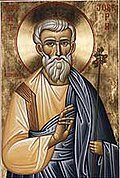 Joseph of ArimatheaRighteous · Disciple of the LordJul 31
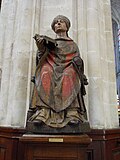 Germanus of AuxerreSaint · Bishop of AuxerreJul 31
 John the ExarchSaint · Bulgarian scholarJul 31
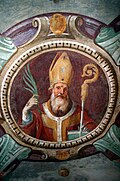 Calimerius of MilanSaint · Bishop of MilanJul 31
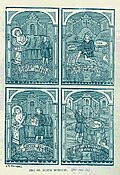 Neot of CornwallVenerable · Hermit in CornwallJul 31
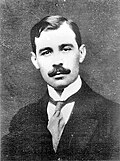 George NovitskyMartyr · Professor of lawJul 31
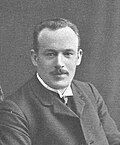 John KovsharovMartyr · Lawyer of Alexander Nevsky LavraJul 31
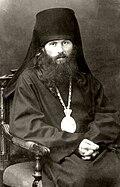 Basil of KineshmaConfessor · Bishop of KineshmaJul 31
 Sergius SheinHieromartyr · Archimandrite and former Duma deputyJul 31
- Arsen of NinotsmindaVenerable · Georgian bishop and calligrapherJul 31
- Anna SerovaMartyrJul 31
- Julitta of CaesareaMartyrJul 31