Venerable
Neot of Cornwall
Hermit in Cornwall
English monk at Glastonbury, later a hermit in Cornwall near the village that bears his name; died in 877.
- Feast
- July 31old style August 13
- Reposed
- 8709th century
- Place
- England
- Order
- Venerables
Life
Saint Neot was an English monk of the ninth century who lived at Glastonbury Abbey and then as a hermit in Cornwall, near the village that now bears his name. He fell asleep in the Lord on 31 July 877. He is honoured in Orthodoxy among the saints of Britain and Ireland, and his feast is 31 July.
Early life
He was born in the first half of the ninth century into a minor branch of the West Saxon royal house, and his father was named Ethelwulf. As a young man he was pressed toward a soldier's life, but when he came of age he gave himself to the monastic life instead. He became a novice at Glastonbury Abbey around the middle of the century and was very studious. His birth name was not recorded. It is thought that the brothers called him Neophytus, "newly enlightened", from which the name Neot may have come.
The monks admired him for his learning, his humility and his devotion. Besides the services prescribed by the monastery, he would often rise in the night and go secretly to the chapel to pray, in the guise of a penitent, returning at dawn to the ordinary routine. He was ordained and later made sacristan of the abbey. The fame of his learning and devotion drew many pilgrims from all over the country to Glastonbury to receive the benefit of his wisdom.
Life as a hermit
Fearing the danger of popular praise, Neot decided to withdraw from this public position and live as an anchorite in a quieter place. He left Glastonbury for a remote village in Cornwall, then called Hamstoke, in a place surrounded by dense woodland and hills. He took with him a single man, named Barius, as a servant. He spent seven years there in fasting, watching and prayer, like a beginner, since until then he had not lived in such hermit strictness. Though he wished to be unnoticed, the village came to be called Neotstoke or Neot-stow.
After seven years he went to Rome to ask the pope for guidance about his future. He evidently meant to withdraw still further from the world, but the pope advised him to return to Cornwall and "scatter the word of God among the people". According to tradition he founded a monastery there. Later he gathered monks around him near Bodmin Moor and was remembered especially for his care of the poor. His name also appears in Bishop Asser's life of King Alfred. Several miracles are told of him, and his fame drew pilgrims.
Relics and veneration
Neot died on 31 July 877. His relics stayed in the monastery he had founded, where many pilgrims came. Around 975 a monastery founded at Eynesbury, in what is now the town of Saint Neots, took the relics from Cornwall without permission, to attract pilgrims. The town that grew up around the monastery took his name. Later it was disputed whether the relics were truly there, but Anselm, prior of the abbey of Bec in Normandy, on which Eynesbury depended after the Norman Conquest, confirmed that they were. Anselm took the saint's jawbone back to Bec. According to other accounts, angry Cornishmen brought them back.
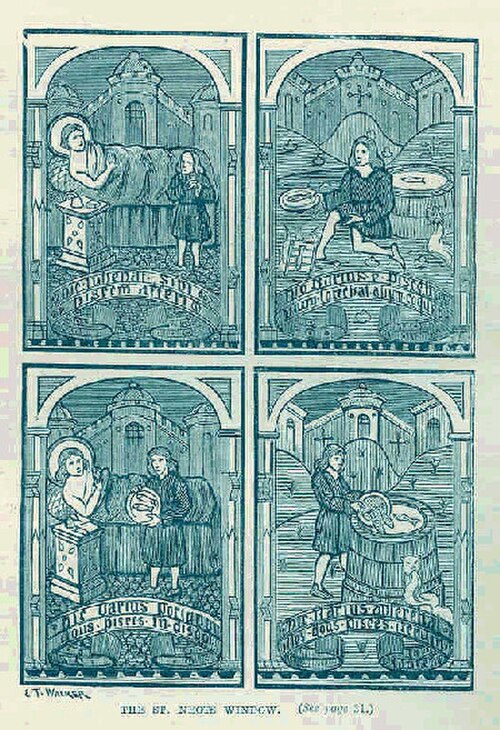
The monastery at Saint Neots was dissolved in the reign of King Henry VIII, and since then no one knows where his relics lie. His name is borne by the town of Saint Neots in Cambridgeshire and the village of Saint Neot in Cornwall. The parish church in Saint Neot keeps medieval stained glass, and one window shows his miracles. Until 1970 the church of Poundstock in Cornwall was also dedicated to him. His feast is 31 July.
Commemorated the same day July 31
 Joseph of ArimatheaRighteous · Disciple of the LordJul 31
 Germanus of AuxerreSaint · Bishop of AuxerreJul 31
 John the ExarchSaint · Bulgarian scholarJul 31
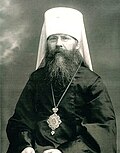 Benjamin of PetrogradHieromartyr · Metropolitan of PetrogradJul 31
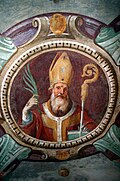 Calimerius of MilanSaint · Bishop of MilanJul 31
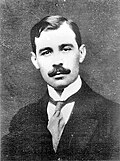 George NovitskyMartyr · Professor of lawJul 31
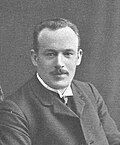 John KovsharovMartyr · Lawyer of Alexander Nevsky LavraJul 31
 Basil of KineshmaConfessor · Bishop of KineshmaJul 31
 Sergius SheinHieromartyr · Archimandrite and former Duma deputyJul 31
- Arsen of NinotsmindaVenerable · Georgian bishop and calligrapherJul 31
- Anna SerovaMartyrJul 31
- Julitta of CaesareaMartyrJul 31