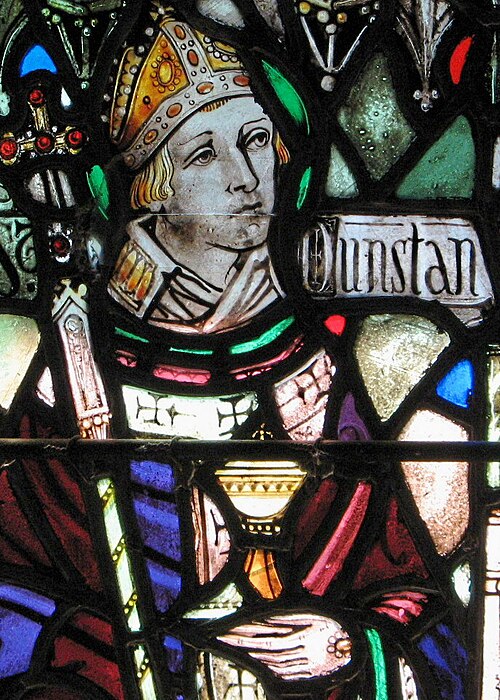
Saint
Dunstan of Canterbury
Archbishop of Canterbury
Monk and abbot of Glastonbury who became archbishop of Canterbury and renewed monastic life in England.
Life
Saint Dunstan was a Benedictine monk, abbot of Glastonbury, bishop of Worcester and of London and, from 959, archbishop of Canterbury. Through his work monastic life in England was renewed and the English Church reformed. He died on 19 May 988, which remains his day of commemoration. For nearly two centuries he was the best-loved saint of England.
Early life
He was born around 909-910, near Glastonbury, to Heorstan and Cynethryth, a relative of bishops, among them Ælfheah the Bald, bishop of Winchester. A later biographer, Adelard of Ghent, says he was a nephew of Archbishop Athelm of Canterbury, but this is less certain. As a boy he studied under the few Irish monks who still lived at Glastonbury Abbey. He came to the court of King Æthelstan and was loved by the king, but the envy of courtiers accused him of witchcraft; he was driven out, beaten, bound and thrown into a cesspool. He managed to crawl out and went to Winchester, into the service of his kinsman Bishop Ælfheah.
The bishop tried to persuade him to become a monk, but Dunstan doubted that he had a call to a celibate life. The answer came through a grave illness, with swellings all over his body, thought to be leprosy but probably blood poisoning from his wounds. He then decided to take the monastic tonsure, in 943, in the bishop’s presence, and returned to Glastonbury as a hermit. Beside the old church of Saint Mary he built a small cell, where he studied, worked and played the harp. A later legend says that the Devil then tempted him, and Dunstan seized him by the nose with his tongs.
Monk and abbot
At Glastonbury Dunstan worked as a silversmith and in the scriptorium, and became known as a musician, illuminator and metalworker. He is thought to be the artist of the drawing of Christ with a small kneeling monk in the Glastonbury Classbook. Lady Æthelflæd, niece of King Æthelstan, took him as her adviser and at her death left him a large fortune, which he later used to foster the monastic revival. About then his father died, and Dunstan inherited his wealth too. After the death of King Æthelstan, King Edmund summoned him to his court at Cheddar and made him a minister of state; again the envy of courtiers pursued him, and the king was ready to send him away. Edmund then made him abbot of Glastonbury.
Dunstan began the reform at once: he established the monastic life of the abbey on the Rule of Saint Benedict and rebuilt the house. King Eadred, Edmund’s successor, entrusted him with the finances of the kingdom. Under King Eadwig, Dunstan was driven out to Flanders for his moral strictness, but could return after the king was deposed. The new king, Edgar, called him to court and made him first bishop of Worcester (957), then of London (958) and, in 959, archbishop of Canterbury. As the king’s adviser he governed the country well and pressed the reform of the Church with persistence, giving much care to education.
Last years and veneration
When Edgar died, in 975, Dunstan supported his elder son Edward, who became king; after three years Edward was killed. His brother Æthelred the Unready came to the throne, and Dunstan left office and withdrew from court. He reposed on 19 May 988, at Canterbury. His life soon drew the attention of hagiographers, among them Adelard of Ghent and Osbern of Canterbury. He is honoured as patron of smiths and goldsmiths, and the Russian Orthodox Church commemorates him on the third Sunday after Pentecost, with the Synaxis of the Saints of Britain and Ireland.
Commemorated the same day May 19
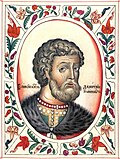 Dmitry DonskoyRight-Believing · Grand Prince of MoscowMay 19
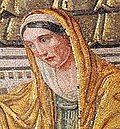 PudentianaMartyrMay 19
 John of GothiaSaint · Bishop of GothiaMay 19
 Alexander PetrovskyHieromartyr · Archbishop of KharkivMay 19
 Cornelius of KomelVenerable · Founder of Komel MonasteryMay 19
 Ignatius of VologdaVenerable · Prince of Uglich turned monkMay 19
 Parthenius of RomeMartyr · Martyr of Armenian originMay 19
 Konstantin DyakovHieromartyr · Metropolitan of KyivMay 19
 Onufry GagalyukHieromartyr · Archbishop of KurskMay 19
 Cornelius of PaleostrovVenerable · Founder of Paleostrov MonasteryMay 19
 Sergius of ShukhtovoVenerable · SchemamonkMay 19
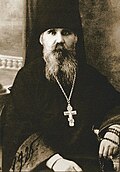 Joasaph ZhevakhovHieromartyr · Bishop of MogilevMay 19