Hieromartyr
John Anserov
A hieromartyr of the Russian Church, commemorated in the Orthodox calendar.
Life
Holy Hieromartyr John Anserov, a protopresbyter, was born on 8 September 1873 in the village of Charus in the Kasimov district of the Ryazan province, in the family of the sexton of the Dormition church, Dmitri Maximovich Anserov, and his wife Elizaveta Akimovna. He died as a confessor, in a camp, on 6 May 1940.
Priest at Spassk
In 1887 he finished the theological school in Kasimov with distinction, and in 1893 the Ryazan Seminary, and was appointed teacher at the parish school in Lubonosk. In 1894 he was ordained deacon at the Dormition church in Charus, and on 27 July 1897 priest at the Transfiguration cathedral in the town of Spassk, Ryazan province. The same year he was appointed catechist for the lower ranks of the military administration and served them without payment. In 1898 he became catechist at the girls' primary school in Spassk and treasurer of the Brotherhood of the All-Merciful Saviour at the cathedral. In 1913 he began to teach the Law of God at the girls' gymnasium in Spassk and was raised to protopresbyter.
To the cathedral there was attached, in Soviet times, a small wooden church of the Dormition, called Borovaya, after the pine wood in which it stood. About ten nuns lived at it. At the end of the 1920s the authorities began to close the churches of the town. In 1929 the believers were asked to give up the Dormition church for the storing of grain. In February 1930 a commission came to the cathedral, and Father John advised the community to send delegates to Moscow. The authorities gave no official answer, but the church was not closed. On 27 May 1931 Father John served the Liturgy in the Dormition church, from seven to half past eight. Around three o'clock in the afternoon the bell tower caught fire, and the flames quickly passed to the church; the bell tower and the wooden church burned down entirely, only the icons being saved. Since the fire had begun inside the bell tower, at a great height, a rumour spread in the town that unbelievers had set the fire so as to blame the believers.
Persecution
Three days later, on 31 May, Protopresbyter John, the church warden and twelve nuns were arrested and imprisoned at Spassk, charged with anti-Soviet activity and with the burning of the church. At the interrogation the father said he could not fully answer whether the taking away of his vote had been right, but that he had been discontented with the dekulakization, since he had himself suffered the same, though he had not voiced his discontent in public; of the nuns he said that they lived in good harmony, and that in their circle the keeping of the Borovaya church had not been discussed, knowing that whatever happened was God's will, but that it was in their interest to keep the cathedral. The investigator wrote in the indictment that the nuns' dwelling was an illegal monastic community, a refuge of the anti-Soviet element, and that the arson had been premeditated. On 9 August 1931 the OGPU troika sentenced him to five years of exile in Kazakhstan, to a remote village in the Chimkent region.
At the end of 1934 he returned from exile and served again at the Transfiguration cathedral, the last open church in the town. On 23 February 1935 the presidium of the Moscow regional executive committee decided to close the cathedral. The believers protested, writing that they numbered between two thousand five hundred and three thousand and that a petition carried 1541 signatures. On 30 September 1935 the cathedral was taken: half of it was given to a goods warehouse, with the iconostasis smashed, and into the other half grain was poured, while the icons were removed and sold. In 1936 the believers still asked to receive at least the cemetery church, which had been kept full of grain for seven years, but the chairman of the town council went on delaying.
Arrest and death
On 5 February 1938 the NKVD arrested the priest Alexander Svetlov, an informer since 1919, who signed testimony written by the investigator. On the basis of it, on 21 February 1938, Protopresbyter John Anserov was arrested and imprisoned at Ryazan. He denied having carried on counterrevolutionary agitation or belonging to any organization, said that Svetlov's testimony was not credible, and at the confrontation on 3 April, when Svetlov said that Anserov had carried on anti-Soviet activity, he answered that he did not confirm it. On 23 April the Special Council of the NKVD sentenced him to eight years in a camp. On 27 May 1938 he was taken to Karlag. In the hard conditions he soon lost his health and, as ninety percent disabled, was put in the group of invalids. He fell asleep in Karlag, at the Burma section, on 6 May 1940 and was buried in an unknown grave.
The Church commemorates him on 6 May, in the new style, on 23 June in the Synaxis of the Saints of Ryazan, and on the movable day of the synaxis of the new martyrs.
Commemorated the same day April 23
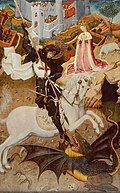 GeorgeGreat Martyr · The Trophy-BearerApr 23
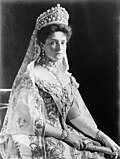 Alexandra FeodorovnaPassion-Bearer · Empress of RussiaApr 23
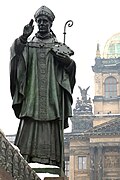 Adalbert of PragueHieromartyr · Bishop of PragueApr 23
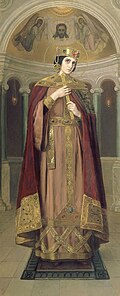 Alexandra the EmpressMartyr · Empress, martyr of NicomediaApr 23
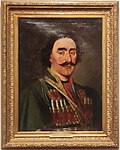 Solomon I the GreatRight-Believing · King of ImeretiApr 23
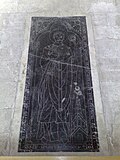 Gerard of ToulSaint · Bishop of ToulApr 23
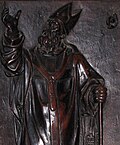 Marolus of MilanSaint · Archbishop of MilanApr 23
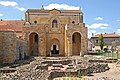 Felix, Fortunatus and AchilleusMartyr · Martyrs of ValenceApr 23
 Therinus of ButhrotumSaintApr 23
 Athanasius the MagicianMartyrApr 23
 Lazarus the BulgarianNew MartyrApr 23
- Sophia of KleisouraVenerableApr 23