Hieromartyr
John Melnitsky
A hieromartyr of the Russian Church, who died in 1937.
- Feast
- October 21old style November 3
- Reposed
- 193720th century
- Order
- Martyrs
Life
Holy Hieromartyr John Melnitsky, a deacon, was born in 1878 in the village of Sheteevo, Udomlya district, Tver province, in the family of the peasant Peter Melnitsky. In 1899 he finished the third class of the Tver Seminary, after which he had to give up his studies to help his father on the farm. The thought of giving himself wholly to the service of God did not leave him, and he made a request to the bishop of the diocese. On 5 May 1907 he was appointed psalmist at the church of the village of Vorotilovo, in the Bezhetsk district, and confirmed in the post on 19 June 1908. On 21 November 1908 he was ordained deacon for the same church. All this time he was teacher and catechist at the Vorotilovo parish school and catechist at the Novino zemstvo school, being praised by the authorities "for unpaid and zealous teaching of the Law of God". His service in church and school lasted until 1918. In the summer of 1918 he was moved to the church of the village of Ilova, in the Vyshny Volochyok district, where he served until the beginning of the persecution in 1929.
In 1930 he was deprived of his farm, the support of his family, his wife and six children, the youngest being only seven and five years old. On 9 March 1930 he was sentenced to two years in a corrective labour camp for non-payment of taxes. Released on 20 March 1932 from the labour colony at Zavidovo, he asked Holy Archbishop Thaddeus to appoint him to a church of the diocese. In 1933 he received a place in the village of Taltsy, to which his family moved too, and he served here until the new persecutions. He was arrested right after the feast of the Protection of the Mother of God, on 15 October 1937, and questioned the next day. The chairman of the "Stalin" collective farm and a local Komsomol member said that in July 1937, on a feast, he had urged the inhabitants that however much they worked on the farm things would not get better, that they should remember God, come to church and pray, since to work on a feast is sin. After him, all the collective farmers were said to have kept the feast for two days in the full season of field work. Likewise, on 15 August 1937, he was said to have called them not to work and to pray for a change of government. On 23 September, at the general assembly of the village on self-taxation, he was said to have said that Soviet power takes much from the peasants.
It is not easy to say whether the witnesses told what they themselves had heard or whether all their answers had been put into their ears by the investigator. The same day Father John was interrogated. He denied any counterrevolutionary activity. He said that he had spoken with some people that life in the collective farm is bad and hunger great, and that if these bad conditions are sent, perhaps it is so that afterwards life may be better, and that he had said not to work on feasts. Of church attendance he said: "If you want your church not to be closed, you must attend it as often as possible." Of the assembly in September he said that he was present, but did not rise to speak, since he had gone home before the end. The next day the investigation was closed, the materials were passed to the troika, and the father was moved to the prison in Ostashkov. On 1 November the troika sentenced him to death. The deacon John Melnitsky was shot on 3 November 1937. He was numbered among the New Martyrs and Confessors of Russia at the jubilee Council of Bishops in August 2000.
The Church commemorates him on 3 November, the day of his death, in the new style, and on the movable days of the synaxis of the new martyrs and of the Saints of Tver.
Commemorated the same day October 21
 Hilarion the GreatVenerable · Hermit of GazaOct 21
 Viator of LyonSaintOct 21
 Hilarion of MeglenSaint · Bishop of MeglenOct 21
 Dasius, Gaius and ZoticusHoly Martyrs · Martyrs of NicomediaOct 21
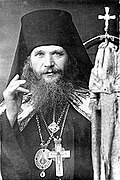 Paulin KroshechkinHieromartyr · Archbishop of MogilevOct 21
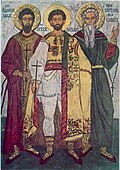 Visarion SaraiVenerable MartyrOct 21
- Sophronius of CioaraVenerable · Defender of Orthodoxy in TransylvaniaOct 21
 Jacob of OmuchVenerableOct 21
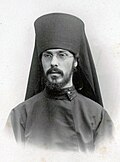 Neophytus OsipovVenerable Martyr · ArchimandriteOct 21
- Theophilus of LugaVenerable · Founder of Omuch HermitageOct 21
 Pelagia TestovaNew MartyrOct 21
 Damian VoskresenskyHieromartyr · Archbishop of Kursk and OboyanOct 21