Venerable Martyr
Paisius Moskot
Hieromonk
Hieromonk born in 1869, who died in Kharkiv on 15 December 1937; a local saint of the Ukrainian Orthodox Church.
Life
Venerable Martyr Paisius (Paisius Grigorievich Moskot, in the world), called of Sloboda, was a hieromonk, born on 8 December 1869 in the village of Peski Radkovskie, near the town of Izyum, in the Kharkiv region, and shot on 15 December 1937 at Kharkiv. He is a locally venerated saint of the Ukrainian Orthodox Church. On 22 June 1993 the Holy Synod of the Ukrainian Orthodox Church decided on his local canonization in the Kharkiv diocese, in the Synaxis of the New Martyrs and Confessors of the Sloboda land. The service of glorification took place on 3 and 4 July 1993, during the visit of the Primate of the Ukrainian Orthodox Church, His Beatitude Metropolitan Volodymyr of Kyiv and All Ukraine, in the Annunciation cathedral of Kharkiv. In 2018 he was glorified in the Synaxis of the Saints of Izyum. Our calendar gives the commemoration on 19 May.
In 1909 he became a novice of the Svyatogorsk Hermitage on the Donets, received monastic tonsure, and in 1911 was ordained hieromonk. After the closing of the monastery, in 1922, he struggled in one of the monasteries of the Tver region, from 1924 he served in a village in Siberia, and in 1936 he returned to his own village, where he baptized children in people's homes.
About his work in his native land, the Svyatogorsk Paterikon says: it is said that Father Paisius returned to his native parts to hide the church valuables left with him: the Gospel, the altar cross, the chalice, the diskos, the vestments. A relative of his, Galina Pavlovna Moskot, testifies that he once came to their house and gave her father, a nephew of Father Paisius, some church items for safekeeping. Father Paisius had two brothers, Peter and Ignatius. Peter died in the First World War and left in the village a wife, Iuliana, widowed with six small children. As long as he lived, Father Paisius helped them as he could, although he himself was the poorest man in the village. He had no property, not even a house: he lived near the church or wandered among good people. He was dressed very poorly, always in the same black cassock. He celebrated the Divine Liturgy very early, still in the dark, so that people could reach their work on the collective farm in time. He loved children greatly and always gave them treats, and they returned his love: when he went along the street, they accompanied him in a noisy and joyful band. He had a very sensitive heart full of compassion, came first to the help of the poor and needy and gave them all the money he had.
On 8 October 1937 Father Paisius was arrested. Accused of subversive activity against Soviet power, he was sentenced to death on 27 November. The sentence was carried out on 15 December at Kharkiv.
Commemorated the same day May 19
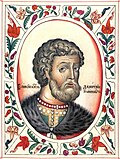 Dmitry DonskoyRight-Believing · Grand Prince of MoscowMay 19
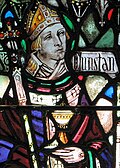 Dunstan of CanterburySaint · Archbishop of CanterburyMay 19
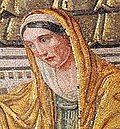 PudentianaMartyrMay 19
 John of GothiaSaint · Bishop of GothiaMay 19
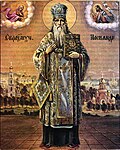 Alexander PetrovskyHieromartyr · Archbishop of KharkivMay 19
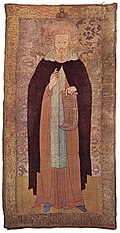 Cornelius of KomelVenerable · Founder of Komel MonasteryMay 19
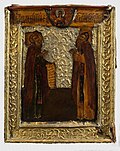 Ignatius of VologdaVenerable · Prince of Uglich turned monkMay 19
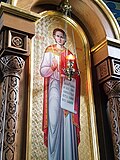 Parthenius of RomeMartyr · Martyr of Armenian originMay 19
 Konstantin DyakovHieromartyr · Metropolitan of KyivMay 19
 Onufry GagalyukHieromartyr · Archbishop of KurskMay 19
 Cornelius of PaleostrovVenerable · Founder of Paleostrov MonasteryMay 19
 Sergius of ShukhtovoVenerable · SchemamonkMay 19