Venerable
Palladius of Antioch
Hermit near Antioch
Hermit of the desert near Antioch, who died of natural causes in 390.
- Feast
- January 28old style February 10
- Reposed
- 3904th century
- Order
- Venerables
Life
Venerable Palladius of Antioch (also called Palladius the Hermit or the Desert Dweller) was a Syrian monk and hermit of the fourth century, who died in 390 of natural causes. He was canonized in the times before the Congregation for the Causes of Saints. He is commemorated on 28 January (10 February by the new calendar) in the Orthodox Church, in the Oriental Orthodox Churches and in the Eastern Catholic Churches. Theodoret of Cyrrhus writes of him in chapter seven of the History of the Lovers of God. One source places him between the fourth and the fifth century, another says that he died at the end of the fourth century, leaving behind several works.
He was a contemporary of Simeon the Elder and led a life like his. He knew Simeon and was close to him, and the ascetics often visited one another, building each other up. Palladius shut himself in a cell, in a mountain cave, not far from a large and populous village called Imma. There he gave himself to various monastic labours: abstinence from food and from sleep, and unceasing prayer. It is said that, because of his struggles, he received from the Lord the gift of working miracles.
Theodoret tells of a miracle of his. A robber stabbed and robbed a merchant at night and threw the body at the door of Palladius's cell. In the morning the body was found and many people gathered near Palladius's cell, among them the robber. The people accused the ascetic of the merchant's murder. Palladius took the dead man by the right hand and said: "Tell us, young man, who dealt you the mortal blow, point to the doer and free the innocent from the impious slander." Then the dead man rose, sat up, looked at those present and pointed with his hand to the murderer. The murderer, on whom the bloody knife and the stolen gold were found, was punished, and the people glorified God, who works through his servant Palladius.
Commemorated the same day January 28
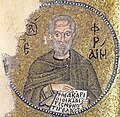 Ephrem the SyrianVenerable · Deacon of EdessaJan 28
 Isaac the SyrianVenerable · Bishop of NinevehJan 28
 Ephraim of PereyaslavlVenerable · Bishop of PereyaslavlJan 28
 Ephraim of NovotorzhokVenerable · Founder of the Boris and Gleb MonasteryJan 28
 Leontius StasievichConfessor · ArchimandriteJan 28
 Emilianus of TreviHieromartyr · Bishop of TreviJan 28
 Theodosius of TotmaVenerable · Monk of Sumorin MonasteryJan 28
 Elias BenemanskyHieromartyr · Priest of TverJan 28
- Olga EvdokimovaNew MartyrJan 28
- Vladimir PishchulinHieromartyr · HieromonkJan 28
- Aedhlugh of Eridh CassainSaintJan 28
- Antimus of BrantômeVenerableJan 28