Saint
Prochorus of Rostov
Bishop of Rostov
Bishop of Rostov who received the schema as Tryphon and died in 1328.
Life
Holy Hierarch Prochorus of Rostov, in the schema Tryphon, was bishop of Rostov and Yaroslavl at the beginning of the fourteenth century and founded the Tolga Monastery in memory of the appearance of an icon of the Mother of God. He departed to the Lord on 7 September 1328.
At the end of 1310, as abbot of the Saviour Monastery in Yaroslavl, he took part in a Council gathered over the metropolitan's practice of taking money from priests for ordination. In March 1311 he was consecrated at Tver, by Metropolitan Peter of Kyiv and all Rus, bishop of Rostov and Yaroslavl. In 1314-1315 he founded the Tolga Monastery, on the river Tolga, in memory of the appearance of an icon. In 1319 he went to Tver to reconcile the grand princes with Prince Yuri of Moscow. In 1325, with Metropolitan Peter and three other bishops, he took part in Moscow in the burial of the grand prince Yuri Danilovich, who had been killed. On 14 August 1327 he consecrated in Moscow the Dormition cathedral, whose building had begun on 4 August 1326, under Metropolitan Peter, with Prince Ivan Danilovich Kalita. In 1328 he retired to the Saviour Monastery in Yaroslavl and died on 7 September 1328, receiving the schema and the name Tryphon before his death.
According to tradition, he was a man of righteous life, with all the virtues of the bishops of ancient Christianity. On 8 August 1314, near Yaroslavl, where the river Tolga flows into the Volga, an icon of the Mother of God appeared to him. On the way to Rostov the bishop spent the night on the bank of the Volga and at night saw a pillar of fire and a bridge over the Volga. He crossed the river on the bridge and saw the light of the icon, set on the pillar of fire. He prayed long before it, then returned over the bridge to his tent. In the morning he crossed the Volga and, at the place of the appearance, began to cut the forest with his own hands, to clear the place and prepare timber for a church; those present did the same with zeal, and the same day they laid the foundation of a small church. The bishop dedicated the church to the Entry of the Mother of God into the Temple, appointed 8 August as the day for the feast of the appearance of the icon, set an abbot and decided that there should be a monastery for monks. The icon that appeared was glorified by many miracles.
In 1322 the saint shielded Rostov from the Tatar khan Akhmyl by miraculously healing the khan's son, gravely ill near Yaroslavl, after giving him holy water to drink and blessing him with the sign of the cross. About his appearance it is said that he was Russian in face, with a beard like that of the Theologian, in hierarchical vestments with omophorion and with the Gospel in his hands. In the book on the Russian saints, Bishop Prochorus, with the Rostov hierarchs Ephraim and Cyril, is numbered among the locally venerated. Those who honour him believe in his intercession with the Most Pure Mother of God and receive, through his prayers, the fulfilment of their requests and deliverance from troubles and sickness. He is presumed to be the author of the Life of Metropolitan Peter and of the eulogy of him.
He is commemorated on 5 June in the Synaxis of the Saints of Rostov and Yaroslavl, in the new style.
Commemorated the same day May 23
 Mary of ClopasSaint · MyrrhbearerMay 23
 Euphrosyne of PolotskVenerable · Abbess of PolotskMay 23
 Demetrius I of GeorgiaRight-Believing · King of GeorgiaMay 23
 Michael of SynnadaSaint · Metropolitan of SynnadaMay 23
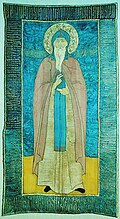 Nicetas the Stylite of PereslavlStylite · Founder of Saint Nicetas MonasteryMay 23
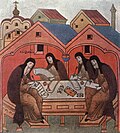 Epiphanius the WiseVenerable · Monk and hagiographerMay 23
 Desiderius of LangresHieromartyr · Bishop of LangresMay 23
 Euphebius of NaplesSaint · Bishop of NaplesMay 23
 Arsenius MatsievichHieromartyr · Metropolitan of RostovMay 23
 Leontius of RostovSaint · Bishop of RostovMay 23
 Cyril II of RostovSaint · Bishop of RostovMay 23
 Dimitry of UglichRight-Believing · Prince of UglichMay 23