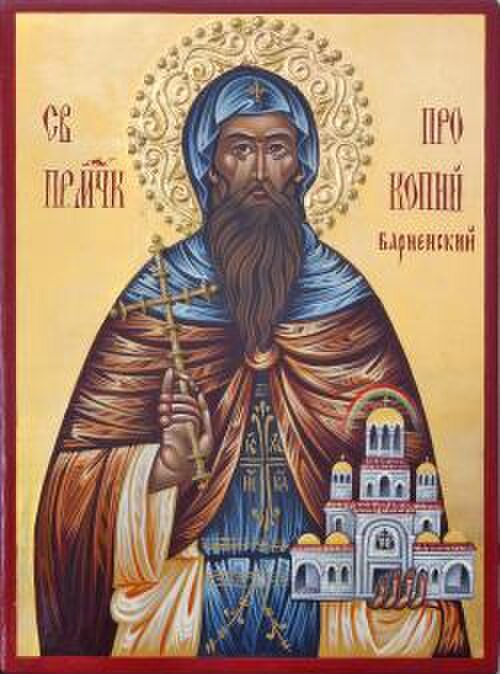
New Martyr
Procopius of Varna
Bulgarian new martyr of Varna, venerated in the Bulgarian Orthodox Church.
Life
Saint Procopius of Varna was a martyr of Bulgarian birth, born into a poor peasant family near the city of Varna, then in the Ottoman Empire, and put to death at Smyrna, in Asia Minor, on 25 June 1810, after he had renounced his faith and then confessed it again. He is the patron of the city of Varna. The Bulgarian Church remembers him on 25 June. Our source does not give the date of his canonization and says only that in 2010 the Holy Synod approved a service in his honour.
Childhood and Mount Athos
He was born into a poor family of Orthodox peasants. He was illiterate, but as a child he stood out for a lively mind, piety and love of his parents' language. One day he and his father met a monk from the Zograf monastery on the Holy Mountain, who praised the order there and the use of the Bulgarian language (more exactly, Church Slavonic) in the services. Procopius asked him at once to take him along. His parents let him go to become a monk, at twelve, and he set out barefoot and ragged, but glad that he would learn to read and write and to know God's kindness to men.
After some time at Athos he found that monastic life did not suit him and thought of leaving it. Though he was consumed by homesickness, he did not dare or could not go back to his village. He went to Constantinople, then to Smyrna, where he lived for a time, now a grown man with a beard. Tormented by regret that he had left both his home and monastic life, he fell into such despair that he decided to change his religion and join the Muslims.
Renunciation and confession
He went to the local kadi and told him that he had become convinced that Islam was more pleasing to God than Christianity and that, as a sign of this, he wished to be circumcised. So that it should be seen that he truly believed in the prophecies of Muhammad and the greatness of Allah, he had let his beard grow long, like a dervish. The kadi was very pleased, taught him the words to say on entering Islam and, fifteen days later, circumcised him.
After another half month Procopius, who in the meantime had repented deeply of his renunciation of Christianity and counted it a grave sin, went to the kadi again, this time to tell him that he no longer wished to be a Muslim. Although at first he had been advised only to flee the city and enter a monastery again, a local priest to whom he turned for help prepared him for martyrdom during most of the time between his circumcision and this moment. The Muslims present at the meeting, astonished and indignant, tried in many ways to dissuade him, but in vain. It became clear that his wish was to die for Christ, and to be a lesson to others who might be ready to renounce.
Although they condemned him to death, according to the lives the Turks could not bring themselves to kill him, out of admiration for his courage and because they "were ashamed of themselves". They argued over who should behead him, until a former Christian was found, described as a cruel and wicked man, perhaps a religious fanatic, who agreed to cut off his head, and the martyr was put to death.
Veneration
His memory is kept on 25 June according to the calendar of the Bulgarian Church. In 2010 the Holy Synod approved a service in honour of the saint, and in 2021 the Metropolis of Varna and Veliki Preslav published a book with his life, an akathist and a vigil service. The akathist calls him chosen of God, venerable martyr, strict ascetic, renowned champion of repentance and valiant martyr, shining with a threefold struggle before the Holy Trinity.
In Varna stands the only church in the country dedicated to Saint Procopius. Building began in 2009, the foundation stone being consecrated by Metropolitan Cyril of Varna and Veliki Preslav, and after twelve years of work the church was consecrated in February 2021 by Metropolitan John. In the city there is also a street named after him.
Commemorated the same day June 25
 Prosper of AquitaineSaint · Church writerJun 25
 Salomon of BrittanyRight-Believing · King of BrittanyJun 25
 Febronia of NisibisVenerable Martyr · Nun of NisibisJun 25
 Adalbert of EgmondVenerable · Missionary to FrisiaJun 25
 Orosia of JacaSaint · Patron of JacaJun 25
 Peter and Fevronia of MuromHoly Right-Believing Rulers · Right-believing of MuromJun 25
 Prosper of ReggioSaint · Bishop of Reggio EmiliaJun 25
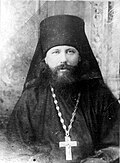 Nikon of OptinaConfessor · Last confessor of OptinaJun 25
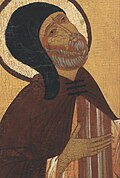 Peter of MuromRight-Believing · Prince of MuromJun 25
 John of UglichMartyr · Child martyr of UglichJun 25
 AmphibalusHieromartyrJun 25
- Fevronia of MuromRight-Believing · Princess of MuromJun 25