Holy Venerable Martyrs
The Thirteen Martyrs of Kantara
Monks of Cyprus
Thirteen monks of Cyprus executed in May 1231 after refusing to use unleavened bread for the Eucharist.
Life
The Thirteen Martyrs of Kantara were Orthodox monks of the Kantara monastery in Cyprus, persecuted and put to death in May 1231 at the request of Pope Gregory IX and under the direction of his emissary, Andrew. After a trial in the manner of the inquisition, because they refused to use unleavened bread for the Eucharist, they were imprisoned, tortured and burned alive. One of them died in prison before the execution. They are venerated in the Orthodox Church, and especially in the Church of Cyprus, on 19 May (1 June in the new style). The names of some are known: Abbot John and the monks Barnabas, Gennadius, Gerasimus, Germanus, Theognostus, Theoctistus, Jeremiah, Conon, Mark and the others.
The times
After Richard the Lionheart conquered Cyprus from the Byzantine usurper Isaac Komnenos, he sold the island to Guy of Lusignan. At the founding of the Kingdom of Cyprus a Roman Catholic hierarchy was set up beside the existing Orthodox hierarchy. Assisted by royal power and supported by successive popes, it began a campaign of conversions, religious pressure and power struggles against the Orthodox communities. It was helped by the forced exile of most of the Orthodox bishops from the island, so that the monasteries, such as Machairas and Kantara, were left at the front to resist royal and papal authority. Gregory IX was known as a particularly uncompromising and harsh pope; in 1231, the same year as the death of the monks, he issued the bull "Excommunicatus", confirming that the punishment for heretics was death.
The persecution and the martyrdom
Pope Gregory IX took measures to bring the island to Catholicism: he ordered that no office be given to anyone who did not recognize Latin practices, then sent to the island a Dominican emissary, Andrew, who carried out the persecution against the Orthodox population. Between 1231 and 1233 the Orthodox clergy of Cyprus went through a series of persecutions. In particular, thirteen monks of the Kantara monastery were prosecuted for refusing to use unleavened bread for the Eucharist, which shows that the main point of conflict was the liturgical question. They underwent a trial for heresy in inquisitorial style and were then imprisoned for three years, by order of the high court of the kingdom, made up of Frankish barons and Roman Catholic clergy.
The monks were then tortured, at least once in public. One of them died in prison and was not executed. Because they did not change their minds, Gregory IX instructed the Roman Catholic archbishop of the island, Eustorge of Montaigu, directly to treat them as heretics, and they were killed by being burned alive. The execution took place in May 1231. Their bones were mixed with the bones of animals so that no relics would remain.
The consequences
The Patriarch of Constantinople, Germanus II, sent Pope Gregory IX a letter pointing out his and King Henry I of Cyprus's responsibility for the executions. The pope replied that they were "schismatics" but agreed to go back on the question of the use of unleavened bread. The death of the martyrs stirred popular resentment, which grew and called for the rejection of the Latin authorities that ruled the island and of their Roman Catholic hierarchy. In the "Narratio" the Roman Catholic inquisitors are likened to the high priests who persecuted Jesus, Henry of Cyprus to Pontius Pilate and the Dominican Andrew to Caiaphas. The persecution strengthened the Orthodox position, and they became more steadfast in their beliefs. The monasteries became centres of Orthodox resistance on the island, and tensions remained violent and strained between the two communities until 1260, when Pope Alexander IV issued the bull "Cypria", which sought coexistence, though it favoured the Roman Catholic Church heavily, and helped to ease the tensions to some degree.
The sources and veneration
The event and the execution of the thirteen monks are known in part through a text written around 1270, called the "Narratio" (Narrative of the Thirteen Martyrs), and through the letters exchanged by Patriarch Germanus II and Pope Gregory IX, in which they mention the event. Later Dominican sources also mentioned it, critically of the monks. Historians regard the event as historical, though the hagiographical descriptions can sometimes be questioned. The fact that some Western Catholic scholars, such as Louis de Mas Latrie, avoided mentioning it in their studies of the history of Cyprus has been criticized in more recent studies, for example by A. Nicolaou-Konnari. The thirteen monks are regarded as saints and martyrs in the Orthodox Church, particularly in the Church of Cyprus, where they are celebrated with a feast on 19 May.
Commemorated the same day May 19
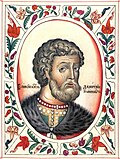 Dmitry DonskoyRight-Believing · Grand Prince of MoscowMay 19
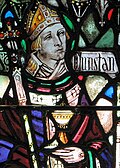 Dunstan of CanterburySaint · Archbishop of CanterburyMay 19
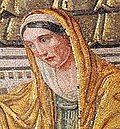 PudentianaMartyrMay 19
 John of GothiaSaint · Bishop of GothiaMay 19
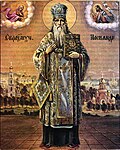 Alexander PetrovskyHieromartyr · Archbishop of KharkivMay 19
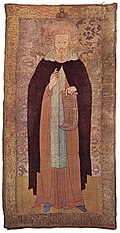 Cornelius of KomelVenerable · Founder of Komel MonasteryMay 19
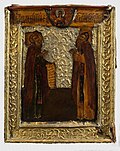 Ignatius of VologdaVenerable · Prince of Uglich turned monkMay 19
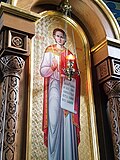 Parthenius of RomeMartyr · Martyr of Armenian originMay 19
 Konstantin DyakovHieromartyr · Metropolitan of KyivMay 19
 Onufry GagalyukHieromartyr · Archbishop of KurskMay 19
 Cornelius of PaleostrovVenerable · Founder of Paleostrov MonasteryMay 19
 Sergius of ShukhtovoVenerable · SchemamonkMay 19